Author Archives: vwt2ocadmin

Pop Top Camper Van The Most Versatile Vehicle On The Road

http://www.camper-van-fun.com/pop-top-camper.html


So, what makes a pop top camper van so unique and versatile more than any other vehicle? It’s the compact size of a van with the addition of a fiberglass or aluminum pop top roof which, when opened with the sides surrounded by different canvas materials (cotton, airtex, etc), gives a normal van full standing height inside and an extra double bed on the top. As a result you get a compact, fuel efficient multi purpose adventure vehicle. Equipped with all the basics such as a cooler, cooker, running water, cupboards, closets and a table with front swiveling seats for those sociable mealtimes. It can either be your daily driver or your adventure companion, taking you far away from the crowds. Add a four wheel drive to all the above and you’ll get a perfect and compact adventure vehicle!

The Concept

The original Volkswagen-Westfalia pop top camper van roof design.Westfalia pop top roof on the VW Joker or Vanagon.

The concept of the pop top camper was introduced back in the 1960’s on Westfalia camper vans and fifty years later, nothing has surpassed its versatility. Westfalia Volkswagen Baywindow and… the Joker or Vanagon I was a small kid back in the 1970’s and as far I can remember, I had a soft spot for those Westfalia camper vans back then. Our family used a camping tent at the time, and whenever the rain poured down, the idea of staying in one of those cozy camper vans was of course more then inviting. In fact, I have always been attracted by compact and efficient solutions of any kind, so when I stepped in the camping van world, the choice was obvious. Pop top camper vans are found based on different types of vans today. Volkswagen van has been the number one choice for this type of camper van conversions since the 1960’s, while a few other conversions use other base vehicles. The Mazda Bongo and Toyota HiAce and a few others represent the Japanese versions commonly used in Australia and New Zealand. Americans do things their own way and Sportsmobile, GTRW and Pleasure-Way represent the American-style versions. A bit larger then similar European or Japanese vans, with plush upholstery, quality workmanship, and the ability to build your camper van the way you want based on Ford, Chevy/GMC and Sprinter vans. A few smaller models are available, the smallest of the bunch based on MPV’s such as the recent Citroen Nemo and converted by one of the British finest, the Romahome.

Homemade Pop Top Camper

Homemade pop top camper on Renault van.Homemade pop top camper on a Volkswagen van.

How about a homemade camper van? The German Reimo has over 30 years of experience in the pop top business and a few dealers around the world. Besides converting their own vehicles, they also provide just about anything you need to build your camper van, including pop top and high top roofs. Or check on eBay to source out used roofs, furniture or anything else you might need. The German SCA is another company you might consider, if you’re looking for pop-top or high top roofs. Depending on the conversion company, the pop top roof can open in a V-shape either up in the front or in the back, sideways and fully erect versions are also available. The sides are made from durable fabric materials and include large windows with integrated mosquito nets.

 Multipurpose Functionality

The interior layout is more or less standard for most camper vans of this type, with the kitchen cupboards and storage room running along the drivers side, the rear bench converting into a double bed and the swiveling front seats creating a small, but comfy lounge with one or two swiveling tables. Depending on the conversion other layouts are available as well. My wife and I use the top bed to sleep on most of the time. We kind of enjoy the close contact with nature that way and have plenty of fresh air that we both love so much. Sleeping on the top bed actually feels like sleeping in a camping tent with a mattress and a hard roof on top. Our pop top also let’s us hop from one ski slope to another in the winter. We carry a Porta Potti (portable toilet) with us at all times for our needs, neatly located in the van and the Eberspacher heater keeps us warm at night. To keep the opened roof warm, I simply bought a large piece of inexpensive external, 7-ply insulation foil for campers, cut it to size, sewed the border strip around it and Velcro-strips on the back to zip it all together. Do to the fact that pop tops don’t have a shower, we have to use other facilities on the way. We usually find a public swimming pool or check out the local spa near our stopovers. But there are a lot of winter campsites open all year around, so we kind of combine everything together.A pop top camper van can sleep up to four people. But the truth is that it’s comfortable for a couple or a couple with a small kid or two. It’s not a large vehicle, so therefore has only so much room inside.

But active and practical folks that enjoy the great outdoors, appreciate what it has to offer. Being the size of a family car, it’s easy to drive, easy to park, easy on gas and will take you just about anywhere you want to. It has more room inside then any other vehicle its size and do to the low profile, you can park it in almost any garage. The pop top camper solution has been around for 50 years, because many people really appreciate the simplicity it offers. For some folks it might be just too small, while others wouldn’t give it away for the world.

– See more at: http://www.camper-van-fun.com/pop-top-camper.html#sthash.cKHsXMK0.dpuf
Volkswagen appoints Frank PR to promote California camper van

http://www.prweek.com/article/1310128/volkswagen-appoints-frank-pr-promote-california-camper-van

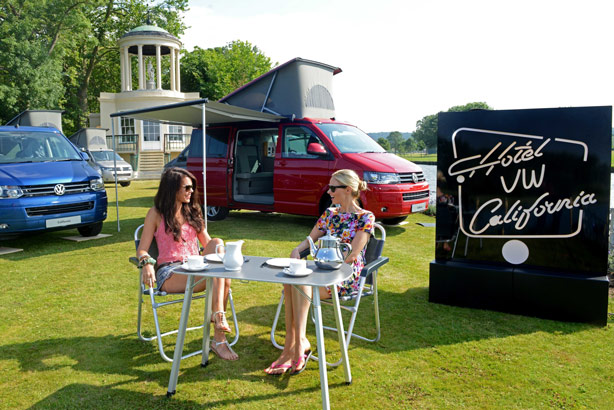
Volkswagen Commercial Vehicles has called in Frank PR to handle its consumer PR projects, including the California camper van.

Volkswagen: Working with Frank on the California model

The new brief tasks the agency with consumer comms around the Volkswagen California and with highlighting the brand’s heritage in camper vans.

In the first of a series of rolling projects for VW’s commercial vehicles division, Frank will look to promote the California as the ultimate ‘getaway’ transport.

Pietro Panarisi, head of press and PR, Volkswagen Commercial Vehicles UK, said: “Over the past 60 years we have built up an envious motoring heritage, which includes some of the most famous and best-loved vehicles of all time.

“We were looking for a partner that could help us spearhead the brand’s media relations activities as we build on our sales success and expand our awareness across non-automotive media. We have been really impressed with Frank’s passion and creative approach to our business.”

Other models in the Volkswagen Commercial Vehicles range include the Caddy, the Transporter and Amarok

Westfalia returns to its roots

http://www.outandaboutlive.co.uk/Motorhomes/News/General/Westfalia-returns-to-its-roots/_ch1_nw3391_pg1

Westfalia, the German converter that made its name building pop-top Volkswagen campervans in the 60s and 70s, has confirmed it is to again build a VW camper with a rising roof. At its German headquarters, the respected manufacturer, which now has two UK dealers – Lowdhams in central England and VW Campersales on the south coast – confirmed that it will build another rising roof VW campervan, this time on the latest T5.

The company’s CEO, Mike Reuer, said the project will produce a campervan “that reconnects to our history and heritage”.

Westfalia began creating VW campers in 1951 when it built a one-off for a British Army officer stationed in Germany. So popular was its so-called “Camping Box” built on a VW Bulli T1 that it went into production, but it was not until the 1960s that Westfalia added its famous rising roof.

Since then it has diversified into producing other models on other base vehicles. But now, some 50 years after it first started installing rising roofs onto its campervans, Westfalia will again build a pop-top VW camper.
The new campervan will be sold here by both dealers and possibly a third, which is expected to be appointed by this time next year.

The new VW will sit in Westfalia’s line-up above the entry-level Amundsen and Columbus, which are both based on Fiat Ducatos, and below the Club Joker, which is also on the VW T5 but has a fixed roof.

While the full specification and pricing of the right-hand drive UK models are still to be finalised, they are expected to be priced between £45k and £50k.

Westfalia also confirmed that the new VW, which is currently known by its working name of ‘Tradition’, will feature a rising roof that is hinged at the front and rises from the rear.

A hint at the design and layout of Westfalia’s new model can be seen in the Renault Trafic-based Mirande campervan, which is built by Westfalia’s sister company, Campérêve. Both Campérêve and Westfalia are owned by French company, Rapido.

The Mirande also features a front-hinged rising roof and has a layout that has a toilet at the rear, a central shower area and a galley along the opposing side. At the front there is a full dinette (see above).
A prototype of the new VW is expected to appear at October’s NEC show in Birmingham, while the final model should be ready for production by February 2015.

“This will not be another VW California,” said Laurent Lafitte, Westfalia’s Sales Manager for Europe. “And it will not be a Club Joker with a tilting roof; it will be something completely new.”

It will also widen Westfalia’s appeal in the UK – the company only returned here in February when it appointed Lowdhams.

More details of Westfalia’s 2015 campervans will appear in September’s issue of MMM, available here.

New Sportline van marks a milestone for VW

http://www.expressandstar.com/drivetime/2014/07/23/new-sportline-van-marks-a-milestone-for-vw/transport-van/

Untitled

Volkswagen has unveiled the ultimate van, equipped with a powerful engine and the sort of creature comforts you’d expect in a classy saloon.

It’s great news for those who spend up to eight hours in the cab, but this new Sportline is special in another way, as it is the company’s way of celebrating 60 years since the first of its iconic Transporter vans was sold in the UK.

The Transporter is one of VW’s greatest success stories, with sales still only outstripped by the Ford Transit: a relative Johnny-come-lately which has only been around for a mere half century. To date more than 11,500,000 Transporters have been sold worldwide, in forms including a panel van, window van, combi, pick-up and, of course, the legendary camper vans which are still hugely popular, attracting hundreds of enthusiastic owners to events all over Britain.

Its story dates back to turbulent times. In 1945, after the British captured the VW factory at Wolfsburg, Yorkshireman Ivan Hirst  (a British Army officer and engineer) resurrected the plant to build a new generation of Beetles. To solve the problem of moving components and machinery around the large site, the Plattenwagen was built: a flatbed truck powered by a flat-four, air-cooled Beetle engine at the rear. By 1947, this had evolved into the first Transporter and in 1954 the first examples were exported to Britain.

With a tiny 1,200cc engine turning out just 30Ps of power, it could carry virtually its own weight in cargo, achieved a speed of 47mph and used a gallon of petrol every 31 miles.

The flat front, with its two big headlight ‘eyes’ and split windscreen remained virtually unchanged until it was replaced by the T2 in 1967.

VW brought one of the earliest examples out of retirement for journalists to drive as part of the celebrations. The interior is spartan: just bare metal which amplifies the sound of the engine under the rear floor and a single ‘pod’ on a metal pole in front of the driver, with a speedometer and just one switch for the semaphore-style indicators.

It’s  six decades and a world away from today’s special Transporter Sportline, which has a two-litre turbo diesel engine with 180Ps of power compared to the T1’s 30, and can average nearly 50mpg while carrying almost twice the payload at motorway speeds.

In panel van or Kombi guise, it’s the flagship of the Transporter range, which has four lower powered engine options plus window van and shuttle body styles.

This ultimate, fifth generation Transporter also has power assisted rack-and-pinion steering compared to the vague worm-and-roller system of the T1 (you wouldn’t want to go any faster than its nominal top speed of 56mph) and comes with the option of a seven-speed DSG automatic gearbox – the same as flagship VW and Audi saloons.

For white van man of the 1950s (or more likely blue van man as many Transporters were) it would be like the Starship Enterprise. A satnav system, sound system with Bluetooth, front seat armrest, parking sensors, camera, electric windows and mirrors, climate control air conditioning, ABS and quilted and embossed leather upholstery are all standard, but would have seemed like science fiction to our grandfathers.

On the outside it’s distinguished by a roof spoiler, colour coded bumpers and 18in alloy wheels. Of and of course, the engine’s at the front, and it’swater cooled.

As well as its impressive equipment, the Sportline rides and drives as well as a passenger car, in spite of its ability to carry a 1,340kg payload.

The T1 of the 50s also pioneered another motoring innovation, its seven seat (plus driver) Micro Bus and its sibling the Kombi being the forerunner of today’s MPVs. Its interior was basic, as the intention was that the seats could be removed so that cargo could take the place of passengers. It was this flexibility which also spawned the idea for the legendary camper, with a bed, storage, cooker and sink that could be slotted in.

The coachbuilder Westphalia first showed a full-blown camper conversion in 1952, but it wasn’t until the arrival of the T5 Transporter in 2003 that VW produced its own version.

For the anniversary celebrations, VW wheeled out a 1967 campervan based on one of the first T2 models: still instantly recognisable as a Transporter but with a slightly more powerful engine (44bhp) and the ‘pop-top’ to give its occupants more headroom once they settled down at the campsite. This vehicle was originally sold in California so was perhaps once painted with flowers, but it was brought to Britain in 1982 and extensively restored to original condition.  It also has a later version of the 1600cc air-cooled engine, with an extra 3bhp. Its top speed has increased to 65mph, but with weight of those fixtures and fittings fuel consumption is down to around 25mpg.

It cost around £1,200 when new:  to buy one today is likely to cost you anything from £12,000 to more than £30,000. A restored 1955 T1 conversion was recently advertised at £19,000.

VW surprised many pundits when the third generation Transporter, or T3, was launched in 1979. Although it was bigger, with a typically 1970s squared-off shape to replace the soft curves of its predecessors, it retained the air-cooled, rear-mounted engine.  Front-wheel drive didn’t appear until the T4 in 1990.

Beware of Camping – Jason Good

http://jasongood.net/365/2014/07/beware-of-camping/

It’s easy to get too excited about the arrival of summer. Here are some things you should keep in mind before scheduling that family trip.

  1. Starting a fire on purpose is really hard. Starting one on accident is very easy. It’s kind of like making a baby.
  2. All the kids’ socks are wet within five minutes.
  3. Your morning bathroom ritual will go from being your favorite part of the day to an hour of panic.
  4. Your kids will each find a special rock, and promptly lose it, causing you to spend the entire weekend searching for the rock.
  5. You ever try to get a three year old to sit down? Now try it in a canoe.
  6. Your child will develop a sudden fear of peeing outside (something he does all-too-frequently at home). Have fun taking him to the john in bare feet every hour or so.
  7. You’ll spend approximately 75% of your day explaining what “that noise was.”
  8. You’ll talk incessantly about buying an RV. You’ll never do it.
  9. The guy at the site next to you might have a confederate flag and call everyone “Fella.”
  10. Even expensive freezer bags can’t keep graham crackers dry.
  11. Hiking involves a lot more arguing and carrying of children than you remembered.
  12. Seeing a moose is not magical; it’s terrifying
  13. You’ll say, “I think that’s poison oak” at least forty times and be right twice.
  14. Everyone will have an acorn under their hip while sleeping.
  15. Tent farts

And it’s all totally worth it. Seriously, even the “cave rash” you’ll all contract.

Eat healthy while camping

http://www.9news.com/story/life/food/2014/06/26/healthy-camping-food/11395583/

[promoslider slider=”test”]

Studies show that people are innately drawn to nature and show reduced stress when exposed to the great outdoors. Though camping can be beneficial to your health in a variety of ways, it can also make it difficult to eat healthfully.

Regardless of whether you are car camping with your family or backpacking solo, eating healthy while camping can be challenging and takes a little planning.

Generally when we think of camping meals they include hot dogs, hamburgers, chips, and s’mores. Though these are tasty treats, they are generally full of fat, sugar, sodium, and preservatives. These foods won’t give you the proper nutrients you need to hike a 14er or go on a long canoe ride on the lake.

So, before heading out on your trip, take the time to write out a healthy menu to ensure that you and your children are getting the nutrients you need to keep you energized for the duration of the camping trip.

Healthy foods you can take with you camping

Car camping gives you the luxury of taking a cooler with you, which makes it easier to bring a variety of foods including fruits, vegetables, and food that needs to remain refrigerated. Pack produce that doesn’t bruise and can be eaten easily such as apples, oranges (or clementines), grapes, berries, sugar snap peas, carrots, and pre-cut celery, red peppers, and green peppers. With backpacking, you need to take into account the weight of the food, as well as your inability to take a cooler with you. However, there are still a lot of healthy options you can take with you. See below for examples of food for both car camping and backpacking.

Example foods to take with you camping:

Breakfast: Hearty


  • Breakfast Burrito (Bring the eggs already cooked and mixed with veggies and turkey sausage. Then just put in whole wheat tortilla and serve)
  • Ham and Egg Muffins (Pre-make these with a scrambled egg, slice of cheese, and slice of Canadian bacon and wrap in foil. When ready to eat, heat over the grill until warm)
  • All in One Skillet Breakfast (Pre-make this by cooking eggs, a variety of vegetables, cheese, and cut up Canadian bacon together before you go. When ready to eat, heat in a skillet over the grill until warm)

Breakfast: Light and Easy


  • Oatmeal, Nuts, and Berries (Bring oatmeal packets and add hot water. Add nuts and berries)
  • Overnight Oats (see below for recipe)
  • Greek Yogurt mixed with berries and nuts
  • Fiber One Cereal with Milk

Lunch: Usually Light and Easy


  • Salad in Mason Jars
  • Whole Grain Bread with Peanut Butter and Grapes on top
  • Whole Wheat Pita Bread stuffed with sandwich meat, cheese, and veggies
  • Pre-made lentil soup

Dinner: Hearty


  • Tin Foil Dinners
  • Pre-made quinoa mixed with black beans, corn, cilantro, and tomatoes

Dinner: Light and Easy


  • Tuna with Salad and Previously Cooked Chickpeas (purchase tuna in pouches, rather than cans to save on weight)
  • Veggie Burgers

Snacks: Usually Light and Easy


  • Fruits that are easy to eat and won’t bruise easily (clementines, grapes,
  • Veggies that are easy to eat or pre-cut (baby carrots, sugar snap peas, celery, red and green pepper slices)
  • Hummus (Dip your apples or veggies)
  • Greek Yogurt (Dip your fruit or add granola/nuts)
  • Previously cooked chickpeas tossed with olive oil, garlic, and sea salt
  • Cheese sticks
  • Boiled eggs
  • Mixed nuts
  • Peanut Butter (Dip your apples or carrots)

Desserts: Usually Light and Easy


  • Baked Apples
  • Campfire Cones (sugar cones filled with bananas, a couple marshmallows, and some chocolate chips. Wrap in aluminum foil and place on top of grill or campfire for 2-3 minutes)
  • Peanut Butter Chocolate Bars (see below for recipe)
  • Banana S’mores (Take a banana, cut it in half and place inside aluminum foil. Add some chocolate chips and marshmallows. Wrap in foil and place on top of grill or campfire for 3-5 minutes)

Peanut Butter Chocolate Bars

Ingredients:


  • 1 1/4 cup of regular or honey-roasted peanut butter (preferably natural peanut butter but use what you’ve got)
  • 1/2 of a large banana, mashed
  • 3 Tbs Sugar-free maple syrup
  • 1 tsp Baking Powder
  • 1 tsp Vanilla
  • 1/2 tsp sea salt
  • 1/2 cup dark chocolate chips (could go down to 1/3 cup as well)

Directions:


  1. Preheat oven to 350.
  2. Combine all ingredients together except for the chocolate chips.
  3. Add the chocolate chips.
  4. Lay parchment paper on top of baking sheet and bake for 20 minutes.
  5. Let cool before cutting into bars.

Blueberry Strawberry Overnight Refrigerator Oats

Ingredients:


  • 1/4 cup old fashioned oats
  • 1/3 cup skim, almond, or soy milk
  • 1/4 cup Greek yogurt (plain or fruit flavored)
  • 1.5 tsp dried chia seeds (optional)
  • 1/4 tsp almond extract
  • 1/4 tsp cinnamon
  • 1 tsp honey
  • 1 cup strawberries and blueberries or any other fruit you like (also works great with raspberries, blackberries, mangos, apples)

Directions:


  1. In a mason jar add oats, yogurt, chia seeds, almond extract, and honey.
  2. Put lid on jar and shake until well combined.
  3. Add fruit and stir until mixed throughout.
  4. Cover jar with lid and refrigerate overnight or up to 5 days.
  5. Eat chilled or nuke in the microwave (with the lid off) until hot.

Michelle Cardel, PhD, RD is a nutrition scientist and registered dietitian at the Anschutz Health and Wellness Center, University of Colorado Denver. Follow her on Facebook and Twitter @MichelleCardel for daily nutrition tips!


5 camping tips to get you ready for your next trip

http://www.newsday.com/travel/5-camping-tips-to-get-you-ready-for-your-next-trip-1.8563225

[promoslider slider=”test”]

Here are five things you might be worried about when it comes to camping, along with ways to cope.

1. SLEEPING

Forgoing a comfy mattress for a sleeping bag may not sound appealing, but there are ways to lessen the ick. Driving to a campground versus hiking in means you can stuff your vehicle with provisions — including a tent you can stand up in for maximum comfort.

The taller the entrance to your tent, the less it affects your back. Then make sure to have a self-inflating mattress, like a Therm-a-Rest, or an air mattress you can inflate with a pump. Slip it under your sleeping bag to avoid the sleepless scenes from “The Princess and the Pea.” Another option is a collapsible camp cot.

Camping in spring and summer means using lighter rectangular sleeping bags stuffed with synthetic material. When it’s cold, go with a down-filled mummy-shaped sleeping bag that cinches around your face. I also found that bringing a bedroom pillow helped. It smelled and felt like home.

2. UNPLUGGING

These days, some commercially operated campgrounds offer Internet access. But if you’re heading to wilderness-type parks, depending on location, you may not even have cellphone service.

You can always bring an external battery pack and angrily play Candy Crush for hours, but that really defeats the purpose of being outdoors.

I did bring my excellent Jackery Fit portable battery pack, but only to make sure my iPhone was charged enough to take photos during hikes into Pinnacles’ winding mountain caves.

Remember that the Internet will still be there later. Play cards, eat, drink, breathe in fresh air, hike, build a campfire and enjoy the company of others — in person instead of online.

3. CRITTERS

You love food, and so do animals, including squirrels and bears, whose sense of smell overshadows ours and who may find your fragrant dinner supplies irresistible. Just remember: They want your food, not you.

Never leave trash, toiletries, dirty dishes, food or drinks unattended. Don’t leave trash and open containers in your car or around the campsite. Keep your tent zipped up, and keep in mind that bugs and birds also enjoy nibbling on half-eaten peanut butter sandwiches, so don’t give them the chance.

As for ticks and mosquitoes, insect repellent works. For major bug phobias, outdoor supply stores and websites sell inexpensive, lightweight mesh jackets you can zip yourself into — including your hands and face.

4. BATHROOMS AND ELECTRICITY

You can live without electricity, a full-length mirror and private bathrooms without sacrificing hygiene or general spiffiness.

Most developed tent campgrounds you can drive to have communal bathrooms with running drinking water, sinks and showers, but check in advance.

Try gas- or battery-powered lanterns for preparing food and hanging out in the evening. A headlamp works well for midnight bathroom runs and as a makeshift night-light hung in a tent.

5. MEALS

Leaving your smoothie blender at home doesn’t mean you can’t have delicious food while camping.

Get a decent-size cooler that can keep your food cold for a few days before the ice melts and a small basin to wash dishes. Bring a propane gas-powered camp stove with one or two burners. In campgrounds with grills, you can fire-roast anything from Portobello mushrooms to zucchini. At night, my family and I made gooey s’mores.

“Approach camping as an adventure with possibilities of new experiences of fun, and the possibility of challenges,” my dad told me. “Camping gives you a sense of togetherness in a natural environment you’re not usually in, that you end up enjoying together.”


Camping Essentials Everyone Always Forgets

http://fathomaway.com/postcards/stuff/travel-loot-camping-gear/

[promoslider slider=”test”]

For as much camping experience as anybody has, we somehow always manage to forget these essentials that often go overlooked.


camping chair

1. Folding Chairs

They seem superfluous with all the gear you’ve already packed, but they’re worth investing in. Late-night conversations and philosophical discussions are much harder to enjoy when you’re squatting on dirt. The Easy Rider camping chair ($49.95) is both sturdy and comfy.


aromaflage

2. DEET-Free Bug Repellent

I don’t care how effective it is, DEET is poison for the body. Aromaflage ($30) not only smells incredible, but is also DEET-, paraben- and sulfate-free. More importantly, it works.


bolivian watermelon stripe blanket

3. Extra blankets/sweaters

When the fire dies out, nights can be chilly. It’s always better to be over-prepared than freezing and miserable. These hand-woven Bolivian frazada blankets ($228) will keep you toasty.


Origins Ginger Body Cream

4. Hand/body lotion

Hopping in and out of rivers while drying out in the sun can make your skin awfully dry. Having lotion on hand is a small comfort with a big impact. Stay soft with the Origins Ginger Souffle whipped body cream ($31.)


Lifestraw camping gear

5. Lifestraw

Skip the plastic water bottles. Skip bottles altogether. Drinking straight from a waterfall, river or lake seems insane — and is insanely good. Don’t be grossed out — a super effective filter is built right into the Lifestraw ($15.)


Roasted corn

Photo: Steven James P. / Flickr

6. Corn

Bring a bunch, and nothing else. Once you’ve got a good fire going, simply place them on a log and let them roast for 5-10 minutes. Don’t let them get too charred, and remove from heat. They turn out so sweet and juicy that salt and butter won’t even cross your mind. If I could live off these, I would.

Survive with your smartphone: Best apps for camping and trekking

http://recombu.com/mobile/news/best-apps-camping-treks-ios-iphone-android-phone_M20556.html

We review the best apps for camping, trekking and surviving outdoors holidays, for iOS and Android.

It’s a Great British Tradition to pack up every summer and head out into the wilderness, for a glorious bit of caravanning or trekking. After all, it’s not a holiday if you don’t come back with a hundred insect bites, severe depression and a spot of bronchitis.

[promoslider slider=”test”]

Even though you’ll likely have sod all signal out in the sticks, your humble smartphone can still help you get through an outdoors holiday or camping expedition in one piece. And if the whole thing goes tits up and you end up stranded, alone, in the middle of nowhere, these tips and apps may just save your life. Hooray!

Get your bearings: Compass and Google Maps (iOS and Android, free)

Don’t forget to get onto Google Maps before you leave the comfort of your living room, and download an offline map for the region you’re headed to. You can do this by searching for your destination, dragging out until you can see the entire area, and then flicking up the bar at the bottom of the screen. You should see a ‘Save map to use offline’ option, which will download the whole thing onto your phone’s storage.

Best Android iOS and iPhone apps for camping and trekking holidays Best Android iOS and iPhone apps for camping and trekking holidays Best Android iOS and iPhone apps for camping and trekking holidays

As long as you’ve got GPS on, you can then see exactly where you’re tramping out in the sticks, even with no mobile signal. Of course, this advice is only useful if you know where you’re headed before leaving home. If you end up unexpectedly lost in the wilderness following a horrific plane crash, you can discount this section. Oh, and good luck.

Find phone signal: BootPrint Pocket Survival (iOS, 69p)

This handy app records the exact location where your phone last picked up signal, in case you desperately need to call home and tell them to record Corrie or Britain’s Got Talent. It’ll even guide you to the golden spot using the iPhone’s built-in compass, so you don’t need to fiddle around with maps.

Best Android iOS and iPhone apps for camping and trekking holidays

Survive in any situation: Army Survival Guide (Android, free) / Survival Guide (iOS, free)

These survival guide apps are actual army manuals, so might be a little hardcore for your average caravan excursion – you can skip the chapters on avoiding enemy captivity, psychological trauma and fending off rabid animals, unless you’re holidaying in Grimsby.

Camping and trekking the best holiday apps on iOS and Android Best Android iOS and iPhone apps for camping and trekking holidays Best Android iOS and iPhone apps for camping and trekking holidays

All the same, there’s loads of really cool advice tucked away, including how to make your own soap, the best way to construct a makeshift shelter, and how to catch and kill your next meal. Fascinating reading, and while we were well up for making soap (we thought a nice minty one would do the trick), we didn’t manage to catch and kill any animals to harvest their fat. Maybe next time.

Catch yourself a meal: Qwik Hunting Calls and Sounds (iOS, 69p)

This app packs in three dozen wildlife calls, which you can play out loud to attract or scare animals. Sadly, we tried a selection of the calls on our trip, and the local animals weren’t too impressed. When we finally gathered the nerve to play a goose call next to one of the ill-tempered birds, it just looked at us like it wanted to peck our entrails out.

Get rescued: Disco Light LED Flashlight (Android, free)

Not only is this disco light app a rather funky way of seeing your way through a sinister, horrifying forest late at night, it could also help attract the attention of a passing helicopter for rescue purposes. And if your days truly are numbered and all hope is lost, at least you can go out with a hell of a party. There’s a seizure-baiting strobe mode, police lights mode, and even a glowstick mode that flashes when you boogie, for proper rave action.

Best Android iOS and iPhone apps for camping and trekking holidays

Remember kiddies, failing to plan is planning to fail! Have a wonderful summer and try not to be eaten alive by pigeons.


Volkswagen UK creates #CamperHunt on Twitter

http://www.thedrum.com/news/2014/08/12/volkswagen-uk-creates-camperhunt-twitter

Volkswagen UK has launched a virtual treasure hunt on Twitter, offering fans the chance to win six VW camper van tents.

Volkswagen UK creates #CamperHunt on Twitter

Beginning yesterday, 11 August, the campaign by Tribal Worldwide will see photographs of four landmarks at a UK location posted on social channels, with fans encouraged to guess where they are.

To enter, fans can click through to a competition page on Facebook, while on Twitter users will be invited to tweet where they think the tent is, using the hashtag #CamperHunt.

Silke Anderson, communications manager at Volkswagen UK, said: “#CamperHunt is a fun, light hearted social initiative that perfectly captures the essence of Summer Driving: the freedom to explore. We’re excited about the competition and are looking forward to engaging with new and existing fans as part of the campaign.”

Six hunts will be held over the next three weeks