Category Archives: Camping

Would you take a campervan to the ski slopes??

vw winterIs swapping the warmth and comfort of a ski chalet for a campervan worth the money you’d save?

http://www.telegraph.co.uk/travel/snowandski/skiing-news/11294759/Would-you-take-a-campervan-to-the-ski-slopes-this-season.html

ByLucy Aspden

New research has found that families could save up to £1,100 by swapping a hotel room for a “cosy caravan” when hitting the ski slopes in Europe this season.

Caravan dealership, Salop Leisure, compared the average cost of staying in a hotel or chalet with the cost of driving to the mountains and staying in a campsite. Yes, there’s no match for the comfort of real, actual brick walls, a freshly-made bed every morning or chalet staff-made coffee and cake on your return from the slopes every day, but making the swap to the deal on wheels could be almost eight times cheaper.

Using prices from Trip Advisor’s 2014 Trip Index, Salop Leisure found that the average price for a week’s stay in a hotel or chalet in Serre Chevalier, France, where accommodation is apparently one of the cheapest in the French Alps, is £1,210. However, skip the hotels and head to the nearby Champ du Moulin campsite and the cost for a family of four for seven nights plummets to £163.

The same savings apply in more popular resorts like Austria’s St Anton, where, according, again, to Trip Advisor, a week’s stay is the most expensive in Europe, with an average cost of £3,424. But trade the luxuries of a hotel or chalet for the Camping Arlberg site and a pitch for the week will cost £182 and include a private bathroom hut, wireless internet, washing machine, tumble dryer, sauna and ski bus stop to the slopes (mind you, that’s just a public bus stop and a free ski bus).

Salop Leisure says more and more Britons are purchasing campervans and caravans for holidays, a trend it believes matches behaviour in North America where driving a motorhome to a holiday destination is much more common. The dealership says that while the initial investment in a “chalet on wheels” may be steep (in the region of £20,000, but up to £40,000), the savings to be made in resorts around Europe are vast.

Campbell Levy, a regular caravanner in Colorado dug up by Salop Leisure to sing the holiday format’s praises, said he drives up to Aspen Snowmass in a 1997 VW Eurovan Camper. “It has a propane-powered furnace that keeps us toasty even on the coldest nights. We’re often too warm, and have to let heat out,” he said.


“It’s especially advantageous on a powder day because you can park on the steps of the gondola, and roll out of bed right before the lift starts running and get right on.”
Camping Arlberg in St Anton, Austria

Ski-in/ski-out access (sort of, from your car park) may sound ideal, but Telegraph Ski and Snowboard editor Henry Druce said the dream does not match the reality. He said: “When I toured the Alps a few years ago in a campervan I found the experience tiring because of all the driving and inconvenient because the campsites where we stayed in Val d’Isère and Chamonix were not that close to the lifts and lacking in crucial home comforts like a nice big bath to soak away the aches and pains of a day on the slopes.”

He added: “Admittedly my experience was tainted from the word go as we were robbed on the first night of our trip and lost thousands of pounds worth of kit.”

Saving money is not the only consideration though – as well as the hours of driving (the drive from Calais to Val d’Isère is about nine and a half hours), prepping your ride for a winter journey requires meticulous effort. Everything from winter tyres, snow chains and pipe insulation to checking tyre pressures, testing breaks and investing in copious amounts of antifreeze are seen as essential preparation for a moutain drive adventure. See our guide on how to drive to the slopes.So, would you?

8 Things that Will Make Eating and Drinking on Your Camping Trip So Much Better

http://fwx.foodandwine.com/secrets/8-things-will-make-eating-and-drinking-your-camping-trip-so-much-better

By Noah Kaufman |

The summer solstice is upon us and there are few better ways to spend the brightest weekend of the year than on a trip into the great outdoors. The fresh air, the chirping of the crickets, the knowledge that you don’t have to care about what’s trending on Facebook for several days—camping is great. But eating and drinking in the woods come with some drawbacks. Lugging beer and wine bottles in your backpack is cumbersome, making a decent meal on a stove the size of novelty Frisbee is challenging and how are you supposed to get a decent cup of coffee? Here are eight things that can solve all of those problems so you can worry about more important things, like what was that growling sound you just heard off in the woods.

Beer Concentrate

Drinking beer around the campfire is perhaps the best part of any camping trip. But packing out all of your empties (and make sure to pack out all of your empties) is a real pain. Pat’s in Alaska has created a beer concentrate, so you can make your own beer right on the trail. No more lugging around packs full of jangling glass bottles all weekend.

The Hydro Flask Camping Growler

What if you’re in the mood for a beer that doesn’t come in cans or bottles? You’re in luck. This vacuum insulated bottle will keep your beer cold for 24 hours, so stop by the brewery and have them fill it up.

Wine Preserver Bags

You can pick up wine in portable pouches, but selection is limited. These refillable ones, which will hold an entire 750ml bottle, will let you put whatever you want in them. Now you don’t have to leave that 1982 Bordeaux at home.

Pour Mason Coffee Maker

This funnel system makes pour-over coffee much more campfire-friendly. Also, hipsters rejoice, because you can own yet another item made of a Mason jar.

A Cooler That Dispenses Shots

Finally, a convenient way to get shots when the nearest bar is three hours away. This is made by Jägermeister, but if that’s not your vice of choice, you can fit it with other spirits.

The Coleman Camping Stove/Oven

We have a friend who insists the only food you should eat when you go camping is canned chili. We’re getting one of these ovens and making a soufflé. That should show him.

The Back Country Martini Glass

Wine and beer not your thing? Class up your campfire drinking with a martini from a stainless steel cup. These things are hearty enough to survive a bear attack.

Power Pot Generator

This brilliant heat-powered generator will charge your phone while you’re boiling water for your coffee. You may not have service, but at least you’ll be able to play Threes and Angry Birds.

Related: This Earth Cooler Chills Your Beer Underground, with No Electricity
The World’s Most Expensive Tea Machine is a Very Fancy Vacuum
Top 10 Picnic Recipes

Traveller’s Guide: Camping in France

http://www.independent.co.uk/travel/europe/travellers-guide-camping-in-france-9268480.html

1 / 1
Bubble wrap: an unusual ‘treehouse’ in Mayenne
Domain des Vaulx

The traditional holiday under canvas has come a long way – now you can sleep in a treehouse, a vintage caravan or even at the zoo. Sarah Barrell pegs down the options

Happy campers are those considering France this year. According to the French tourist office (uk.rendez vousenfrance.com), there are now more than 9,000 one- to four-star campsites spread across the country, plus a blossoming number of luxury pitches. And if you don’t want to carry your own canvas, many of these sites provide fully equipped tents, caravans and cabins, not to mention a burgeoning number of very smart treehouses.

Camping in France

The accommodation on offer is ever more inventive: from a pop-up surf camp near Bordeaux (0800 6123 516; feralsurftours.com), to a naturist beach retreat in Corsica (00 33 4 95 38 80 30; bagheera.fr/en) plus floating cabins (echologia.fr) and bubble treehouses (00 33 2 43 69 95 63; domainedesvaulx.fr) found in the increasingly popular Mayenne region, a short hop from the ferry port at Caen.

Camping in France

Early booking is recommended, especially for breaks during the school summer holidays and to secure places on sites with easy beach access, swimming pools and activities for children. “We hear that the north and west coast of France is selling well, but there still seems to be lots of availability in the south,” says Daniel Johnson, from campsite comparison website, francefor families.com. “This is different to recent years. But families who want to head to the Mediterranean coast for the school holidays should still book now before it sells out.”

To ensure a good choice of dates and destinations, it is worth considering areas outside the southern summer holiday hubs. “The Alps are often overlooked, but there are some stunning sites to be found there and plenty of outdoor activities to fill a holiday,” says Jonathan Knight, founder of Cool Camping (020 7820 9333; coolcamping.co.uk). He suggests choosing a site with pre-pitched tents. “Without the need to bring a car-full of your own camping gear, you could just pick up a cheap flight or take the train.”

Pre-pitched tents with luxury trimmings – plush beds, loos and a close attention to design – are popping up across France, a destination that had previously lagged behind the luxury camping boom seen in the UK and Spain.

However, “bookings are significantly up on last year,” says Rebecca Whewell, from Sawday’s Canopy & Stars (0117 204 7830; canopyandstars.co.uk). “It’s important to book early, especially for family places. People assume peak season weather is the best, but the mildest, sunniest days often fall in May, June and September. Our most popular bookings are treehouses – France is the place to go for these; there are many more established than in the UK – and also for traditional roulottes: much bigger than a gypsy bowtop caravan, but with the same quirky, bohemian style.”

If you want something really wild, how about camping out at the zoo? Three new safari-tent-style Lemur Lodges recently opened at La Flèche Zoo (00 33 2 43 48 19 14; safari-lodge.fr), in the valley of the Loir, a tributary of the more familiar Loire. Each has oversized windows for observing the nocturnal habits of these much-loved Madagascan primates, plus an outdoor shower and pergola to complete the back-to-nature experience. A week in June costs £125 per adult, £60 per child (aged three-12); under-threes go free. The price includes two-day zoo passes for all and half board with dinner delivered to your lodge.

Camping in France

The Michelin Camping Guide (travel.michelin.co.uk) and Guide Officiel Camping Caravaning (available from campingfrance.com) have more details on sites across France.

Camp chic

These days, the perfect pitch means more than flat ground and a great view. Glisten Camping (0844 344 0196; glistencamping.com), at Col d’Ibardin in the Pyrenees-Atlantiques, has six new geodesic domes furnished with hanging sleep pods for children, beanbags, king-sized beds and an artfully arranged al fresco kitchen with plancha grills. There’s also a kid’s club, swimming pools and sports for teens. A week in August costs £750 (sleeps four adults, two children).

Canvas Holidays (0845 268 0827; canvasholidays.co.uk) has expanded its “luxury extras” programme. New summer additions include safari tents and buggy building (teams race and create beach buggies from rope, wooden poles and barrels). Other activities at the 12 participating French sites include Water Walkerz (aqua body zorbing), orienteering and teddy bear picnics. A week’s stay in a Safari Tent Deluxe (sleeps six), at Camping la Sirène, near the coast and the French-Spanish border, costs £1,288, arriving 19 July.

Travelling with tots

If you don’t have to travel during the school holidays, it’s easy to save. Book a break between 1-19 June and Eurocamp (0844 406 0402; eurocamp.co.uk) is offering a week’s holiday for £405 per party (up to eight/six adults), including accommodation in a three-bedroom mobile home and return Dover-Calais ferry crossings. Participating toddler-friendly sites include Domaine des Ormes in Brittany, where pitches are available for those with their own tents, plus treehouses and mobile home rental. Set just inland from St Malo, the site has a pool and lake to swim in, plus a kid’s club, babysitting services and all-terrain buggies which you can hire.

Stay within dashing distance of Paris, at La Croix du Vieux Pont (0844 847 1356; hoseasons.co.uk), a five-star campsite perfectly set up for under-fives with accommodation that includes fully equipped mobile homes, lodges and tents. Facilities include children’s pools, playgrounds, soft play areas and a kid’s club; a frequent camp bus service makes the hour’s journey to Disneyland Paris. A week in June costs £441 for a family of four staying in a mobile home, with shower and loo.

Camping in France

Fancy farm stays

Book a stay on a farm near the beach in Normandy. As part of the Featherdown Farm (featherdown.co.uk) portfolio, the family-run Ferme de la Folivraie offers the usual Featherdown comforts: decked, canvas tents (sleeping six) with kitchens, comfy beds and flushing loos, plus farm activities for childern, the beaches of Port-en-Bessin are a mile away and the Marais du Bessin National Park is on your doorstep. A week’s stay in June costs between €649 and €759 per tent.

Another Normandy farm favourite, Château de la Grande Noë, is an organic farm estate where you can camp high up in Douglas redwoods in medieval tent-style treehouses complete with drawbridges, rope ladders and winch systems to hoist up farm-made picnic baskets. Walk a Shetland pony, pet horses and goats in the paddocks, and explore La Perche – the surrounding region of protected woodland. A week in August costs €1,015, including breakfast, in a treehouse for five (chateaudelagrandenoe.com).

However, “bookings are significantly up on last year,” says Rebecca Whewell, from Sawday’s Canopy & Stars (0117 204 7830; canopyandstars.co.uk). “It’s important to book early, especially for family places. People assume peak season weather is the best, but the mildest, sunniest days often fall in May, June and September. Our most popular bookings are treehouses – France is the place to go for these; there are many more established than in the UK – and also for traditional roulottes: much bigger than a gypsy bowtop caravan, but with the same quirky, bohemian style.”

If you want something really wild, how about camping out at the zoo? Three new safari-tent-style Lemur Lodges recently opened at La Flèche Zoo (00 33 2 43 48 19 14; safari-lodge.fr), in the valley of the Loir, a tributary of the more familiar Loire. Each has oversized windows for observing the nocturnal habits of these much-loved Madagascan primates, plus an outdoor shower and pergola to complete the back-to-nature experience. A week in June costs £125 per adult, £60 per child (aged three-12); under-threes go free. The price includes two-day zoo passes for all and half board with dinner delivered to your lodge.

The Michelin Camping Guide (travel.michelin.co.uk) and Guide Officiel Camping Caravaning (available from campingfrance.com) have more details on sites across France.

Sand, sea and safari

Stay safari-style in Brittany. Bot-Conan, in the Baie de la Forêt, has six “Archipel” safari lodges set on wooden decks, and each comes with its own outdoor kitchen. There are also “atoll” tents with sundecks and barbecues and two grass-roofed bathhouses. Beach access is along a wooded coastal path down to a “secret” bay. Canopy & Stars has a week’s stay in June for £587, in a safari tent that sleeps five.

Swim in view of the Pyrenees at Camping des Albères, near Perpignan. Perfect for families, the site has a two swimming pools, a café, shop and activities; the beaches of Argelès-sur-Mer are four miles away. Pitchup (pitchup.com) offers a week in June for £164, for stays in a “nature safari tent” (sleeping up to five), with accommodation split into a double room, a triple room and a fully equipped kitchen, plus a decked terrace area.

Camping in France

Remote retreats

Sleep high in the Haute-Savoie in south-east France. Camping Les Dômes de Miage is set at 3,000ft up the Rhône-Alpes with pitches offering views of Mont Blanc. There are no swimming pools, static caravans or animation programmes but plenty of mountain bike trails, forest hikes and a lovingly-restored wooden mazot (traditional Savoyard chalets). A pitch for two people costs €25 a night (in own tent) in August, with Cool Camping.

Beat a retreat to the foothills of the Pyrenees, to bed down in a vintage trailer. Pioneers of the European vintage trailer park trend, Belrepayre (00 33 5 61 68 11 99; airstreameurope.com) is arguably one of the most splendidly isolated spots to stay in an Airstream. Ten gleaming aluminium trailers from the 1950s, 1960s and 1970s (sleeping two to six) are each furnished in period style, plus there’s an on-site spa, hot tub and bar/café. A trailer for two costs €630 per week in August.

On a budget

France’s municipal campsites offer the best budget pitches. Found in most towns and larger villages, these usually have loos, hot showers and a basic shop. You need to book only in touristy (largely coastal) regions. These make great pit-stops for road trippers or those who don’t want to commit to one destination. A night at the Mérindole site in Port de Bouc, close to Marseille, costs from €1.95 per tent and €3 per camper with cars charged at €2.05 (camping- municipal.org).

For a bargain action-packed camping trip, try Family Adventure Holidays (01273 827333; family adventureholidays.com). Stay in a mobile home on a campsite set vineyards and the foothills of the Cévennes. Take a two-day whitewater canoe descent of the Ardèche gorge, with an overnight riverside bivouac, or try kayaking, climbing and abseiling in the limestone cliffs, and tackling a high-ropes course among the pine forests of Villefort. These holidays are suitable for children aged eight and above. A week in August costs £438pp, including accommodation, activities and some meals.
What Kind of camper are you?

http://www.inspiredcamping.com/kind-camper/

What Kind Of A Camper Are You?

what kind of a camper are you?

Camping, for those who are particularly fond of this outdoor activity, is primarily a very satisfying act since it allows them to commune freely with nature as well as get away from the daily hustle and bustle for a few days at the least. Most campers can be recognized into what kind of a category they fall into through their style of camping.

Family Camping

Family campers, these days, wish to provide their children with an outdoor experience which is coupled with basic amenities as well, so as to be sure not just of their safety but also of their comfort. Woolacombe Bay Park in Devon, England allows such parents to not just teach their children various outdoor skills but also helps them relax and rejuvenate as a couple by providing various facilities like sauna, heated swimming pools as well with an easy access to the Lundy beach and to various countryside walks.

Wild Camping

There are many who want a pocket-friendly getaway into the heart of nature and do not mind carrying that extra load of freeze-dried meals and a tent, camping into the mountains is the foremost choice. Dartmoor in England provides them with just the right kind of escape and it costs absolutely nothing.

camper

Al-Fresco Camping

Camping outdoors does not always entail lugging tents around but can also entails inhabiting whatever space is available to get the most out of an outdoor experience. It could be a barn or a run-down shack that nobody is using or even a beach. Those who prefer this kind of camping, only have to carry the bare minimum that they require and can do away with the whole hassle of tents and poles.

Laid-back Sites

Camping for many is actually an escape from not just the routine of everyday living but also the rules that society puts on them. Which is why, if one does not want to be ordered around on where to pitch their tent or when to put the lights out, countryside Britain allows such campers an excellent  opportunity in the form of the Stonethwaite campsite in Borrowdale which is surrounded mountains and is at a stone’s throw away from the Blackmoss Pot.

Glamping

Recent times have seen the rise of a new style of camping known as Glamping that involves camping in luxury. For those who are overtly fashion conscious, boutique camping trips are winning favors hands down and allow the glampers a 5-star experience along with soaking in the atmosphere of living out-of-doors.

Dozens of jobs created as GO Outdoors opens £1.2m Taunton store

http://www.thisisthewestcountry.co.uk/news/11143997.Dozens_of_jobs_created_as_GO_Outdoors_opens___1_2m_Taunton_store/

GO Outdoors, which sells outdoor equipment and clothing, has opened a £1.2million store in Taunton, creating 37 jobs and boosting the local economy.

The store has a wide range of camping products, tents, clothing and footwear, as well as fishing, cycling, climbing, running and horse riding equipment.

Staff can advise customers on the right products for their needs, whether it is camping with the family or competing in downhill mountain bike races.

The Taunton store has a large indoor field tent showcasing GO Outdoors’ new range of tents.

The tents are pitched in store so that customers can get a feel for the size and shape of the product, and in-store experts can answer questions.

The Taunton store officially opened last weekend with more than 50 customers queuing from 8am to take advantage of opening offers.

Store manager Laura Humphreys said: “We’re very excited to be up and running in Taunton.

“Somerset is a great base for outdoor pursuits and we’re really keen to get to know local activity groups and individuals who enjoy the great outdoors.

“We had a great reception on launch day and hope to meet many more local families, enthusiasts and adventurers over the coming months.”

GO Outdoors was established in 1998 and employs more than 1,800 people across the UK.

GO Outdoors Taunton is at St John’s Retail Park next to DFS. To contact the store call 08443-876800.

This Company Rents Out High-End Trailers For Camping and Corporate Events

This Company Rents Out High-End Trailers For Camping and Corporate Events

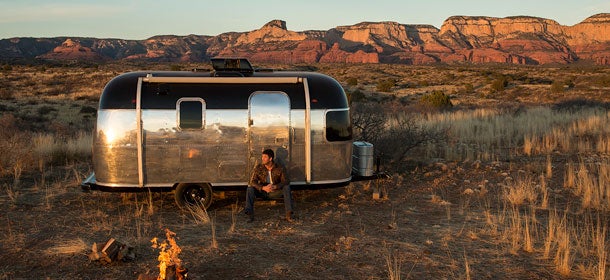
Tents are fine. RVs can be fun. But no transitory home launches as many dreams of running away from it all as an Airstream. That’s something Bill Ward counts on for his Denver-based business, Living Airstream, which rents out the gleaming aluminum trailers for events from camping to corporate. The instantly recognizable bullet-shape trailers are “an American icon like Harley-Davidson,” Ward says.

Recreational renters can call one of his Airstreams, which include new models and vintage ones with 1960s-era amenities, home for a day or for months on end. Prices start at $175 per day for a vintage trailer; a monthlong rental of a new model costs $2,600. Many customers fall in the 50- to 80-year-old range and have been Airstream enthusiasts for decades. “This has the most diverse demographic of anything I have ever been involved with,” Ward says.

He has sent Airstreams out for everything from camping trips and guest housing for weddings to hipsters looking for a backdrop for stylish selfies. They’ve also been used at Burning Man, the counterculture festival that takes place each summer in Nevada’s Black Rock Desert.

Living Airstream

Playing on the power of Airstream’s iconic image and utility, Ward’s company rents out units for corporate customers, too. The Airstreams have served as vinyl-wrapped mobile billboards (one-month minimum rental) and temporary office spaces (average rental time: five months). The bulk of the consumer rental business comes during warm weather, but the corporate usage generates income year-round. Ward estimates that the corporate advertising business brings in 10 percent of total revenue.

And for those who really fall in love with the Airstream lifestyle, the company sells restored vintage trailers (outsourcing the renovations) for an average of $15,000. Living Airstream’s team of six part-time employees and independent contractors manages everything from deliveries to introductions to companies that make the vinyl wraps to finding folks who can do repairs and restoration.

Living Airstream has a constantly shifting inventory, with more in stock during warmer months. In the first quarter of 2014, the company expanded to San Francisco, where the proximity to outdoor recreation and the population’s affinity for retro styling are expected to help the venture triple its revenue this year. Living Airstream is also expanding to Arizona.

Eventually, Ward hopes to move to “an inventory-less model.” He is starting another business, Rentbowl.com, which he describes as Airbnb for Airstreams, ATVs, boats and other recreational vehicles. Customers will use the website to book the vehicle they want in the location they want; Rentbowl.com will take a cut, but won’t have to take possession of or deliver the vehicle.

The new model adds to the “idea of a community” upon which Airstream was founded in 1931, Ward says. “We have such a solid start on what’s next.”

Warwick Davis takes his family to Cornwall in a VW camper


In a brand new travelogue for ITV, legendary actor Warwick Davis and his family take their camper van around the country and extol the virtues of the Great British Holiday. Tonight’s opening instalment sees the Davis clan journey round Cornwall where they meet pirates, woodland creatures and a band of rogue knitters.

An enchanted wood in Launceston is the family’s first destination as they meet a group of locals dressed up as fairies, pixies and numerous other woodland creatures. These locals meet up regularly to keep the area’s legends and mystical stories alive and Warwick is excited to learn more about the magic and mystery of the county.

Warwick later organises for a gang of pirate reenactors to bring Cornwall’s history of smuggling and piracy to life. However the Pirates of St. Piran’s ambush on the family provokes a negative response from Warwick’s son Harrison who is genuinely terrified by the experience. Warwick later tells us that he thinks the stunt has backfired and is worried that he’s traumatised his son for life.

In Penzance, Warwick meets a group of graffiti artists with a difference as he gains an audience with the notorious ‘Yarn Bombers’. The women in question keep their identity a secret as they discuss their pop-up knitting displays which arrive randomly in Penzance every six weeks.

Finally, Warwick participates in a boat race involving only blind rowers. He shouts words of encouragement to the team and later helps out the cox by using ropes to control the rudder.

Join the Davis family as they begin their journey Fridays on ITV at 8:30pm

VW campervans in the UK – a guide to rentals

http://www.theguardian.com/travel/2014/mar/21/uk-vw-campervans-rentals

Festival-goers and nostalgia-hunters are fuelling a boom in the campervan rental market in the UK
  • UK campervan
A VW campervan on a campsite at Reedham on the Norfolk Broads.  Photograph: Richard Baker/Corbis

Campervans aren’t just for warmer climes. In the UK, the Kombi is very much alive and trucking. According to Camperbug.co.uk – a site that brings together van owners with potential hirers – the rental sector is going strong, bolstered by nostalgia and the growth of music festivals.

“As soon as the sun comes out, we’re inundated with people wanting to hire vans,” says founder Bud Atapattu, a music agent turned web developer. He started the site in 2010 to make money from his own van, which was lying unused for much of the year. “Unfortunately, you can’t go on holiday all the time, so you end up with an expensive asset just sitting in your driveway.”

Relying heavily on social networks, Atapattu built an online community of van owners wanting to tap into the rentals market. He now has 550 vans on his books, all over the UK, plus some in Spain and France (prices from £410 a week). “The advantage is that there is no long-term commitment,” he says. “Owners can dip in and dip out when it suits them.”

NewForestSafari.com, based in Hampshire, is another VW specialist and opened for business just months before the last Kombi was produced at the VW factory in Brazil last year (the old design was deemed incompatible with modern requirements for airbags and antilock brakes).

The family-run company owns nine vans and specialises in the restoration and maintenance of older models. It proudly includes two 1960s “spiltscreen” Kombis in its fleet (from £740 a week). Like Camperbug, it sees festivalgoers as a key market, especially group of people in their 30s and 40s who have grown tired of sleeping under canvas.

Camperbug sent 50 vans to Glastonbury last year, while both companies started taking bookings for this year’s festival season last autumn.

The key to a successful campervan trip, says Atapattu, is to travel slowly. He advises first-timers not to make ambitious plans: “Older campervans tend to have top speeds of 55mph, so opt for one of the newer models if you want to buzz down to Italy or the south of France. And don’t be too rigid with your itinerary – the journey is, after all, the best bit.”

• For alternative campervan rentals, not just retro VWs, see also GoBongo.co.uk, WickedCampers.co.uk and Quirkycampers.co.uk

Derek and Christie’s Summer Solstice Rally – 21st – 28th June 2014

Racing at Fakenham racecourse

This year’s annual SUMMER SOLSTICE rally is hosted as usual by Derek and Christie Leary. It will be held in the beautiful county of Norfolk at Fakenham Racecourse. It will be held in the week commencing 21st June 2014 for the whole week.

To book a place please call Derek or Christie  – 01491 873 990 or 07971 737 983

Trip advisor information around Fakenham

Fakenham Racecourse website

Many of you have voiced an interest in playing the guitar or ukulele, so there will be a couple of beginners workshops held during this camp. String along with us folks!!


The Racecourse Caravan & Camping site

Fakenham Racecourse runs its own high quality and independent caravan and camping site. The site is open to guests every day of the year making it the ideal location for relaxing summer hoilidays and winter breaks.

There are a number of features which make Fakenham Racecourse the prime site for a caravanning or camping holiday in Norfolk. For many it’s the location. Just 10 miles from the stunning North Norfolk coast. It is a short 10 minute walk into the market town of Fakenham which is at the heart of the County and surrounded by Norfolk’s finest attractions. The site itself makes the perfect base. Our 125 pitches are set in beautiful countryside, some of which are sheltered by tall conifers and mature trees. The grounds and modern facilities are excellently maintained.

Fakenham campsite pitches

Caravan Club accredited

TheCaravanClubLogo.png

We are proud to be associated with the Caravan Club as an ‘Affiliated Site’. The Tourist Board has also awarded us 3*. The Racecourse is situated 25 miles north of the beautiful historic city of Norwich, and 20 miles to the west is the Georgian town of King’s Lynn. In close proximity are some of the country’s finest stately homes, coastal resorts and diverse countryside. The nearest seaside resort is Wells-next-the-Sea, situated on a magnificent stretch of coast noted for its sandy beaches and salt marshes. Part of the area is National Trust owned and forms the largest coastal nature reserve in the country. It is a major venue for bird watches.

Whether you are looking for a lazy holiday, or an active one, Fakenham Racecourse is the ideal choice for your stay in Norfolk.

Classification

Tourist Board 4* Rating for Caravan/Camping Site Tourist Board 3* Rating for Hostel Accommodation AA 3 Pennant Rating

Pitches

The layout of Fakenham Racecourse campsite


125 pitches with 15amp electric TV hook ups. Some hard standing area. Limited ‘Long Stay’ pitches subject to availability.

Arrival Time

You can occupy your pitch from 2pm on the day of your arrival.

The Caravan site has a Late Arrival facility (on Pitch 87)  and operate a drop box outside reception.

Departure Time

Please leave your pitch by 11am on the day of your departure.

Amenity Blocks

Three centrally heated amenity blocks with showers, wash basins, disabled facilities, hair dryers, shaver points, laundry facilities, mother care units and washing up areas.

Parental care unit

Baby changing facilities available on site.

Disabled persons facilities

Facilities suitable for disabled persons are located on site.

Waste

Chemical and waste water disposal points.

Reception facilities

The Reception stocks Basic Goods i.e. Milk , Tea, Coffee, sugar , Drinks, Biscuits and sweets.

Dogs

Dogs are permitted, up to a maximum of 2 per pitch, but must be kept on leads around the site.

Hitting the road in a VW camper

http://www.northjersey.com/travel/236909601_Hitting_the_road_in_a_VW_camper.html

Cruising somewhere under the speed limit, we rounded a curve to find nothing but a painted line on the road separating us from the rugged coast and crashing waves below. The Pacific Coast Highway is not a place to drive quickly with its steep turns, hills and sections with no guardrail. That made our vintage blue and white Volkswagen Westfalia, dubbed Ala Lani by the rental company, the perfect choice.

The chance to drive and live in a classic VW camper was the reason my girlfriend and I came to California. For years we’ve admired vintage Westfalias from afar and long fantasized about hitting the open road with the freedom to camp in comfort wherever we parked for the night. In our wildest dreams we own one, in reality we were very happy that we could rent one.

We picked up the VW in Costa Mesa and after a thorough explanation of the camper’s capabilities and many features, we were on our way. At home we have no-frills compacts; so we were a bit nervous about driving something that was considerably larger.

Westfalia was one of several companies outfitting Volkswagen buses with a camping interior in the 1970s. Our Westfalia was a deluxe model and came equipped with an elevating pop-top roof, a stove, sink, icebox, and room enough to sleep four.

The inside had a vintage decor but conveniently featured a modern radio with an auxiliary jack, making it possible to play the California-themed playlist on our iPod through the speakers. The camper is shaped like a loaf of bread with the driver situated at the absolute front. Turning around to check for obstacles reveals that the rear window is some 12 feet away.

Our camper was an automatic so putting it in motion was as easy as shifting into drive and hitting the gas. Pulling into traffic it became apparent that the large steering wheel, which resembles the type you see on a city bus, was not simply an aesthetic choice. The camper does not have power steering, so the robust wheel is a necessity when turning, especially at lower speeds. The VW was built in the 1970s and does not handle like a modern vehicle. Bouncing along in the bucket seats with a commanding view of the road, the thrill of driving was immediate and it did not take long to feel completely comfortable behind the wheel. The plan was to drive north on the PCH through Big Sur to Santa Cruz, staying in the VW at campsites along the way.

On the way back, we wanted to drive inland and visit Pinnacles National Park. Before leaving Costa Mesa, we stopped for tacos and after wrestling with the wheel in the parking lot I managed to pull the camper into a spot. We sat in the back of the VW, eating lunch and soaking in the beauty of the blue and white interior. In possession of the camper for only about 15 minutes, we were already in love. Going north toward the coast and PCH, drivers waved and smiled when they passed and we easily got the VW up to its advised top speed of 65 mph. The engine is in the rear and with the windows and vents closed, it’s surprisingly quiet in the front seats. Approaching Malibu, light seemed to reflect off the Pacific and fill the cabin of the camper with an orange glow. When the sun set, we were still driving and I found myself stealing glimpses over the ocean while keeping one eye on the road. It was after dark when we pulled up to a campsite at El Capitan State Beach. The pop-top, when open, is a triangular shaped tent that houses a bed for two and sits above a large opening in the ceiling of the camper. The deploying mechanism is spring loaded and activated by pushing on an overhead bar; the entire process can be completed in minutes. Accessing the loft involves stepping on part of the front seat, standing on a countertop and pulling yourself up. If you don’t feel like climbing each night, the camper also has a pullout rear bench seat that sleeps two. The rental company supplied pillows, sheets and several blankets.

The original plan was to lie on top of sleeping bags as a way to soften the mattress, but at the last minute we decided we had packed too much into the camper and left them behind. That was a mistake. The bed was too firm and we ended up buying a mattress pad midway through the trip. We woke early to a cold morning, but were able to warm up with coffee thanks to a French press that was stashed in one of the many cabinets. Cooking with the stovetop in the camper is no different than doing so at home. An onboard propane tank feeds two burners and once lit they supply an ample flame.

The VW came stocked with utensils, plates, cups, pans and other kitchen essentials. With the pop-top open I had more than enough room to flip pancakes and freely move about the middle area of the camper. This added airspace is limited to the VW’s midsection only, a concept that was difficult to grasp as evidenced by the staggering number of times we hit our heads while moving around. When the time came to leave camp, we were able to easily collapse the pop-top and quickly get back on the road. Somewhere north of San Simeon, the beautifully scenic coastal highway began to climb recklessly among the cliffs.

As we meandered along, with a line of cars behind us at times, the relaxed tempo of the VW created the perfect opportunity to admire the deep blue of the ocean and the endless rocky shore below. We pulled over whenever possible to let faster traffic pass, often while the driver held up a peace sign. We had been impressed with the sights on PCH thus far, but when we got to Burns State Park in Big Sur we were awestruck. As day began to fade and light poured through the towering redwoods, the coast we had grown so accustomed to seeing was now completely obscured at times.

Driving late one night, the road illuminated only by the lights of the VW, we felt as if a perfect balance had been struck between the challenge of the winding cliff-side road and the capabilities of our vintage camper. As if mesmerized by our slow approach, a great horned owl stared us down from its perch on a bridge before taking flight in the darkness. Throughout the trip, temperatures would often soar during the day and plummet after dark. Cooking in the VW at Pinnacles National Park, heat from the stove fogged the windows and kept some of the chill away as we sat bundled up on the back seat talking about how our time with the camper was coming to an end. We reminisced about the excitement of seeing the VW for the first time at the rental shop and soon found ourselves standing outside the camper admiring the glow of the interior lights under the clear night sky. The next day we drove south toward Refugio State Beach. Arriving after dark and settling in for the last night in the camper, the crackling open fire painted the VW with light. We’ve camped before and enjoyed it, but the experience we had driving and living in the Westfalia felt different.

It really is the ultimate vehicle for living on the road and it’s incredibly fun to drive. When we arrived late to a campsite we didn’t have to set up a tent in the dark, we simply popped the top and climbed up to our loft. While on the road as long as we could find a place to park we could rest in comfort or cook a meal. A modern camper could offer the same conveniences, but the vintage Westfalia provided something more. Symbolizing a spirit of adventure from a foregone era, and lacking any perceivable aerodynamic design, the VW’s lumbering pace was the perfect compliment to California’s natural beauty. Often on vacation we tend to overextend ourselves, racing around in an effort to see as much as we can in the short time we have. The VW demanded a more easygoing approach and we found ourselves happy to oblige