Category Archives: Uncategorized

Kombi’s Last wishes – Official Volkswagen

http://www.youtube.com/watch?v=tXynxODC4eY


As a tribute to the people who were a part of its life, the VW Type 2 (Kombi) fulfills its last wishes.

The VW Type 2 (Kombi) was created by Dutchman Ben Pon in the 1940’s. He came up with a combination between the reliable mechanical set of the Volkswagen Sedan and a light load vehicle. Adopted in Brazil, the name “Kombi” is an abbreviation of the German word Kombinationsfahrzeug — meaning “combined vehicle”. In Germany the model was called VW Bus T1 (Transporter Number 1).

In recent years, despite the competition of bigger vans sold in the Brazilian market, the VW Type 2 was still the favorite among many clients. From September 1957 to September 2013, over 1,560,000 units were produced in the São Bernardo do Campo plant.

The documentary took six months in the making. The film gathers scenes from people who went through special moments with a Type 2, going from Owings Mills, in the suburbs of Baltimore (USA) — where designer Bob Hieronimous receives a gift from the car –, all the way across the ocean to Amsfort, in the Netherlands, where the Kombi meets its brother Ben Pon Jr. before finally leaving.

Green Car Reports: Volkswagen Shows Off Its 40-Year History Of Electric Cars‏

http://www.greencarreports.com/news/1091126_volkswagen-shows-off-its-40-year-history-of-electric-cars

While its new 2015 Volkswagen e-Golf will be the first-ever plug-in electric VW sold in the U.S., the German carmaker has a surprisingly long history of prototype electric cars.

Two weeks ago, during a drive event for its VW e-Golf and e-Up production models, along with prototype Golf GTE plug-in hybrids, Volkswagen showed off restored examples of some of its earlier electric test vehicles.

Volkswagen has experimented with electric cars since the 1970s, when the Volkswagen Golf(Rabbit) platform was first produced.

These electric conversions were built in very limited numbers–dozens or perhaps 100–to give the company a better understanding of how real-world users treated cars with electric drive.

Volkswagen Golf City Stromer Mk II, historic VW electric car at Tempelhof Airport, Berlin

All of them used heavy, low-capacity lead-acid batteries. In the Golf models, they were located under the rear seat and the load bay, resulting in reduced rear space and an awkward and very reclined rear seat-back angle.

On display (though apparently not in  running condition) were two different generations of VW Golf City Stromer–based on second- and third-generation Golf hatchbacks–along with an even earlier VW Transporter T2 Elektro.

The name’s not a typo: “Stromer” comes from the German word “Strom”, or “Current,” with the “City” prefix alluded to the limited range and city-car usage of the test vehicles.

The second-generation Range Stromer, based on a late-Eighties Golf, used VW used heavy lead-acid gel batteries and an anemic 18.5-kilowatt electric motor

It provided a range of 50 to 60 miles on a good day, and a top speed of around 60 mph. And the third-generation model was little better.

Our contributor Nikki Gordon-Bloomfield wrote about her own second-generation Golf City Stromer, now owned by Volkswagen of Great Britain, which is restoring it.

Perhaps most interesting was an electric conversion of a Volkswagen Type 2 Transporter, better known in the U.S. in its multi-window form as the “VW Van” of hippie and surfer legend.

Volkswagen provided relatively little information beyond the name plates (and, frankly, we were driving new plug-in VWs most of the day), but the T2 Elektro obviously carried banks of lead-acid batteries under its floor as well.

We’d welcome more information on these historic electric Volkswagens.

Meanwhile, enjoy the photos–and reflect on how very far the state of the art in electric cars has come since that first electric Golf 40 years ago!


How VW T2s used to get into Europe

http://blog.caranddriver.com/europeans-can-again-buy-new-type-2-volkswagen-microbuses-were-jealous/

Like the Beetle, the Volkswagen Type 2—a.k.a. Kombi, Transporter, or Microbus, depending on where you’re from—is a classic. The Bus was created as a super-practical offspring of the Type 1 Beetle; it served countless people around the world as a commercial vehicle and family hauler. It also moved tents, guitar cases, surfboards, and bongs to rock concerts, political rallies, and beaches all over America, earning a special place in the hearts of those at the center of the Sixties counterculture movement. And it continues to serve as an inspiration to VW designers, as evidenced by the Microbus and Bulli concepts.

The T2 hasn’t been sold in Continental Europe for many decades, but it has faithfully carried on in Brazil, where it is offered as an entry-level commercial vehicle wearing the Kombi name. Not surprisingly, it enjoys a fiercely loyal following. Just five years ago, Volkswagen of Brazil made a very significant update, replacing the air-cooled engine with a water-cooled 1.4-liter powerplant and therefore silencing the bus’s characteristic, puttering exhaust note. As part of the upgrade, the T2 lost its clean front end and now features a square black grille in the middle of its snout. Volkswagen of Brazil acknowledged the nostalgic appeal of the old look, and bid the air-cooled engine farewell with a special limited edition.

Now, believe it or not, the T2 is back in Europe. Dutch Volkswagen dealership Volkswagen Campercentrum in Amersfoort, Netherlands, is offering brand-new T2 models for a whopping €45,000 or so. How is it legal? The trick is to bring the T2 into Continental Europe through Danbury Vans in the U.K., which has imported the T2 for several years. “There is no other way to get these vehicles legal except through the U.K.,” admits Martijn Siegers of the Campercentrum. “Technically, we sell them as used cars, but they are just briefly registered in the U.K. and have zero kilometers.”

The Kombis—also available in a sort of panel-wagon style with metal where the vans shown here have windows—come to the U.K. in their basic trim and painted white. They are then resprayed—including, thankfully, the black grille—in classic VW colors and outfitted with lavish trim in preparation for being sold as Campers. If you insist, you can also get a plain T2 Kombi, sans options and camper upfittings for some €26,000—not exactly cheap, but surely worth it for buyers who wish to own a brand-new piece of history at a more-reasonable price. “We can sell them any way the customer wants,” Siegers promises.

The Campercentrum began importing the T2 just two weeks ago, and its sales targets are modest. Martijn Siegers says he hopes to sell 25 to 50 units next year. Some of his customers are rental-car companies that currently rent out 1960s and ’70s T2s and are upgrading their fleets with freshly imported vans.

As for our market, don’t hold your breath. For anything remotely similar, we’ll have to hope the production Bulli comes here. It’s based on the new modular-horizontal platform shared with the Golf and Audi A3, and VW designers promise it will adhere to the spirit of the original. Europeans who refuse to be convinced, however, need only to head to the Netherlands and pick up one of these babies.

Photography by Kirsten Berendsen

VW Brazil pay tribute to their longest serving “employee”

http://www.youtube.com/watch?v=tXynxODC4eY

The VW Type 2 (Kombi) was created by Dutchman Ben Pon in the 1940’s. He came up with a combination between the reliable mechanical set of the Volkswagen Sedan and a light load vehicle. Adopted in Brazil, the name “Kombi” is an abbreviation of the German word Kombinationsfahrzeug — meaning “combined vehicle”. In Germany the model was called VW Bus T1 (Transporter Number 1).

In recent years, despite the competition of bigger vans sold in the Brazilian market, the VW Type 2 was still the favorite among many clients. From September 1957 to September 2013, over 1,560,000 units were produced in the São Bernardo do Campo plant.

The documentary took six months in the making. The film gathers scenes from people who went through special moments with a Type 2, going from Owings Mills, in the suburbs of Baltimore (USA) — where designer Bob Hieronimous receives a gift from the car –, all the way across the ocean to Amsfort, in the Netherlands, where the Kombi meets its brother Ben Pon Jr. before finally leaving.

C&CC sees 26 per cent increase in advance online bookings

http://www.caravantimes.co.uk/news/clubs/camping-and-caravanning-club/c-cc-sees-26-per-cent-increase-in-advance-online-bookings-$21384209.htm

Bob Hill, Sites Director at the Club expects the numbers of caravanners to increase over the upcoming season

The Camping and Caravanning Club has announced a 26% increase in the number of advanced bookings made via the Club’s website compared to last year.

With the Easter Bank Holiday just around the corner, and the long-awaited spring weather starting to show, the Camping and Caravanning Club has been reaping the rewards of quick, easy and accessible booking system.

The Camping and Caravanning Club aims to prove that camping and caravanning is the best way to explore the beautiful countryside, with 110 award-winning Club Sites, 16 Camping in the Forest Sites and over 1,600 small and exclusive Certificated Sites supporting them.

As well as the Club’s website, another handy way of finding caravan and camping sites, is to use the search tool provided on the Club’s SiteSeeker app, which is available on both Android and iOS.

Bob Hill, Sites Director at the Club, is looking forward to the new camping season and said:

“Our booking figures tell us that camping and caravanning continues to be a popular pastime and we only expect to see numbers rising over the upcoming camping season.

“Compared with 2013 prices, base adult prices will be lower at 38 Club Sites in high season and 56 Club Sites in low season, even after inflation.

“Base family rates will also be lower at 18 Club Sites in high season and more than 30 in mid-season.”

“We hope this will encourage more people to join the Club, enjoy our sites and their nearby attractions – which will only help to boost local economies.”

The Finest Frankenstein Car Is The Fridolin


http://jalopnik.com/the-finest-frankenstein-car-is-the-fridolin-1456118887

The Finest Frankenstein Car Is The Fridolin

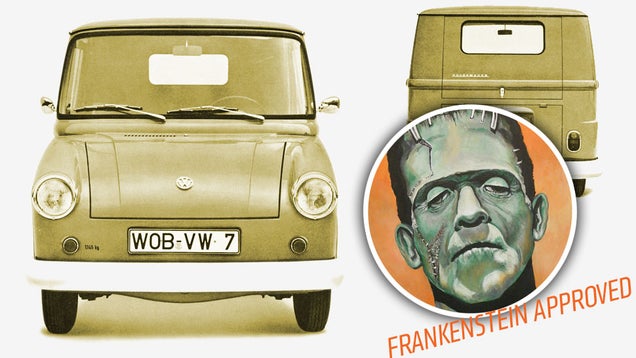
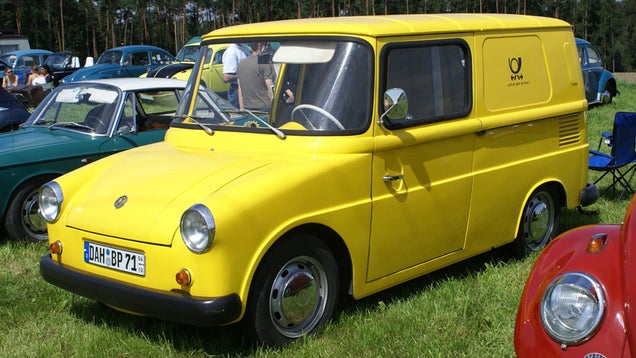
The car is the VW Type 147, known as the Fridolin, and it’s an unholy mash-up of four different kinds of VW.P

By ‘Frankenstein car,’ I mean that it’s a car that’s made up, primarily, out of bits of other cars, in the way that Dr.Frankenstein’s noble experiment in corpse-reanimation used a variety of body parts crudely stitched together to form one majestic whole. And, like all good unholy stitching-parts-together-to-make-a-monster projects, this one was done at the request of the postal service.P

The Finest Frankenstein Car Is The Fridolin

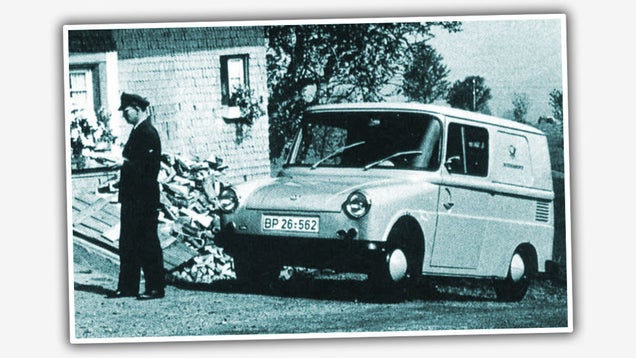
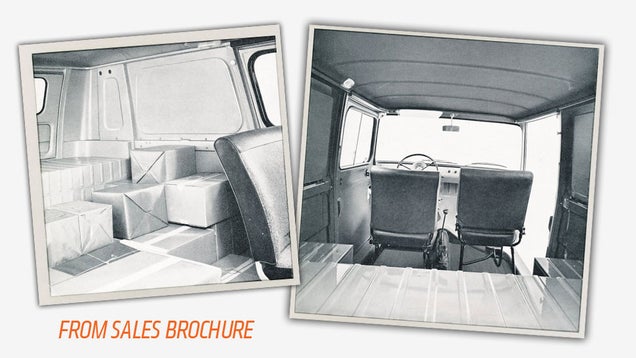
Well, specifically, the German Postal Service, or Deutsche Post. See, in the ’60s, the Deutsche Post was delivering mail in adorable but tiny Goggomobile Transporters. They wanted to have something a bit larger, and less likely to be stolen and enjoyed by a group of four to six determined toddlers. So they came up with a set of requirements, and approached their biggest car maker, Volkswagen.

The requirements list was really just a set of desired dimensions:

  • 2 m³ (71 cubic feet) storage compartment
  • Payload between 350 and 400 kilograms (772 to 882 pounds)
  • Length 3.750 mm (12.3 feet)
  • Width 1.440 mm (4.7 feet)
  • Height 1.700 mm (5.6 feet)

Oh, and it had to have two sliding doors. They didn’t specify, but I think they meant one on each side. So, what they’re looking for seems to be a smallish vehicle with a good amount of load space. Which makes perfect sense.

The Finest Frankenstein Car Is The Fridolin


This rounded bit right here under the windshield reminds me of the Fiat Multipla.

In the US, we used the very cube-like AM General Mail Jeep, and thanks to convergent evolution, VW’s solution wasn’t too different in overall shape: a tall cube with a stumpy hood. Under that stumpy hood, though, they differed a great deal, as the VW kept to the company’s DNA and housed a little trunk and gas tank, while the familiar 1200cc Type I engine was out back.

What makes the Fridolin interesting is, of course, the incredible parts-bin nature of it. Here’s essentially what made up a Fridolin:

• Type 14 Karmann-Ghia chassis (like Type I Beetle chassis, but wider)P

• Type 1 (Beetle) 1200cc engine and transmsissionP

• Type 2 (Microbus) Rear hatch, engine lid, taillights, and various other parts of the rear bodyP

• Type 3 (Fastback, Squareback) Headlight assemblies, basic hood design (not quite a cut-down Type 3 hood, but close) and all sorts of trim and parts P

… and, of course, wheels and hubcaps and instruments and all sorts of interior parts were from across the VW line.P

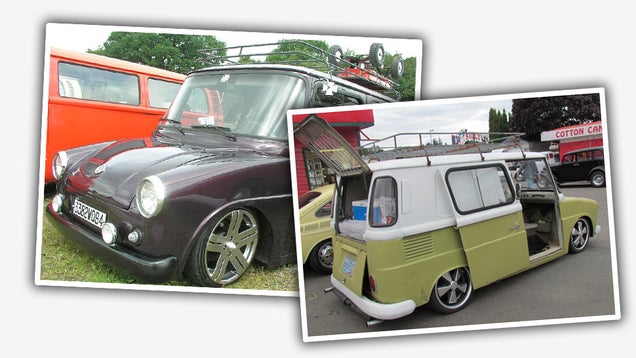
For something made from whatever VW had laying around, I think the end result is pretty charming, and it proved quite useful. The load area was large and easy to access, the extra little trunk in the front was surely appreciated by the German postmen (who, I imagine, filled it with their lunches of oversized pretzels, strings of sausages, and ornate beer steins), and the little trucklet proved useful enough that it was employed for ten years, 1964-1974, and over 6,000 of the little guys were made.2P


The Finest Frankenstein Car Is The Fridolin

The Swiss postal service ordered about 1200 of them as well, and specified some extra corner windows, which, of course, were taken from the 21-window Microbus. A few other companies ordered smaller quantities as well, including Lufthansa, who used them as field service cars.P

Why the Type 147 is called a “Fridolin” is a bit of a mystery. The name is sometimes used to refer to a little boy, and the proportions of the car can certainly suggest that association. Also, the name is used to refer to a rail motor-handcar, the MKB 52, which certainly does resemble it, and was VW-powered as well.P

The Finest Frankenstein Car Is The Fridolin

Today, Fridolins are pretty prized among VW geeks, and well restored ones are worth a good bit. There’s not many left, since as state-owned utility vehicles, they tended to be run into the ground, and nobody really paid much attention to them for years. This is one of those few VWs that only hardcore VW nerds know about, and that makes them pretty special. To certain groups, at least.P


Another Weird Air-Cooled VW You’ve Never Heard Of: Basistransporter


Another Weird Air-Cooled VW You've Never Heard Of: Basistransporter

http://jalopnik.com/another-weird-air-cooled-vw-youve-never-heard-of-basi-1335706069

You know that jerk at your local vinatge VW club? Here’s how to get him: ask what the first FWD air-cooled VW was. If he answers at all, it’ll probably be “VW Gol.”

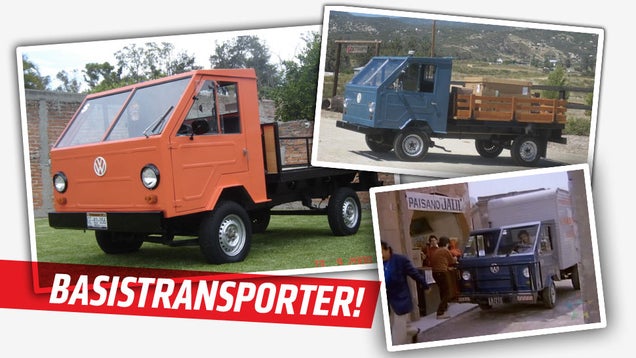
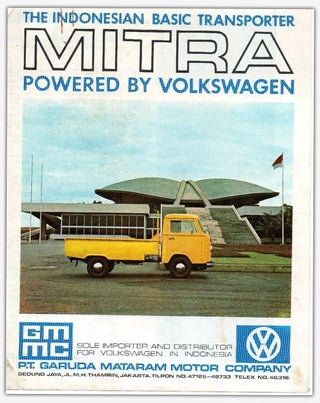
The real answer is the VW EA489 Basistransporter, also known in Mexico as the Hormiga, and in Finland as the Teijo (well, that one’s a close variant), and in Indonesia as the Mitra. That’s a lot of names for something that VW never sold in the developed world (well, and Finland), and that they made only a bit over 6,000 copies of from 1975-1979, which is minuscule in normal VW numbers.

Another Weird Air-Cooled VW You've Never Heard Of: Basistransporter

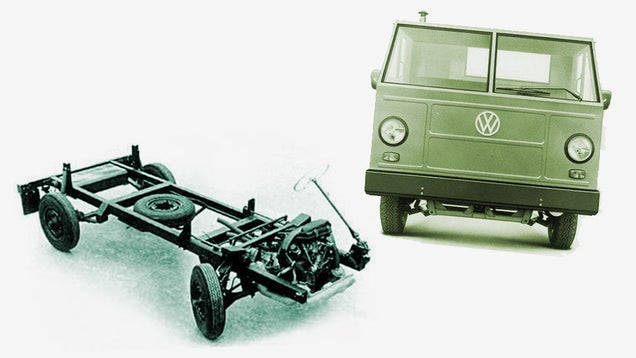
The Basistransporter was a VW experiment in making the most basic utility vehicle possible. And boy did they succeed. The chassis was a simple ladder-frame that mounted a normal 1600cc Type I VW flat-four up front, in a new location and orientation for that engine, with torsion bars up front and a solid, mideval era-cutting-edge beam axle at the rear.

The body was designed to be built, much like other projects like Citroën’s FAF, with no fancy presses, just flat, corrugated steel panels. The end result resembled a potting shed with headlights, but it did the job. Other variants, like Turkish-built ES489s and that Indonesian Mitra used modified VW Type II front panels and custom doors.

The Mexican Hormiga variant was probably the most successful of the bunch, with 3,600 copies sold, and you can still find them in use in Mexico today. They’re pretty slow and incredibly crude, but that’s exactly why these things are capable of living with vast amounts of neglect and abuse and living forever. Body damage can be fixed with plywood, mechanical parts are available all over, and you can even replace the glass with flat sheets you get at Home Depot.P

Another Weird Air-Cooled VW You've Never Heard Of: Basistransporter

You Won’t Believe How Far People Will Go To Save Early VW Buses!

http://jalopnik.com/you-wont-believe-how-far-people-will-go-to-save-early-1477256997

You Won't Believe How Far People Will Go To Save Early VW Buses

You wouldn’t save a car that’s been rotting for decades deep in a forest, frozen into ice and mud with no roads in sight as a way back to civilization. Well, these guys did, because the wreck in question is a 1951 Volkswagen Type 2 “Barndoor.” It only took a chainsaw and a helicopter.P

If somebody offers you an early VW bus in whatever condition at a reasonable price, take it. Shake hands, sign papers, just do it. These things are getting very rare and valuable.P

A few years ago, I’ve seen a video on Youtube in which some German VW fanatics airlifted a 1954 bus from the forest where it’s spent for the last thirty years. Chainsaw action, manual labour and a hired helicopter just to end up with an rusty, incomplete bus. Here’s that vide

<iframe width=”640″ height=”360″ src=”//www.youtube.com/embed/MOldGxyJEQ4?feature=player_embedded” frameborder=”0″ allowfullscreen></iframe>

Three years on, history repeats itself. It seems like Swedish forests are full of these things, as after seeing a 1951 (No. 20-011421) “Barndoor” (meaning it has the specific features of the first model year) being saved from the icy woods, another team went there to do the impossible.P

Reaching the abandoned wreck on foot cutting their way through the green, these guys pulled their project literally out of a frozen swamp. A helicopter was needed again, but this ’51 is on its way now to be more than roadworthy again.P

You Won't Believe How Far People Will Go To Save Early VW Buses