
VW Camper Van review: youtu.be/asIjAxNdwlU via @YouTube #vwt2oc @Volkst2oc
Category Archives: Uncategorized
Renting aVW camper van
Camping in a VW classic van
By Neil O’Sullivan
Production of V Dub bus finally ends next month, but rental companies are keeping the dream alive
 ©Heather O’SullivanNeil O’Sullivan with his son Sam, daughter Beth and ‘Wolverine’ at Harlyn Bay in Cornwall
Is November just about the worst time of year to make your first trip in a vintage VW camper? All week people have been making reassuring noises (“You will literally freeze/die,” my wife’s friend tells us). But I know we’re in trouble when the company that hires out the vans asks whether we’re sure we want to go through with it. The forecast is terrible, says Penny Scott, who owns O’Connors Campers in Okehampton, Devon.
Yet cold and rain aside, it seems a fitting moment to get to grips with the famous friendly-faced bus that started life as a goods van in postwar Germany, became a symbol of 1960s peace and love, and remains a must-have for serious surfers today. Next month, 64 years after it was unveiled at the 1949 Geneva Motor Show, the original VW Type 2 (also known as the Transporter, Kombi, Microbus or just camper) will retire. Changes to health and safety rules in Brazil – where the bus is still manufactured three decades after it stopped being made in Germany – have made further production impossible.
More
IN UK destinations
A significant chapter in motoring history is coming to a close. But there is still time to live the “V Dub dream”. The cult of the camper goes on in a booming “scene” of shows and events and, for the less committed, through hire companies such as O’Connors, whose colourful collection of retro buses appeals to those who like a bit of Cath Kidston with their counterculture. For a family man with a wife, two young children and no discernible camping expertise, this seems an appealing way to take to the open road. But is it really possible just to turn up, tune in and drop out in a camper for the weekend?
When we get to O’Connors, Penny says they are often amazed at how people arrive, “sometimes still wearing suits”, looking strung out. Yet after a few days driving around in Battenberg or Noddy Windsor (VW campers are pretty much required to have quirky names), these same uptight individuals return virtually unrecognisable – some are even wearing shorts.

We’ve chosen Wolverine, a 1974 four-berth powder-blue and white van with “bay” windscreen (until 1967 VW campers had split-screens) previously abandoned in a garage. Today it is immaculate, right down to checkerboard flooring and blue spotted curtains. Another bus, Uma, was being used as a log store when it was rescued and restored.
Romantic stories are a big part of the camper’s appeal. This year O’Connors has had 17 bookings for a combination of weddings and honeymoons, including the man who tracked down his father’s old “splitty” for his own daughter’s big day. When the unsuspecting grandad was reunited with his bus, he didn’t say a lot “but he spent a lot of time just sitting in it”.
The romance of driving Wolverine eludes me at first. It takes a quarter of an hour to find reverse gear and leave the car park in Okehampton and even longer to reach the main road – I miss the turnings and can’t face trying to reverse. But eventually we hit the A30 and pretty soon I am reaching speeds in excess of 39mph, swooping up and down the hills that lead from Devon into Cornwall. Padstow, about 60 miles west, is reached in a mere two hours, as darkness descends.
The genius of driving a tent on wheels is that there is no pitching to do. Plus at most campsites you can hook up to the mains and plug in a heater. Camping in November is not so much about letting the outside in as shutting it out, but hot chocolate and board games remain constants.
So, I ask the children, what do you think of living in a van then? My son says he’s surprised by how well it works, even though it’s 40 years old. My daughter, clambering round the top bunk in the pop-up roof, pauses to consider the majesty of sleeping under the stars, then says: “Feels a bit weird not having a telly.” As we join the Friday night throng at the Cornish Arms, I feel like we’re not quite living the dream yet – but at least I know how to reverse out of the car park.
 ©Heather O’Sullivan‘Wolverine’ at Harford Bridge campsite near Dartmoor
So where does the affection and fascination that continues to surround this vehicle come from? Partly it’s the look. “They’re a design classic,” says James Peene, group editor of VolksWorld and Camper & Bus magazines. “And they were really user-friendly.” But there’s also the thrill of driving what is, increasingly, a vintage motor. “You get into a different mindset,” says Peene. “Driving becomes more about the journey than the destination. Other VW owners wave or flash their lights as you drive towards each other. They usually stop when you’ve broken down on the side of the road or just come over to talk to you. You just don’t get that with any other make or type of car.”
The camper’s cultural heritage also plays a part. By the 1950s people across the western world were holidaying in camper vans of various types. On the US west coast, surfers discovered that VW’s campers were the ideal way to live by the beach. But by the 1960s and 1970s these disarming-looking buses began to go further afield than the seaside or the national park. Painted in flowers and peace symbols, campers blazed the hippy trail to far-off and far-out places such as Kathmandu. In the process they, too, became symbols – of peace, freedom and of a lifestyle that challenged the conventional suburban dream.
Is this really still a part of why people yearn to drive a VW bus? According to Peene, today’s would-be camperfans are more influenced by Jamie Oliver, the TV chef and camper enthusiast, than the Grateful Dead. “Seeing them in the media has made a lot of people think they’d like to get in on the action for themselves.”
It’s hard to tell what time it is when the cockerel starts crowing by Padstow Touring Park the next morning because it’s still pitch-black. But by 9.30am we’ve already taken in the first rainbows of the day at Harlyn Bay and arrived in the still-sleepy town centre as the shops are thinking about opening. After a breakfast of Cornish pasties, we head north 30 miles along the coast to Widemouth Bay, where we’ve been told you can pull right up to the beach.
This is the moment we have been waiting for. Sliding open the camper door, the children take kites on to the sand while we watch a handful of intrepid kitesurfers charging through wind and waves. Occasionally a car pulls up and another athletic young man dons a wetsuit. Meanwhile, I am doing the “V Dub” surfing thing in less ostentatious fashion: boiling water for a cup of tea. “Nice bus,” says one of the watching surfers, checking out Wolverine. He tells me he has just bought a camper van, but not a V Dub, as they’re not so cheap nowadays. “All part of the scene,” he observes, “aren’t they?”
I wish I could offer something insidery, about the “Westie” interior or how you can tell it’s a 1974 bus because the front indicators are back above the headlamps. Instead, I apologetically say, “I’ve just hired it for the weekend.” “Cool,” he says, but I’m not sure he means it any more.
We spend a couple of hours here, braving ice-creams and walking on the beach. It’s pretty idyllic and we’re getting into the swing of things. Alas, it’s soon time to hit the road again – campsites shut early this time of year.
In bright sunshine the next morning, we are better able to appreciate Harford Bridge holiday park, on the edge of Dartmoor National Park near Tavistock. The sky is cloudless, and the noise that last night sounded like a strong wind is actually the rushing of a river close by. There is no one near us – it occurs to me that this kind of tranquillity wouldn’t be so easy to come by in August. For the first time this weekend, eating al fresco seems plausible and we fry bacon on the van’s impressive mini gas cooker.
The cult of the camper is hotter than ever right now, according to aficionados. This is partly down to the ravers from the late-1980s VW scene growing older, having kids and swapping their Beetles for buses. Last year, more VW buses were imported into Britain than any other classic car. A van of Wolverine’s vintage in decent condition will cost between £10,000 and £20,000.
 A Samba – with 23 windows
Peene says the bubble is not about to burst. “The more people buy them, the more people see them on the road and want one of their own.” The holy grail of VW campers, a restored 23-window split-screen “Samba”, would now cost £50,000 to £60,000, he says. The Brazilian-built vans are slightly looked down on in the scene, he says, so the end of production there is unlikely to affect prices. Most UK buyers go for German-built Bays from the 1970s, often shipped in from the US.
“You’ve got a lot better than at the start, Daddy,” says my daughter as I grapple with the giant bus-like steering-wheel one last time. What’s more, the van has forced us to take it easier than we might otherwise have done. Scrap that busy itinerary you had planned: you’re never going to do half of it in a vintage camper. As we barrel across Dartmoor, my son up front next to me, peering out at wild scenery and down at drivers in sleek modern motors, an undeniable feeling of being on the open road stirs. If it wasn’t November, I could even see myself reaching for a pair of shorts.
——————————————-
Neil O’Sullivan was a guest of O’Connors Campers (www.oconnorscampers.co.uk). A long-weekend rental (Friday to Monday) costs from £350
——————————————-
When I’m 64: From postwar Germany to retirement in Brazil
 An early VW Type 2
1949 The Volkswagen Type 2 is unveiled at the Geneva Motor Show in November (Type 1 was the Beetle), writes Jocelyn Petrie. The Type 2 had been developed while VW was being run by the British military; control had been returned to the German authorities the previous month.
1950 Production begins at the Wolfsburg factory on March 6. The Type 2, also known as the Transporter, is a basic commercial van, with an aircooled engine at the rear and a split windscreen (hence the nickname “splitty”).
1951 Major Ivan Hirst, a British army officer who played a key role in reviving VW in the postwar years, commissions Westfalia, a coachbuilding company, to convert a Transporter so it can be used for camping. The result, with a cooker, sideboard and folding bench seat, was so successful that the company put it into production.
1953 VW Brazil is founded, quickly becoming the company’s largest foreign subsidiary.
1956 Westfalia sells its 1,000th camper van. Several other companies go on to create camping versions of the Type 2 – VW itself did not make a “camper van” with beds until the California was launched in 1988.
1962 The millionth Type 2 leaves the production line.
1963 Popularity spreads to the US, and Bob Dylan’s second album The Freewheelin’ Bob Dylan features a van on the cover. Later, fans of Grateful Dead start following tours in a camper van convoy.
1967 The “splitty” is superseded by the T2 version, which has a single “bay” windscreen.
1969 According to VW, sales are boosted by the appearance of the “Mystery Machine” van in the cartoon Scooby-Doo.
 The Microbus concept
1979 Production stops in Europe as a result of tighter safety regulations, and the classic “smiley-faced” T2 is superseded by the, squarer, more robust T3, nicknamed “the Wedge”. T2 assembly continues in Argentina, Brazil and Mexico.
2001 VW sets fans’ pulses racing by showing a futuristic reimagining of the T2, the Microbus concept car, at the North American motor show, but plans for it are cancelled in 2005.
2011 Early Type 2s are considered valuable classic vehicles. A 1963 Samba version is sold at auction in California for $198,000.
2013 When production ceases in Brazil on December 31, 6.23m of the T1 and T2 will have been built.
Dude, Where’s My Bus? Fast Times in the Iconic VW Van – The Daily Beast

Dude, Where’s My Bus? Fast Times in the Iconic VW Van
Volkswagen is ceasing production of the legendary hippie van at the end of the year, but Scott Jennings, whose restaurant owns 16 of them, says the stories of epic parties will never end.
So I hear they are stopping production of an all-time classic. Not only is this the end of an era, it’s the end of a counter-culture icon. More weed has been smoked, more babies have been conceived, and more fun has been had in the Volkswagen Bus than perhaps any vehicle ever made. When people see the Bus, it’s almost impossible not to smile. It brings them back to a simpler time of no-worries partying.

The Bus’s official name is the Type 2, having been derived from Volkswagen’s first model, the Type 1 Beetle. You might know it as the “hippie van,” as its associations with the ’60s are so strong. The first model of the Type 2 actually appeared in 1949—it’s been in constant production for 64 years. Unfortunately, the Bus’s cab-forward design puts the driver ahead of the front axle, which doesn’t meet safety requirements in almost every country. Germany stopped making it in 1979 and Mexico ceased production in 1994. The Volkswagen plant in Brazil is the last place on Earth still making a version of the VW camper van, but starting in 2014, all new cars in Brazil must have anti-lock brakes and air bags, and Volkswagen says it cannot adjust production to meet the law. As a result, the last Bus will roll off the factory line on Dec. 31.
I always thought it was an urban legend that the VW Bus is the most dangerous vehicle ever made. It’s not entirely true. It can’t be the most dangerous vehicle ever made—that’s the motorcycle. What’s next, are they going to strap an air bag to a motorcycle? We should be able to choose what kind of vehicle we drive, even if it comes from Brazil. I’ve been driving a VW Bus for the past 15 years, and—knock on wood—there haven’t been any physical damages. (But there may have been some mental damages.)
Some of the best stories are the breakdowns.
The first time I saw a VW Bus was when Jeff Spicoli (Sean Penn) rolled out of one in the movie Fast Times at Ridgemont High. I was hooked. I was in high school at the time, and for the people that saw the movie, they know the only thing cooler than that Bus was the pool scene with Phoebe Cates. Unfortunately, I didn’t have the money in high school to make my move on one.
Throughout the years, I couldn’t shake the allure of the Bus. Now we have a fleet of 16. I ended up starting a sub shop called the Cheba Hut “Toasted” Subs, and the camper van is our mascot. We actually have it written into the franchise agreement that it is mandatory to have a VW Bus (preferably between the years 1965-1972).
The thing with the VW Bus is that it is more than a vehicle. It is an experience, and often an inconvenient one. It lacks horsepower, so you can never go fast. The engine breaks down often, so you can never go far. But there is something about the faint smell of gas, the two foot shuffle between the sticking gas pedal and the slipping clutch, and the thrill of driving one of the most badass-looking vehicles ever made. For any other car, if it breaks down, you get pissed and want to sell the piece of shit. Not the VW Bus. Some of the best stories are the breakdowns. Not once did I have to wait more than 10 minutes for someone to stop and ask if I needed help. A majority of the interactions involved a gracious ride to town, and quite a few ended up at a party. But every single one started with, “Nice Bus, you need some help?” and was followed by, “I remember the time my Bus broke down.” The true perks of owning a Bus go much further than the mechanics. I must admit I have partaken in many of the adventures that go along with the privilege of driving a hippie camper van.
Over the past 15 years at the Cheba Hut, we have taken our well-used fleet of Buses to many music festivals—vending out of them, tailgating out of them, sleeping in them, partying in them, and, occasionally, getting busted in them. We even tried to recreate the classic scene in Fast Times where they roll out of the bus late to class with smoke pouring out of the sliding door. We have had them jumped by skateboarders, guys on BMX bikes, and a guy on a motorcycle. We even had a guy jump his bike over one into a pool of Kool-Aid.
It is getting harder and harder to find these classic icons, and they are getting more and more expensive. As that last VW Bus rolls off the production line in Brazil, enthusiasts around the world will keep the stories coming. It will cost us some money to try to purchase the very last one. But we must remember, a great story will always last longer than money.
vwt2ocadmin
06/10/2013
Brazilians say goodbye to beloved VW Kombi:… fb.me/6tvj05cDZ
vwt2ocadmin
06/10/2013
What BlackBerry Could Learn From the VW Camper :
Smartphone maker BlackBerry is on the ropes and we… fb.me/1zLA4Lmyz
vwt2ocadmin
04/10/2013
Rare Car: 1961 VW 1500 Convertible, only 11 produced. #vwt2oc. Now thats rare! pinterest.com/pin/4427602070…
vwt2ocadmin
11/09/2013
Reduced AA membership when you join VWT2OC!!: Another benefit of joining our club.
Reduced membership of the… fb.me/2ojfwsCX7
Reduced AA membership when you join VWT2OC!!
Another benefit of joining our club.
Reduced membership of the AA – typically 10% less than if you join via theAA.com!
Members are rewarded with enhanced breakdown benefits at renewal.
Join the club to access the unprotected post which contains the necessary passcode.
JOIN US
AA DISCOUNT DEAL FOR VWT2OC 27 Aug 2013

Volkswagen Kombi Van Ends Production in Brazil After 56-Year Run with limited edition
Volkswagen Kombi Van Ending Production in Brazil After 56-Year Run


It’s the end of yet another era. The iconic Volkswagen Kombi, better known to some as the Volkswagen Bus is going out of production in Brazil after a 56-year production run. As with the original Beetle, VW is sending the Bus out in style, with the limited-edition Volkswagen Kombi Last Edition, which is designed to celebrate the legendary vehicle’s history.

Limited to just 600 units, the VW Kombi Last Edition comes nostalgia-filled with a two-tone blue and white paint job, whitewall tires, and matching white wheel caps. Other unique Kombi Last Edition exterior touches include a blue upper grille and headlight trim, as well as “’56 anos – Kombi Last Edition” decals on the side and rear of the Bus.

Inside, the Volkswagen Kombi Last Edition gets blue and white vinyl upholstery and trim, and matching blue curtains on the side and rear windows. Each Kombi Last Edition is then topped off with a number identification plaque mounted on the dash.
Unlike the air-cooled Kombis of yesteryear, the Volkswagen Bus is going out of production with a water-cooled 77-hp 1.4-liter I-4 in its rear engine bay, paired with a four-speed manual. As we reported late last year, the VW Kombi is ending production due to more stringent Brazilian crash test regulations.
Source: Volkswagen of Brazil


Latest pictures of Hymer’s first Volkswagen campervan
Hymer has launched six new campervans one of which is built on the Volkswagen T5
The Hymer VW campervan – called the Cape Town – joins five other all-new campervans – the Rio, the Sydney, the Grand Canyon, the Yellowstone and the Serengeti – which are built on the Fiat Ducato.
The campers have been designed and built by a new division of Hymer – called HymerCar – that has been created to allow the manufacturer to get a foothold in the growing European campervan market.
The new VW HymerCar will come to the UK next year, although left-hand drive models are already available and British dealers have already placed orders.
The VW Cape Town features a double bed that can be easily made up and sits across the cabinetwork.
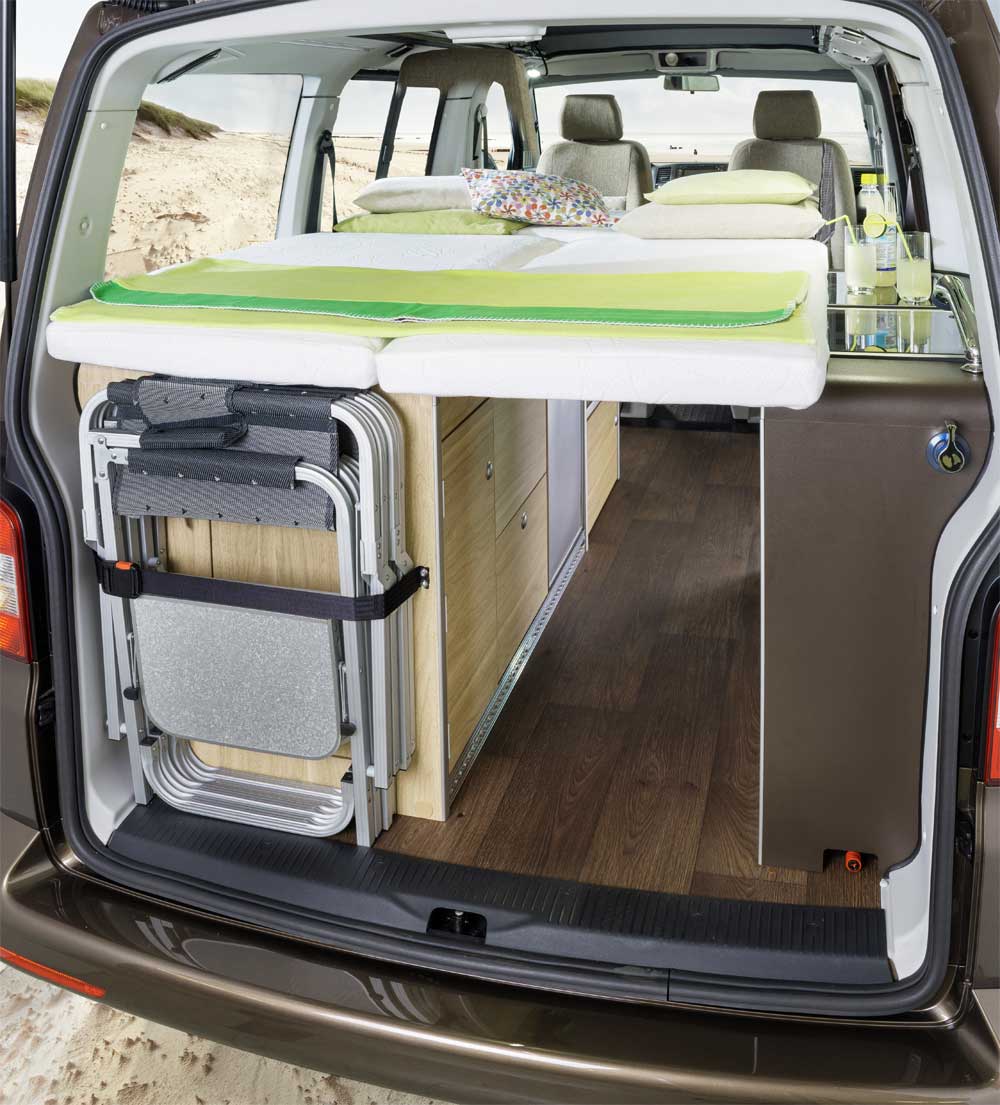
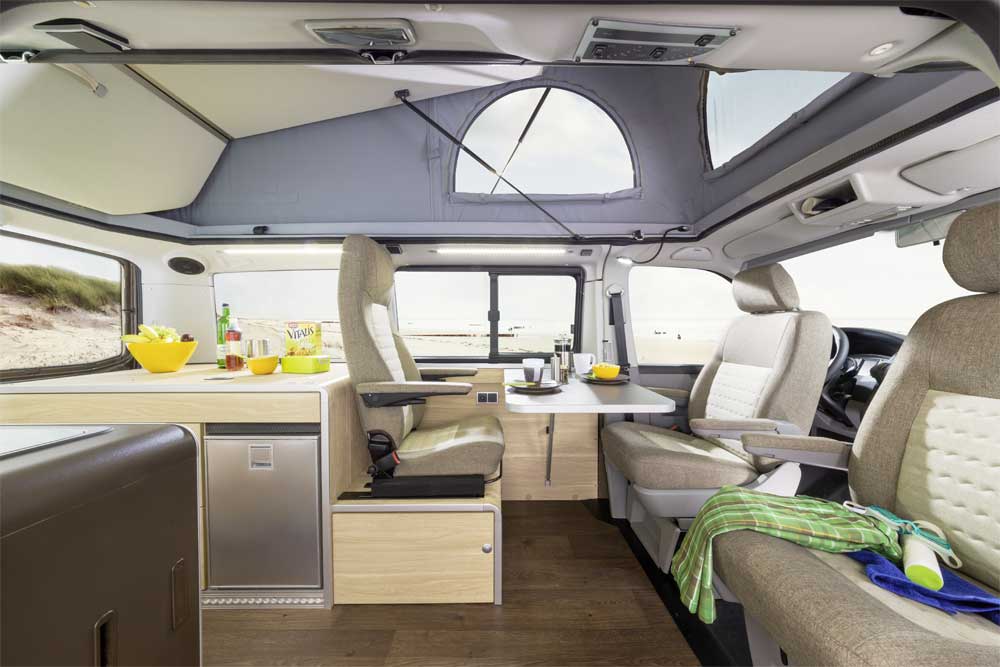
It also features a unique pop-top rising roof that has a double joint at the rear so it allows for walking room inside when the ‘upstairs’ bed is not in use.
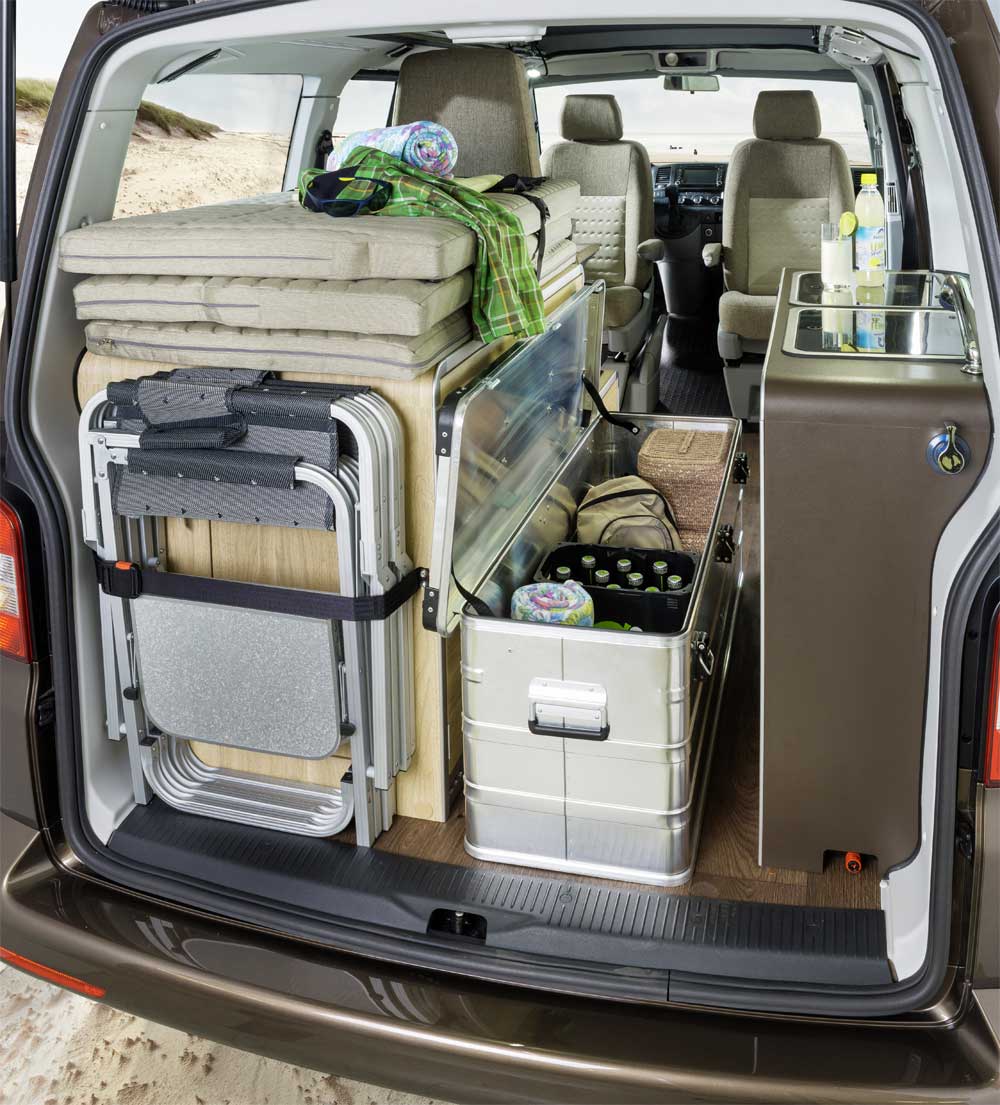
Hymer has also created a range of bespoke storage solutions for the new campervans
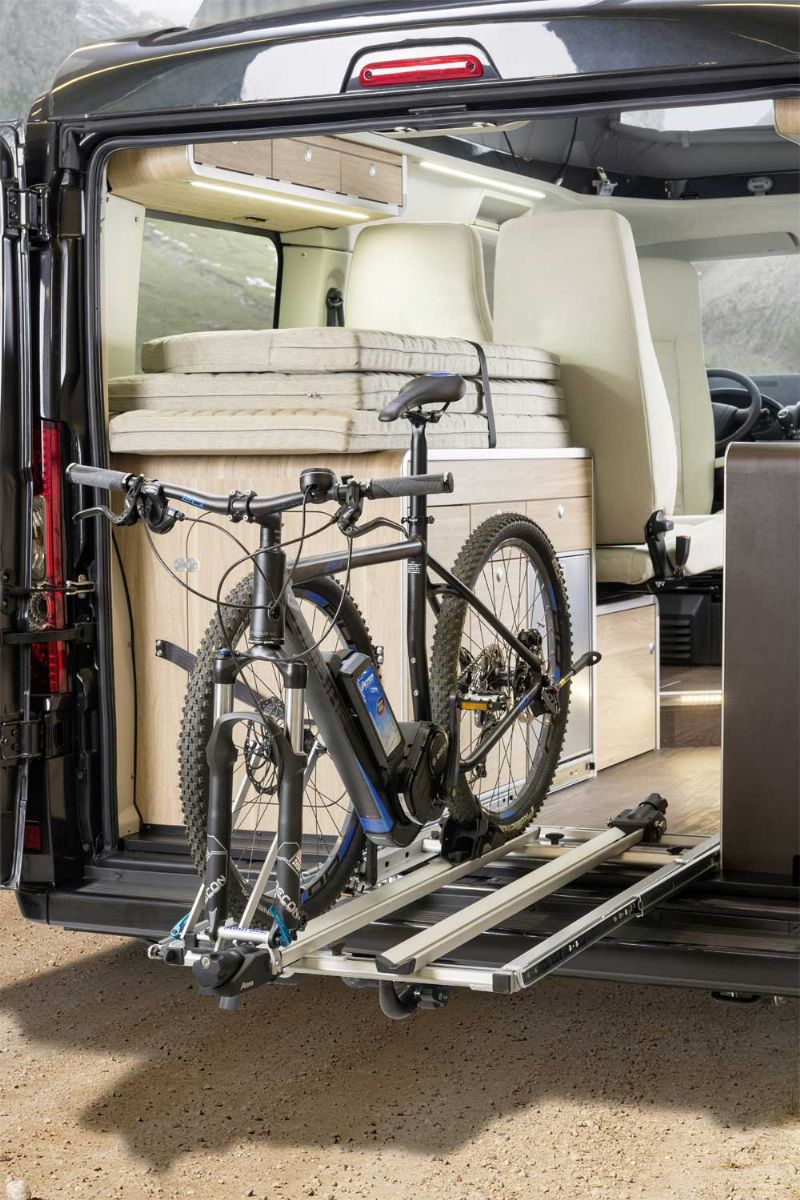
In addition, Hymer has created a clever bicycle-carrying system for the new VW campervan
The public will be able to view the new HymerCars, including the all-new VW Cape Town, at the October NEC motorhome show.
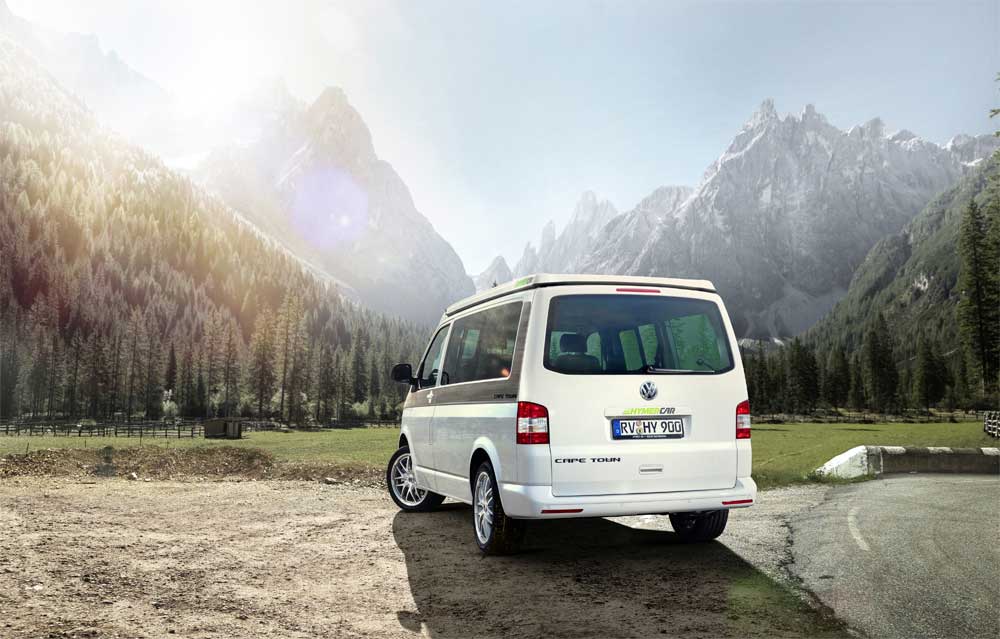
While prices have yet to be confirmed, expect the new VW Hymer to cost in excess of £50,000, which puts it in the same price range of the VW California.
You can read more about the new HymerCar campervans in the August issue of MMM magazine, which is on sale now. This issue also contains a FREE campervan supplement, which has details of campervans and manufacturers in the UK.
In addition, the September issue of MMM magazine, which goes on sale on 22 August, features an exclusive interview with the managing director of Hymer about his plans for tempting more British buyers through his dealers’ doors.
MMM is available as a digital magazine for just £2.95. Click here for more