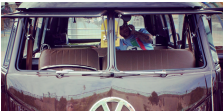

We appreciate that most of our members already own a VW Camper, but not all of our members have taken the plunge just yet and some may be looking for an additional project or a change of scenery.
Over the coming issues, we will take a look at the Volkswagen T2 in its various forms and provide some information as a buying guide. This issue, we start with the Split Screen.
Driving
An early VW such as a split will not be the best motorway vehicle, but if you don’t mind taking it easy there’s no reason why it shouldn’t be enjoyable. They can be like an “old bus” with their huge thin rimmed steering wheel and like a bus, don’t expect it to handle like a modern vehicle. It will be slow, use lots of fuel and will more than likely break down one day, but that’s the fun of VW Camper ownership (or so they say!).
Remember also that the split screen buses have smaller engines than the later models and will be less powerful than what you may be used to.
Bodywork
This is probably the most important part of any potential purchase. All classic VWs suffer terribly with rust and splits are no exception. If you can find one that is pretty original and rust free, you’re onto a winner!
But this is highly unlikely due to the age of the vehicles and that previously there wasn’t as much interest in these vans, meaning that a lot of them have been repaired badly. If possible, you want to avoid putting someone else’s shortcuts right, but chances are that most out there for sale has at least one questionable repair.
Rust can and will affect most areas of bodywork, especially the bottom 6 inches. This includes the lower front panel, outer sills, rear corners and wheel arches. Other hotspots are inner sills, chassis rails, outriggers and jacking points. It’s worth having a look at the floor, tailgate, bottom of doors and areas around window rubbers.
If you come across a van that you decide to take on, repair panels and sections are readily available from many specialists, but before handing over the cash, ask yourself whether you are ready for the commitment that project will require.
Engines
Air cooled engines can be reliable when properly looked after, but the stress put on them by the extra weight of a van, especially a fully fitted out camper, can eventually have an effect. As discussed in the last issue’s “Don’t Panic, Ask The Mechanic!” feature on oil temperature, oil is one of the most important
components of the engine, so it is good to see evidence that the oil has changed regularly.
Oil leaks are common, but some are trickier than others to repair and may require engine removal, something worth thinking about with any potential purchase.
Blue smoke when revved can indicate worn valve guides, lack of power could be a number of things but could be a compression problem. When the engine isn’t running, give the lower pulley a tug as excessive movement/end float could mean main bearing wear, resulting in an engine rebuild.
Running gear
Lots of Split Screen vans have been lowered. If done sympathetically it can improve handling. This is commonly done using adjusters on the front beam. If this has been carried out it is worth checking the quality of the welding and the adjuster itself. The rear is usually adjusted by turning the rear spring plates on the torsion beam or by using adjustable plates, these should also be checked for condition.
With regards to brakes, there’s not too much to worry about as everything can be replaced inexpensively, but to check things are set up ok, make sure the van pulls up in a straight line on a test drive.
Interior
There have been various companies offering camper conversions over the years and generally there’s little to choose between the different conversions. It’s worth viewing as many different vans as you can to see which internal layout works best for you. If you’re a purist, original condition will be important.
Otherwise, as long as items such as the sink and cooker are working, the rest of the interior cabinets and upholstery can be easily refurbished. Watch out for home conversions, items such as fridges need to have proper external ventilation, so make sure these are in place.
What to Pay
As you’re no doubt aware, all bus prices have gone through the roof in the last few years which is good news for owners, and rubbish for anyone interested in buying. Realistically, you are unlikely to find a split screen bus in any shape or form for anything less than £10,000 with the cheapest kombis likely to be
£15k-£20k. Half decent bona fide split campers that are ready to roll will be anything from £20,000 right up to £60,000-£70,000. Buying an import from the US or Australia might be the best option to avoid bodywork issues. The key will be to swot up on where they rust and go into the buying process with your eyes wide open. If you do buy a rusty project, rest assured if you are able to do the work yourself you’ll be sitting on a great investment. If you propose to pay someone else, bargain accordingly and bear in mind
there’s always going to be more rust than you first envisaged!
The opinions expressed here are the personal opinions of the author and do not necessarily represent the views and opinions of The Volkswagen Type 2 Owners Club.