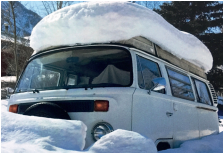
How to Keep You and Your Van Safe During The Winter
Those who are brave enough will “carry on camping” through the winter, here are some handy tips to keep you and your van safe and warm this winter.
Insulation
An important step to keeping your camper warm is to stop the heat escaping from the inside. This can be done by insulating the van as best you can. The windows are one of the first areas to look at when insulating as they will lose a substantial amount of heat and will also create condensation when sleeping and cooking inside the van.
To insulate the windows, there are ready made thermo-screens that can be purchased as a set for most variants of the T2. These are very effective and not too much hassle to fit and remove. The other (cheaper) option is to make your own thermo-screens, although these may not be as effective, depending on how far you go with them. I had planned to trial this using radiator foil insulation between the glass and curtains on the side windows, but unfortunately haven’t had a chance yet. If a member has successfully managed to make their own window insulation and wants to share this, please let us know!
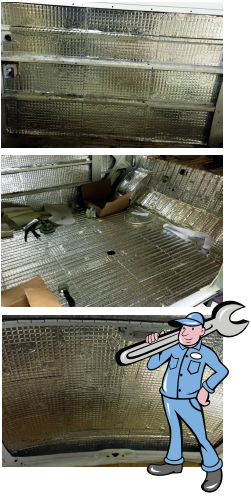
Other vital areas to insulate are the side panels, floor and roof. These are best done at anytime you may have the interior removed. There are several forms of insulation on the market and some can be used as sound deadening too, helping to stop panels from resonating and reducing road noise.
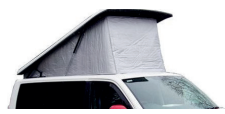
If you have a pop top roof, there are now pop top wraps available that insulate the material on the outside to stop heat escaping from this obvious weak spot. If you are able to, an easy way to keep the heat in is to keep your roof closed overnight!
Heating
Now you have insulated the van to keep the heat inside it, what ways are there to heat your van? VW campers are small spaces to heat so do not require systems such as those in larger motorhomes.
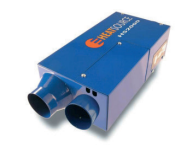
When camping, most people will have at least one fuel supply available to them, whether mains 230v from campsite hookups, or a gas supply for cooking. The gas can be used to supply a heater called
a Propex HeatSource. These can be fitted to all variants of T2, as long as you have a 12v supply. It is recommended that they are fitted by a professional. The Propex is very popular, offering high efficiency and flexibility with fitment location. The Propex HeatSource tends to retail between £450-£800 depending on the vehicle and the model.
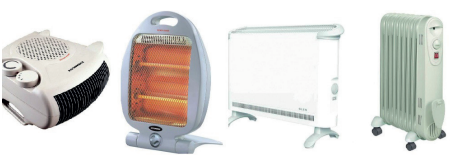
Cheaper alternatives are available, but these will require a 230v mains supply. Heating appliances such as fan heaters, halogen heaters, convector heaters and oil filled radiators are very good for heating the
small space inside your camper and are readily available at very competitive prices. Personally we have observed that fan heaters are good for a quick blast of heat, but the heat inside the camper tends to drop very quickly once turned off and we wouldn’t recommend using them overnight whilst asleep as they are
noisy (and we wouldn’t trust it!). Halogen heaters are good for heating awnings as they don’t physically get hot, but you need to be directly in front of these heaters to benefit from them, they don’t actually heat
the space around you, therefore again not recommended for overnight use.
Convector heaters are very efficient and cheap to buy. They will heat a small space effectively and can be set up with a thermostat, making these good for overnight use. However, if anything is placed on them,
there is a risk that the item will get incredibly hot, causing a fire risk. Oil filled radiators are essentially a convector heater, but they store heat in the oil making them very efficient and can also be used with a
thermostat. They can be used safely overnight and the other advantage of these heaters is that items of clothing such as socks can be left on them to warm up
The disadvantage of these heaters is that they are standalone and will take up additional space.
Driving
The following are some winter driving tips, however if in doubt, don’t go out! Watch weather reports prior to a long distance drive or before driving in isolated areas. Make sure your vehicle is in good operating condition. Keep at least half a tank of fuel in your vehicle at all times. Take a mobile phone in case of a
breakdown or becoming stranded. If you become stranded, stay with your vehicle as it provides temporary shelter and makes it easier for rescuers to locate you. Accelerate and decelerate slowly.
Accelerating slowly is the best method for regaining traction and avoiding skids. Don’t try to get moving in a hurry and take time to slow down.
Drive slowly. Everything takes longer on snow-covered roads, accelerating, stopping and turning!
Don’t stop if you can avoid it. There’s a big difference in the amount of inertia it takes to start moving from a full stop versus how much it takes to get moving while still rolling. If you can slow down enough to keep rolling until a traffic light changes, do it.
Don’t power up hills as this can start your wheels spinning. Try to get a little inertia going before you reach the hill and let that inertia carry you to the top.
Storing Your Camper
Those who prefer to store their camper through the winter can take extra measures to ensure their camper is hibernating well and is snuggly tucked away to keep it in a tip-top, reliable condition.
Those who prefer to store their camper through the winter can take extra measures to ensure their camper is hibernating well and is snuggly tucked away to keep it in a tip-top, reliable condition.
Inside:
All water should be drained from any storage tanks. If it freezes, it will expand and could split the tanks and/or any associated pipe work.
Any propane and butane gas tanks should be removed and stored in a safe location, such as a garage or workshop.
It’s a good idea to thoroughly clean the inside of your vehicle, paying particular attention to the kitchen or cooking area, food storage cupboards and fridge. Mould can grow, creating all manner of problems and rats and mice could be attracted to forgotten food items.
If possible, remove bedding or bedding covers for cleaning and then store indoors until next required.
Consider the use of mousetraps during the winter to stop vermin in their tracks. While your van hibernates, rats and mice can ruin that lovely interior of your camper van.
If you store your van inside, leave the windows open an inch to allow for air circulation, this should prevent damp and mould from developing.
If you store your van outside, when possible on those dry days, open the windows or leave the side door open for the same reasons. (Don’t forget to close them again and lock up!)
Outside:
Generally, it is advisable not to store your vehicle under a tarpaulin. They can stop the air from circulating around and can cause mould to develop inside the camper.
If you are desperate to use a tarpaulin, maybe create a frame to stretch it over to prevent it touching your camper and allowing air to circulate underneath.
The ideal place to leave your camper van is inside a covered building. However, this isn’t always practical or possible! Could you rent a building or borrow a friend’s garage for the winter?
Check the tyre pressures before storing and consider placing your camper van on axle stands to stop the tyres from deteriorating. This is pretty extreme though and would generally be for storage over long durations.
Moving parts such as door hinges and mechanical parts should be lubricated which will keep them moving and repel water.
Make sure your camper van is clean before you store it away as dirt retains moisture that can lead to rust.
Don’t be tempted to regularly start your engine which can deposit moisture in the engine oil and exhaust system. Start it at least once a month and ensure the engine runs for 30 minutes on idle and rev the
engine periodically.
Consider changing the oil just before you store your camper and if leaving the vehicle for an extended period of time, try and keep the main vehicle battery charged.