
With classic car vehicle theft on the rise classic car security systems are more important than ever.
The Mechanic has noticed some members asking some questions on the Club Facebook page about van security and what different people use, so has decided to cover some options for security to help members understand what products and services are available to keep your van as safe as possible.
Starting with the basics, your vans already has some built in security features from the factory that you should utilise and ensure are working effectively before even worrying about additional security measures.
Firstly check that all of the doors lock securely, including the tailgate or rear doors in later transporters. Full lock sets can be inexpensive and a doddle to fit, depending on the model. If the doors aren’t locking as expected, there is plenty of adjustability with the striker plates and latches, don’t be afraid to give it a go. All van windows, whether they are manual windup, electric windup, louver or sliding, should close fully and latch where possible. Anything short of this is an invite to an opportunistic thief.
All types of Transporter have a standard steering lock fitted which is activated by turning the steering wheel with the ignition key removed. This stops anyone from being able to turn the steering wheel and drive off without the ignition key. The ignition key and barrel is another standard security feature that should be present, older vehicles can be modified over the years to work in several ways depending on whether there have been problems in the past, but the ignition lock is something extremely basic that
you want to ensure is working.

Some other very basic things to consider are where you keep your van parked when not in use. Do you have a secure location such as a garage or a lockup? Do you use a driveway or park on the road? If you have a safer place available to you, use it. Now we have covered the basics, we can move on to additional security devices. There are various additional security devices available for vehicles and they can be mechanical or electrical and very affordable or expensive, depending on the product and the application.
A basic additional security device that many will have used at some point is the steering wheel lock/clamp. These are a mechanical device that fits to the steering wheel to prevent the wheel from being turned in the event of you vehicle being stolen. They vary heavily in application and price and the choice is a personal decision, but whatever you choose, a steering lock is a visual deterrent for potential thieves as well as a physical mechanical hindrance. I personally always use a steering lock, even if only leaving my van for a short period of time, it gives me peace of mind that it would take longer for someone to
steal my van with it fitted than it would without it, which should help to put off the opportunistic types. There are many different types of steering lock on the market, but “Stoplock” has been a well known name for years.
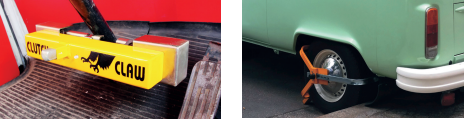
Another basic, internal fitting mechanical device is a pedal lock. These are not as common as steering locks as some people find them fiddly to fit and not as quick as simply fitting a steering lock. These are more common when leaving a van for a longer period of time and work by locking the three driving pedals together. These are more expensive than steering locks and obviously need to be tailored to the application.
There are several available on the market such as the “Safe-T Pedal” and “Clutch Claw” that we looked at in the last issue of Transporter Talk. These are less visual than a steering lock, but if someone gets into your van and sees one of these fitted, there’s a good chance they will decide to leave it or will need to make noise and spend time removing it in order to get your van easily.
That’s not all for internal mechanical locks as you can also buy devices that lock the gearstick to prevent any gear changes. On some VW models you can buy gear sticks and surrounds that have locks built in. Or you can find devices that lock the gearstick into position using a part of the interior, such as seats or steering wheels. Much like the steering wheel lock and pedal locks, these are a visual deterrent and will also slow down any thieves if they’re intent on taking your van.
Use of these mechanical devices may be time consuming, but can prove to be a very effective and wallet friendly means of adding security to your pride and joy. Another simple mechanical locking device is the
use of an external wheel clamp. If you use your van on a daily basis then this could prove to be an annoyance, but if you use the van on the odd occasion then using a wheel clamp is a cheap and effective means of additional security. There are various designs and styles of clamp available and they vary in price, but the main thing is that this extra security device is another problem that any would be thieves need to break through in order to get what they want.
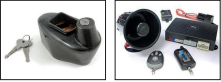
With mechanical devices covered, we can now move on to the electronic advancements that can help to keep your van in your hands. Some more modern vehicles already have electronic devices fitted as standard, but those with older transporter models will be lacking in this area. Immobilisers are fitted to modern vehicles as standard and are fitted to prevent the engine of a vehicle from running unless the correct key or chip is present. Those who have ever owned a car that has an aftermarket immobiliser with
problems will tell you how effective they are! Immobiliser kits can be purchased and DIY fitted fairly cheaply these days and there are companies out there that offer fitting and after sales services too.
As well as immobilisers, alarms are also now fitted to most modern vehicles and these can now be added to older vehicles as an additional security measure. Alarms can be much more complicated than immobiliser kits as there are more areas for problems, such as doors and movement sensors.
It is highly recommended that alarms are fitted by a qualified alarm fitter and ensure that you get some kind of warranty too.
Another excellent and worthy purchase in the category of electronic security devices is a GPS tracker.
A GPS tracker is a location device that will track your vehicle if it’s taken without your permission. This is the best way of locating your vehicle quickly to have it recovered and so reducing the chance of damage or loss. There are several types of GPS Tracker on the market, some are standalone devices that are
completely user operated and some utilise a subscription service where a company will monitor the tracker and can offer different levels of service. One such GPS Tracker service is Skytag, which has been covered elsewhere in this issue and now offers VWT2OC member’s a discount on their tracker service.
Other methods of additional security could include kill switches or battery isolators, these are cheap to acquire and simple to fit for most. These are best used when leaving the vehicle for longer periods and can be operated with a key. One problem with this is that if you have a vehicle tracker fitted, the battery isolator will likely disable the tracker.
Some other different and interesting ideas include fitting an electronic fuel pump that has a hidden switch somewhere inside the van, no fuel, no running engine! Or you could go very extreme and remove the steering wheel from your vehicle for longer periods of storage and would be much easier on earlier transporter models.
Others have suggested removing the rotor arm from the distributor as this disables the engines ignition system, but again is probably best used for longer periods of storage. To aid with tracking, some also suggest fitting a number plate to the roof so that the vehicle can be identified from above in the event of it being stolen. Hopefully some of these hints are useful to members for helping to think about security options, but remember that the most important thing is to keep the basics working. Without these, any other additional security device loses effectiveness.