Category Archives: Public

Anyone can see these items

Member’s Motor – Paul and Suzanne Dunstan – Lola

Sitting by the log burner one cold winter’s
eve, my wife Suzanne and I had a very
uncomfortable chat with decisions to be
made just after Christmas last year; Delilah
our 1970 Early Bay had become the problem
child all VW parents hope won’t happen. After
several years of happy times, forgetting all
the damp nights from the leaky pop top and
refusals to start after a weekend away, the
steady drip of cash to keep her going turned
into a deluge when we found out her engine
problems, whilst not terminal, were not good
news. Our soul searching kept coming around
to the inevitable; we’d have to let her go, listen
to our heads and not our hearts. We’d toyed
with the idea of getting a T4 a few years ago
but air-cooled was always the previous winner.
Who couldn’t fail to love the look, the sound
and the feel of the old Bays and Splitties?…
Only the hopeless romantics and the ones
with deep pockets!
Everything happened in a whirlwind shortly
after the New Year. Delilah advertised and sold
within a matter of days to a wonderful fellow
from Kent who would have the time and
expertise to return her to her glory and just
days after and several viewings of vans in all
conditions and specs, we picked up a T4 2.5TDi
SWB short nose, new conversion from Will at
Coast Campers near Bognor. Will had turned
around an extremely sound, low mileage work
van, fitted her out with a ¾ rock n roll bed,
swivelling double passenger seat, Dometic
twin burner and sink, 240v/12v fridge, split
charger, hook-up and plenty of storage by Evo.
Suzanne soon had her named Lola (think The
Kinks / trans-porter) and we began adding the
personal touches. We are Pagans and into our
Nordic heritage and culture, so we set about
sourcing decals to make Lola look that little bit
different to your average camper. It’s surprising
how much you can save by not looking at
camper/vehicle stickers and decals and look at
interior decorating instead!
We traded in our Skoda estate and downsized
to a Fiat 500 and I immediately began using
Lola as a day runner, something I’d never even
contemplated with Delilah, and as soon as the
weather picked up we started to get away for
weekends and day trips. So far, we’ve travelled
the Hampshire countryside, done Dorset and
Wiltshire, and sailed over the Solent for a long,
long weekend at the Isle of Wight Festival.
Our first weekend away was to Eype/West Bay
near Bridport; Highlands End campsite is on
the cliff tops and has excellent facilities to suit
all needs and pockets. We love Dorset as it’s so

close and it offers everything for a weekend as
relaxing or active as you’d want. We even took
Alfie the pug with us but the pesky rabbits
occupying the campsite on the clifftops kept
him alert all through the small hours with their
thumping and such. The luxury of having a
van that was guaranteed not to leak helped
with the relaxation but missed having a pop
top, meaning we had to bend double or kneel
down to cook. The ease of shifting a lever and
pulling out the bed was fantastic, especially
putting it away again in the morning rather
than the near IKEA building process we
needed with Delilah’s bed. I’d never got around
to finishing the hook up on Delilah either
so having power to the van took away that
modern day first world anxiety of smartphone
battery watching and also meant we could
take an electric kettle with us for that lifesaving
morning cuppa just that little bit quicker.
Soon after the Dorset trip, we were off to
the Stonehenge Camping site at Berwick
St. James. What a wonderful site, with big
communal fire pits, small but spotless facilities
and only a 4 mile walk from the hallowed
stones themselves. They even have VW only
pitches! We’re already looking to book there
for next year’s Summer Solstice so we can fully
appreciate the atmosphere and meet up with
other like-minded V-Dubbers.
6 months in and Lola has given us back our
freedom to get away when we want and know
we’ll get back without the worries we all have
when on the road in a 47-year-old air-cooled.
We just did the VDub at the Pub festival at
Wimborne with friends who hired a T6 camper
(we’re in the process of getting friends hooked
on campervans). It’s a great little family
friendly weekend and there was every type
of VW under the sun there. As always you get
to wander around the campsite and arena
being nosy and chatting to other owners
(shout out to Steve and Dee with Matilda)
comparing interiors, engines, colour schemes
and everything in-between and always come
away with ideas for the next addition or
modification. When time and money allows,
ours will be to get Lola a pop top to save our
aching backs and knees.
I know we’ve lost some of the kudos and
glamour we used to have but in their own way,
T4’s have character and can be whatever you
want. Reliable and versatile, Lola will hopefully
last as long as the originals with the same
amount of dedication and TLC and will give
us many years happy ‘vanning in the future.
We’ve already got the next weekend sorted,
Somerset with our latest campervan convert
friends (keep it quiet though, they’ve got a
Renault – we tried!

Camper hunting – Keith Bolton

It all probably began when I was at university
back in the seventies and my supervisor had
an early 60’s Split Screen in which he drove
most of his students on course visits. I was the
proud owner of a black and chrome Honda
SS50Z motorbike, which I would take along and I
used to race the VW back from our trips. The result
was always the same: I easily out-accelerated
it, but then on the long straights it gradually
hauled me in with its 60mph top speed. Once
it was ahead I hung on in the slipstream until
gradual asphyxiation forced me to fall back to
watch helplessly as the speeding Kombi slowly
slipped away, laying smoke like a WW2 destroyer.
It was in those days that a love was kindled, and
it lay unrequited through many dalliances with
big Citroens, British sports cars and assorted
Land Rovers.
Then a couple of years ago, my Defender betrayed
my trust one more time. I knew instinctively that
it was over and what I had to do and that was to
seek out my first love: My wife, Jenny (different
sort of first love) and I decided we would look for a
Camper. We knew we could offer it a good home
because we had already had a garage able to
accommodate the Defender. Jenny, for different
reasons, was equally keen to enjoy a break. Not
long ago I had to drive a borrowed and stricken
T25 at night in rural South Africa and met lots of
friendly people every time I stopped, the problem
being that I couldn’t persuade them ever to get
back out again! We knew we would forgive an
old Camper for breaking down because we knew
that’s what they do and also because everyone
says it’s how you make new friends.
So here are some experiences and tips we picked
up on the way. I hope not ALL of it is obvious.
First was to go to shows and flatter owners into
showing us round their Campers, asking to
see their best welding repairs. Then I turned to
websites where I found most on Car and Classic,
Auto Trader and eBay. Split Screens were out of
range, so as is so often the case, I went for a younger
model and was easily seduced by the softer lines
and less expensive tastes of Bays, especially early
ones. So began the long phone-calls and longer,
fruitless trips from which, to summarise, I learnt
to be very suspicious of: anything selling near a
canal, anyone poor at maths or grammar (body
110%, drives excellent, etc.), anything just painted,
anything wet and trader jargon (got to be right,
good clean motor, first to see will buy, etc).
Now for some hopefully practical tips, especially if
like me, you are not mechanically talented :

  1. Find a local specialist you can trust. I was
    extremely lucky to come across Jez and Lou
    at Dubtricks near my home in Harrogate, who
    actually spent ages humouring me and looking
    at photos of possible purchases which I took
    to show them, even though I wasn’t even a
    customer. They were just really prepared to take
    an interest and offer advice – though I suppose
    they might have reasoned that if I turned
    up one day with a basket-case, I might try to
    persuade them to work on it!
  2. Best tip – Take a camera with a powerful flash
    and photograph every inch of the underside of
    as possible. Holes appear through Waxoyl as if
    by magic when you get the pictures onto your
    computer and I could easily have bought a
    lovely looking late Bay from its confident owner
    if my photos hadn’t shown it to have a chassis
    with a LOT of extra ventilation – holes show
    as jet black against the reflected wax surface
    and weld lines show up like a relief map of the
    Yorkshire Dales.
  3. Take a WEAK magnet, like a fridge magnet. A
    professional-looking heavy magnet has expert
    pose value but it’s more like a metal detector
    and will find metal deep beneath, whereas a
    fridge magnet will fall off if there is filler under
    the glossy paint. Also take a powerful led torch.
    Used at an angle, paint texture changes
    and panel ripples show immediately.
  1. VW in the sixties and seventies had OCD and
    plastered their vehicles with ID plates. The
    Camper we bought has to date revealed plates
    next to the windscreen, behind the driver’s seat
    and deep under the carbon on the floor of the
    engine bay. It is good if these match and even
    better if you check it all out on the internet from
    the m-plate codes behind the driver’s seat (on
    our U.S.A. import). It is also fun because of what
    else you find. I dug up from under the front
    seats an anti-Vietnam war badge, something
    to do with a rabies clinic, a strange-looking
    cigarette end and a scary looking dead spider.
  2. Documents – Ideally import documents and UK
    log book which all match up. Historic vehicle
    status is great for forty year-olds and apart from
    free road tax you should still be allowed into
    London freely once new emission zone rules
    come into force in 2020. This could spread to
    other cities, so it’s a thought.
  3. Choose your van based on the seller and where
    the vehicle lives, as well as the Camper itself.
    Ours had lived in a big garage in a big house
    in the country with a Porsche and the owner’s
    kids all loved it, so maximum points there. I
    should add that my wife does say I am easily
    fooled!
  4. Beware the prices of spares. Ours had a broken
    jalousie window from a break-in attempt and
    it took me six months to find another and
    that basic-looking little Westy folding table
    top will set you back around £200 on eBay in
    mint condition. I thought I might need a new
    front-hinged roof as mine was warped into a
    pagoda impersonation (I wondered at first if
    it was a rare Japanese import) and they seem
    totally unavailable. Luckily Jez and Lou with
    a combination of a super hot day, probable
    extensive sunbathing lying on top of the roof,
    lots of leverage and remarkable skill, have
    returned it to shape without it cracking. I still
    don’t know how they did that, but it saved me
    over £2000 on a non-original replacement.
  5. In my view, don’t worry about left-hand drive or
    right-hand drive. There seems to be a premium
    for right-hand, but you are never remotely
    going to overtake anyone so it’s just not an
    issue. I’m OK with my German VW having
    German left-hand drive (OK it’s American, but
    same point, sort of).
  6. Lastly, to come back to the beginning, it’s really
    all about rust. European vans will probably have
    been restored, but a recent paint job will stop
    you knowing how well, despite photos – I am
    a photographer and can make ANYTHING look
    good! USAs, South Africans and Australians
    may be rust free, but may not if they lived near
    the coasts (most South African ones) or in salty
    winter cities (lots of USA ones). Conversely,
    European interiors are more likely to be in good
    condition, but at least you can readily see if the
    hot climate ones have baked themselves to
    biscuits and dust.
    So, after it all, we have a lovely Early Bay Westfalia
    Campmobile, with an original interior in amazing
    condition. It has never had any welding and it’s
    recently been to Dubtricks for a new engine,
    clutch, dynamo (though it’s ended up with an
    alternator as the Hella recon dynamo was faulty),
    replacement fuel lines, rewires to make it less likely
    to immolate itself and some UK headlights (despite
    passing its last mot with USA lights!) The thing
    is all this is incidental to having good bodywork
    and a good interior, everything mechanical can
    be fixed and there are clearly specialists out there
    who are enthusiastic, expert and a pleasure to
    work with. There are also excellent parts suppliers,
    such as NLA, Just Kampers and VW Heritage with
    prices for moving bits reasonable, far less than
    for modern vehicles, though if anyone knows
    of a LHD early bay steering box for less than the
    average mortgage, do please let me know! We
    can’t wait to get it back on the road.

Member’s Motor – Ian Crawford

One Careful Owner For 44 Years!
Continuing the new addition to Transporter Talk magazine from the last issue, the second instalment features Club member Ian Crawford’s van “OTK 666J”.
OTK 666J is a ‘71 Bay Window, Danbury conversion with a tin top roof.

Ian bought his camper in 1972 with 9,381 miles on the speedometer for £1,270 and has a current agreed value of £14,000, not a bad investment! The speedometer now reads 92,249 miles, meaning that in 44 years of ownership Ian has covered an impressive 82,868 miles. Ian’s camper has been garaged all of its life and every winter it is “Put to Bed” and then emerges again in April. Maybe this is how he has managed to keep the bodywork and paint completely original! The paint has never been touched up and there is no known rust. All door and window seals are also original, apart from the Windscreen and Tailgate seals as these were replaced when new glass had to be fitted
due to vandals throwing bricks! Ian’s secret to keeping the rubbers soft and pliable is Talcum Powder (don’t tell everyone!)


The 1600 AD Twin Port engine is still the original that was fitted at build and it has seen
some work carried out over the years. In 2000, Ian decided to fit a re-conditioned 34 PICT 3 Carburettor as it would have fitted originally and what a difference this made to the running of the engine, starting first time, every time! The first major service that the engine received was in 2001 at 60,547 miles. This service consisted of a top end overhaul with new valves, guides, push rod tubes, flywheel oil seal and a new clutch. Work was carried out by F Tuthill of Wardington.

In 2003, OTK 666J was back to F Tuthill for more work. This time around work included replacement of all fuel lines due to petrol smell when driving (always worth doing), a new clutch return spring, brake fluid and another flywheel oil seal. The engine was also treated to some fresh Fully Synthetic 20W60 oil.
Lastly, despite all of Ian’s efforts with the previous work carried out, in 2014 the engine
was out and taken apart for all internal bearings to be replaced. Once again, this work was completed by F Tuthill.
The interior is that of an original Danbury, but over the years Ian has tailored the layout to suit his own needs. These personal touches include a gas fridge, 2 ring gas cooker, water supply using a 12v submersible pump, a porta-potti and a 240v inverter for using a razor (no electric hook-up). As well as these customisations, Ian also designed and fitted his own IR Beam security system and in 2001 he refreshed the interior with some new cushions and curtains from Individual Interiors of Upton-upon-Severn.


It is clear to see that Ian has looked after his camper during the 44 years of ownership and his efforts were recognised in 2004 when it was voted “Van Of The Year” by members of The Volkswagen Type 2 Owners Club. Well done Ian, we hope you have many more happy years of T2 ownership.


With all work completed, we have had another excellent summer of camping and looking forward to a winter where the work required on Bluebell is reduced somewhat!
Despite all the hard work and effort, we wouldn’t change our campervan and the memories we have with her.
Here’s to more memory making and we wish our members happy memories in their vans too

The Mechanic – Engine Bay Fire Suppressors

With the summer holidays looming and
everybody planning their travels and holidays,
have you planned your maintenance and
checks of your VW in as much detail? It is
very important to keep your van maintained
properly, but with the hotter weather and
longer than usual journeys; even the most
well maintained engines can suffer problems,
such as perished or split fuel hoses. Something
such as a split fuel hose could mean really
bad news for classic (or even modern)
VW camper owners.
Every summer there are reports on social media
of at least one classic VW that has caught fire
and been lost. Although good maintenance
and preparation should prevent this, there is
always that small chance and a fire suppression
system will provide extra insurance against
losing your van to a fire.


Fire suppression systems are now readily
available and vary in function and cost.
There are manual systems that operate using a
lever and cable to activate the suppressor and
there are also automatic systems. Automatic
systems are preferential as they require no
input from the driver to activate.
Within the automatic suppressor range there
are two main systems that prove to be the
most popular.


The first one is a cylinder (much like a fire
extinguisher) that is mounted in the centre
of the engine bay over the engine and if a
fire occurs in the engine bay, the vial over the
nozzle melts, releasing a gas agent at 240 psi.
The nozzle is designed to ensure 360° dispersal,
meaning that the gas will completely fill the
engine bay. The gas is released at -19°C so will
cool down the engine bay helping to prevent
any re-ignition of petrol vapour. This system is a
small scale version of what is used within oil rigs.

The second automatic system is also a cylinder,
but rather than mounting the cylinder directly
over the engine, the cylinder is mounted
within the engine bay (usually) but out of the
way, (usually the left rear side of the engine
bay is most spacious). This system uses a linear
detection tubing which is installed throughout
the engine compartment. This tubing can not
only quickly and accurately detect a fire but
also extinguish it before it can damage adjacent
components. The tubing is connected to the
cylinder valve and charged with nitrogen or
compressed air. This pressure is utilised to hold
back the extinguishing powder in the cylinder.
Should a high temperature or fire occur, the
pressurised tubing will burst and the powder
will be deployed from the burst hole directly
onto the fire.
Both systems are fully automatic and come
with a full fitting kit.
Fitting is relatively simple and requires no
wiring or electrical input.
The first system with the 360° dispersal nozzle
can be purchased for approximately £60-
£100 and the second system that utilizes the
linear detection tubing can be purchased for
approximately £180-£250.
The design is personal choice and we would
not merit one over the other, but The Mechanic
has had experience of fitting the second system
and found it simple

The next club magazine is on its way

The next edition of the club magazine has been finished by our Editors and looks fantastic. It should be arriving through your door soon! If you are enjoying the club magazine and have a story about a trip, an upgrade, a restoration or just a tip, send a contribution to our Editor at editor@vwt2oc.co.uk.

Member’s Motor – Glenn George – Mavis

In December 2016, Club member Glenn George from
Dartmouth, Devon, alerted us to the fact that his
trusty 1973 Bay Window Devon camper “Mavis”
had been used as a getaway vehicle during the
heist of a security van during a Pirate Festival! This
was not the usual getaway that Glenn was used
to; he preferred the kind that involved camping!
However there was no need for alarm as “Mavis”
was used for filming an episode of BBC1’s
“The Coroner”, now in its second series and
with an episode titled “Pieces of Eight”, “Mavis”
provided the perfect cover for a robbery during
Lighthaven’s Pirate Festival and Glenn has given
an account of his experience below.
It started with a phone call from Adam at AJs
VW in Paignton (where Mavis has been serviced
for 43 years), Adam told me that he had been
asked if any of his customers had an old camper
and were willing to take a couple of days out for
filming in and around Dartmouth. As I work just
a few miles over the river in Brixham I thought
this sounded like an interesting proposition so I
agreed. The next few weeks I spent speculating
what would be involved, as it is BBC policy to not
give too much away. I asked around if anyone
knew of this “Coroner” series, as I must admit I
hadn’t heard of it myself

When the day finally arrived I headed off to
Bantham and was quite impressed with the
military precision that had gone into the
planning of the day. I was sent a list with details
of all 70+ people and where and when they all
had to be. I arrived at 9am and found an assistant
Director who fetched a couple of wardrobe
assistants. I got a bit nervous at this point, but
it wasn’t me they were going to dress up, it was
Mavis! At this point I was concerned with what
they might do to her, but they assured me that
they would clean her up afterwards. She was to
be dressed as a Pirate Van, she looked a bit funny
but they were very gentle.

I was asked to drive Mavis down a very steep hill
to a small sandy cove where there is a beautiful
view of the river and an old boat house. “Drive her
on to the sand a bit” I was told, whilst surveying
the green tinged last few cobbles of the socalled road, I didn’t think this was the best idea
but was persuaded by the crew. So I drove half
on and then reversed a bit to see if she’d get off
again and she wasn’t going anywhere, well and
truly stuck! This was when I realised how friendly
everyone was as they all chipped in with pushing
and pulling to get Mavis back on to firmer
ground. During the rest of the day’s shoot, Mavis
only moved about 3 feet and it took till gone
6pm to wrap the scene which lasts about 90secs
on screen! Once this shoot was finished, we had
to negotiate the very steep hill again, this proved
to be a challenging ascent which was assisted by
the 4×4 Mule usually used to transport lighting
rigs and camera equipment.

The second day of filming was eventful in a
different way, no steep slippery slopes but
filming in the centre of Dartmouth. It was here
that I learnt Mavis’ role was a getaway vehicle and
I also learnt the sense of humour underpinning
the show! When I was told that they would
hi-jack a security van and bundle someone into
the back of Mavis I laughed because I know
that all things T2 happen at their own usual
relaxed pace.
The first take was in progress when the “Pirate”
tried to quickly open the door, he used a few
nautical phrases that were heard echoing around
the Dart Valley. I offered a solution for myself to
crouch inside the van and persuade the door
to open with my foot as the handle was pulled
down. The director agreed to try this and it was a
successful 2nd take.
Our first experience with the Beeb was very
interesting and fun. I’m not sure we get to see
Mavis at her best, or any of the really fun scenes,
but I will keep my eye out for the out-take shows!

Type 2 T1 Split Screen Buying Guide

We appreciate that most of our members already own a VW Camper, but not all of our members have taken the plunge just yet and some may be looking for an additional project or a change of scenery.
Over the coming issues, we will take a look at the Volkswagen T2 in its various forms and provide some information as a buying guide. This issue, we start with the Split Screen.

Driving
An early VW such as a split will not be the best motorway vehicle, but if you don’t mind taking it easy there’s no reason why it shouldn’t be enjoyable. They can be like an “old bus” with their huge thin rimmed steering wheel and like a bus, don’t expect it to handle like a modern vehicle. It will be slow, use lots of fuel and will more than likely break down one day, but that’s the fun of VW Camper ownership (or so they say!).
Remember also that the split screen buses have smaller engines than the later models and will be less powerful than what you may be used to.

Bodywork
This is probably the most important part of any potential purchase. All classic VWs suffer terribly with rust and splits are no exception. If you can find one that is pretty original and rust free, you’re onto a winner!
But this is highly unlikely due to the age of the vehicles and that previously there wasn’t as much interest in these vans, meaning that a lot of them have been repaired badly. If possible, you want to avoid putting someone else’s shortcuts right, but chances are that most out there for sale has at least one questionable repair.
Rust can and will affect most areas of bodywork, especially the bottom 6 inches. This includes the lower front panel, outer sills, rear corners and wheel arches. Other hotspots are inner sills, chassis rails, outriggers and jacking points. It’s worth having a look at the floor, tailgate, bottom of doors and areas around window rubbers.
If you come across a van that you decide to take on, repair panels and sections are readily available from many specialists, but before handing over the cash, ask yourself whether you are ready for the commitment that project will require.

Engines
Air cooled engines can be reliable when properly looked after, but the stress put on them by the extra weight of a van, especially a fully fitted out camper, can eventually have an effect. As discussed in the last issue’s “Don’t Panic, Ask The Mechanic!” feature on oil temperature, oil is one of the most important
components of the engine, so it is good to see evidence that the oil has changed regularly.
Oil leaks are common, but some are trickier than others to repair and may require engine removal, something worth thinking about with any potential purchase.
Blue smoke when revved can indicate worn valve guides, lack of power could be a number of things but could be a compression problem. When the engine isn’t running, give the lower pulley a tug as excessive movement/end float could mean main bearing wear, resulting in an engine rebuild.

Running gear
Lots of Split Screen vans have been lowered. If done sympathetically it can improve handling. This is commonly done using adjusters on the front beam. If this has been carried out it is worth checking the quality of the welding and the adjuster itself. The rear is usually adjusted by turning the rear spring plates on the torsion beam or by using adjustable plates, these should also be checked for condition.
With regards to brakes, there’s not too much to worry about as everything can be replaced inexpensively, but to check things are set up ok, make sure the van pulls up in a straight line on a test drive.

Interior
There have been various companies offering camper conversions over the years and generally there’s little to choose between the different conversions. It’s worth viewing as many different vans as you can to see which internal layout works best for you. If you’re a purist, original condition will be important.
Otherwise, as long as items such as the sink and cooker are working, the rest of the interior cabinets and upholstery can be easily refurbished. Watch out for home conversions, items such as fridges need to have proper external ventilation, so make sure these are in place.

What to Pay
As you’re no doubt aware, all bus prices have gone through the roof in the last few years which is good news for owners, and rubbish for anyone interested in buying. Realistically, you are unlikely to find a split screen bus in any shape or form for anything less than £10,000 with the cheapest kombis likely to be
£15k-£20k. Half decent bona fide split campers that are ready to roll will be anything from £20,000 right up to £60,000-£70,000. Buying an import from the US or Australia might be the best option to avoid bodywork issues. The key will be to swot up on where they rust and go into the buying process with your eyes wide open. If you do buy a rusty project, rest assured if you are able to do the work yourself you’ll be sitting on a great investment. If you propose to pay someone else, bargain accordingly and bear in mind
there’s always going to be more rust than you first envisaged!

The opinions expressed here are the personal opinions of the author and do not necessarily represent the views and opinions of The Volkswagen Type 2 Owners Club.

Ask The Mechanic – Oil

Oil is one of the most important components of your engine. Without oil, an engine will overheat and fail. Many Dubbers keep a close eye on oil levels and top up as required, but is this enough? Keeping the oil in your engine at optimum temperature is as important as maintaining the correct level. Monitoring the oil temperature in your classic VW has always been tricky and normally requires the fitment of an aftermarket system that can look out of place, be challenging to install and leave a large dent in your wallet.
However, there is a simple yet very clever product called “Save My Bug” that can help you to monitor the oil temperature without breaking the bank.

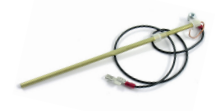
“Save My Bug” is an oil temperature dipstick that replaces your original dipstick and connects to the oil pressure switch with an 18” wire included in the kit, allowing you to monitor the engine oil temperature without the use of an aftermarket gauge. The oil light on your dash will now not only operate as an oil pressure warning light, but will also become an oil temperature warning. In normal conditions the light will remain off, if the engine oil temperature starts to get too hot it will flash, if the light comes on steady, the engine temperature is excessively hot (or there is an oil pressure problem) and you should pull over and stop the engine immediately.
This has made keeping an eye on oil temperature whilst driving a doddle and the installation takes less than 10 minutes for all levels of ability.
It is available for both the Type-1 engine and Type-4 engine from most well known air-cooled VW specialists for around £30-£40 depending on application.

Member’s Motor – Helen and Dave Salisbury

My wife and I had always wanted a Type 2 Bay after spending a weekend in Newquay in 1993, we didn’t know it at the time, but the Run To The Sun festival was on and after spending the weekend watching Campervans and Beetles drive around we had been bitten by the VW bug. However, still being an apprentice and being on apprentice wages there wasn’t much chance.


Fast forward 7 years to November 2000, I had heard about a van from a lady that I worked with and she told me that her husband who was a gardener, had spotted it in a barn at a large house in the Cotswolds that he had been working at. When the gardener asked about it, the owner told him that it had been sat there for 2 years and that they wanted to sell it. When I heard about it, I rang the owners and arranged to go and see it.


It was poking out of the barn with one wheel arch split through with rust and hanging off, a damp fusty smell inside of it, some of the brakes were seized, the engine was running on 2 cylinders, there was various rust holes in all the usual places and it generally looked very sorry for itself. The owner agreed to get it taken to a local garage on a trailer to let them have a look and give me an idea of the work required to get an MOT pass on it. After looking at the fail MOT sheet, we agreed a price and the van came home with us.


It was placed on my in-laws’ drive and work started right away. I spent most of the weekends that winter welding and replacing parts with a view to getting the van ready for a trip to Cornwall the following Easter. After lots of cold, hard work, 2 weeks before Easter we got our MOT Pass certificate and had a great first trip.

The Mechanic – Brakes

This issue takes a look at a submission from club
member Ian Crawford, who had a problem
with his brakes at MOT time, something we all
want to avoid!
Having owned my Type 2 for 43 years, I have
never had an MOT failure, until September
2015.
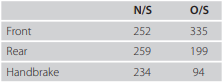
If failed on the brakes being “unequal” from the
N/S readings compared to the O/S readings
when tested on the rolling road.


The tester said I had 10 days in which to get
the problem sorted and return for a free retest.
I immediately drove to the garage I have used
for 43 years (Francis Tuthill), to see if he could
resolve the problem for me within the 10 day
window.
I showed Francis the above figures and his
immediate response was to say “you probably
don’t use your brakes all that much. I’ve come
across this situation before”.
His response was to jump into my van and
drive it around the village for about 5 minutes
doing numerous “emergency stops” in order to
get the brake linings warmed up. On returning
he said I should go back to the MOT garage
now and get it retested as he couldn’t find
anything wrong with them.
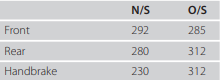
This I did and when retested the brake figures
obtained were now:


My van now passed its MOT. Panic over! So
the moral of all this is if, like me, you don’t drive
all that many miles a year and you tend to
hardly use the brakes “in anger”, make sure you
warm them up before going for your MOT as
you might end up like I did, with a (temporary)
MOT failure.