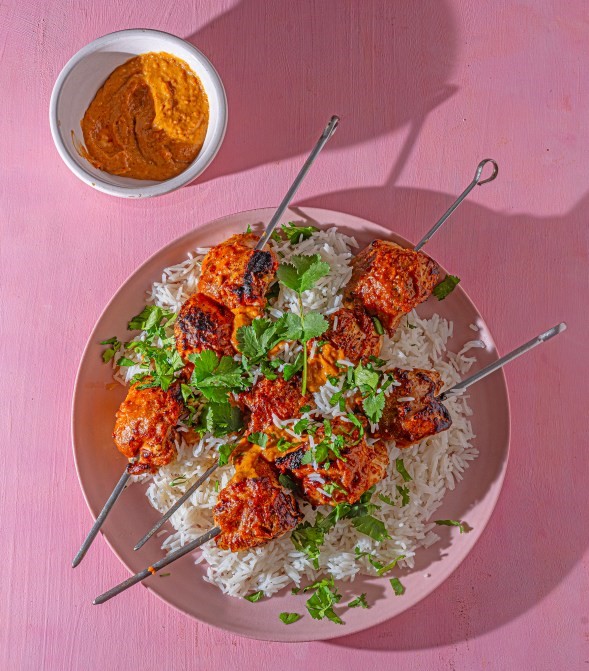
2 heaped tbsp crunchy peanut butter 3 tbsp chutney 2 tbsp soy sauce Juice of 1 lime 1 onion, chopped 1 garlic clove, finely chopped 1 tsp red curry paste 400g chicken thighs, bones removed and meat diced Oil for frying Coriander leaves (optional), roughly chopped Rice
Before you leave home, combine the peanut butter, chutney, soy sauce, lime juice, onion, garlic and curry paste with 100ml water in a food processor. If it gets too stodgy, add a splash of water and give it a stir. Keep it in an airtight container otherwise the smell will permeate everything! When you are ready, roll the chicken cubes in a little oil and thread onto skewers. Grill on high for 3 minutes on each side or until the chicken is cooked through and starting to colour. If your van does not have access to a grill or BBQ, skip the skewers and shallow fry. Pour the peanut sauce over the chicken and grill for 1 minute more or remove as much oil as possible from the pan and cook in the same pan. The sauce will caramelise slightly – the more caramel and sticky the better! Serve with rice and coriander sprinkled over.
Ingredients – Serves 2 Oil for frying 4 large or 6 medium tomatoes (or 1 tin for ease!) Pesto sauce Chilli sauce (optional) Crème fraiche 2 packs of filled ravioli Grated cheese (optional)
Fry the tomatoes in the oil for 5 minutes. Add the pesto, chilli sauce and 2 tablespoons of crème fraiche and simmer for 2 to 3 minutes. The ravioli usually says drop into boiling water for 3 minutes, feel free to do that. We just drop the ravioli into the frying pan for 3 minutes and have not had a problem, plus it saves using a second ring and saves on washing up!
We sometimes do a side salad if the weather is warm enough, but really a pasta dish is just an excuse for loads of garlic bread.
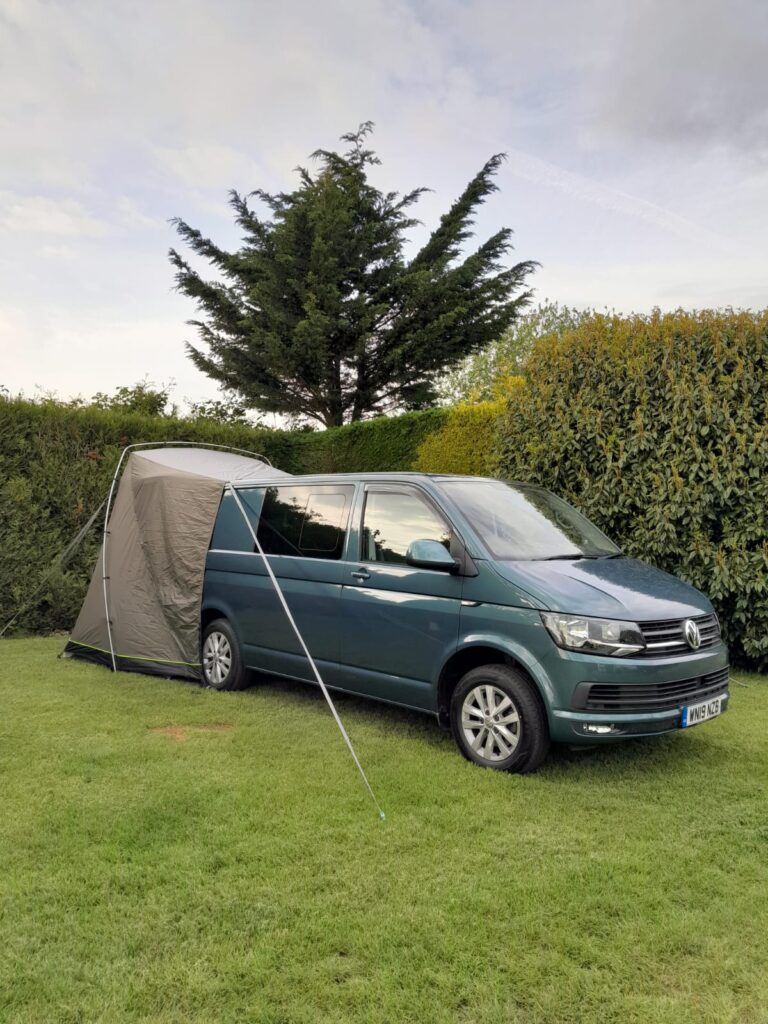
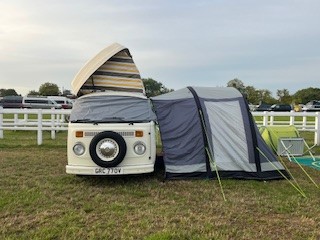
We have always used a freestanding awning with the campers, especially when the offspring were going away with us. Now it’s just two, we find we don’t need so much space, and putting an awning up for short stays is a chore. At the moment our van is a kombi conversion with a rear slide out kitchen, so rather than extra people creating a lack of space, it’s now the large bulk of a triple middle row seat that forms part of the bed and can’t be removed for camping.
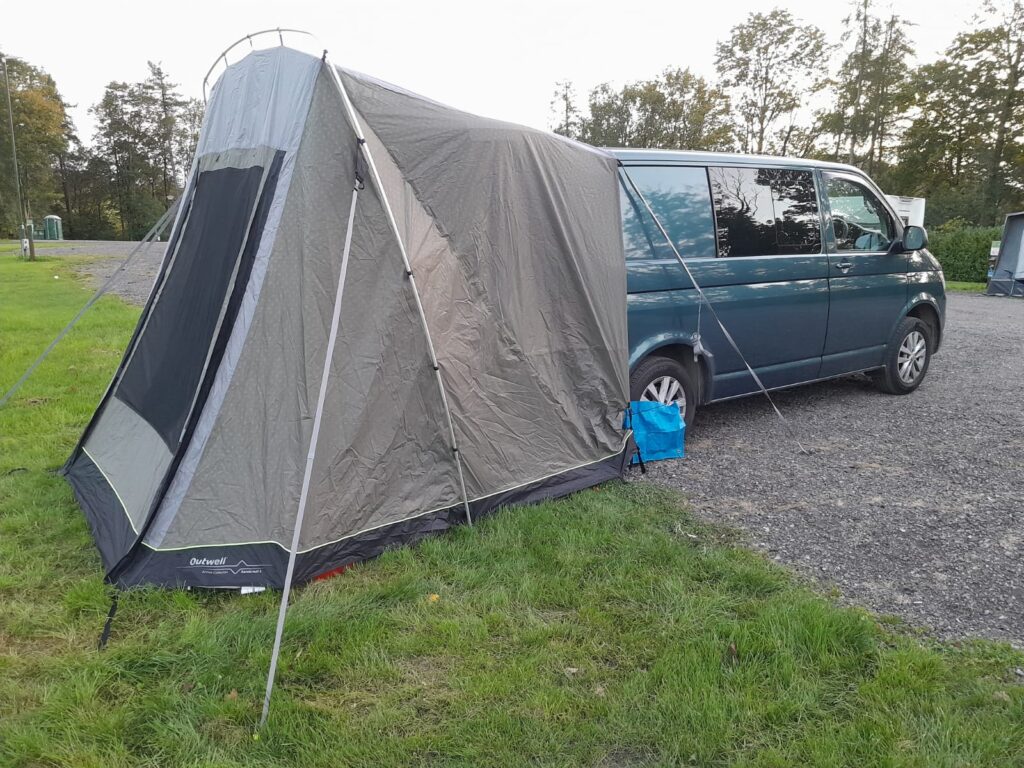
This got me looking at tailgate awnings but most had one flaw. The tailgate had to be left up to support the awning therefore major lack of security. This is where the Sandcrest L is different. It has a single aluminium sectioned hoop to support the nylon, and so the tailgate can be lowered. Although not advertised as driveaway, I have done so using the guylines for support like any tent, although I wouldn’t risk it if it was too windy. It only takes about ten minutes to erect, is light(5.7kg) and takes up very little space (packed size is 64 x 22 x 22cm). As with all Outwell tents/awnings it has many useful features including a zipped mosquito mesh for when camping in warmer climates. Overall size is 310 x 220 cm and living space is about 180 x 200 cm. Enough room for a couple of chairs, table and my offside slide out. The Sandcrest L fits most Transporter sized vans and there is a smaller Sandcrest S for caddy sized vans.
Well, what do we say – a very exciting and fun trip for our three vans.
First of all, a massive thank you to Lorna for all the hard work she and Nick put in to make it work so well. A group WhatsApp was set up so that we could all follow each other, which was a terrific bonus and we didn’t lose anyone en route. All of the camp sites were amazing. A true testament to the organisation of the trip.
Sunday 19th May
Departure day … we all travelled separately to our respective campsites before crossing the channel tunnel the following day.
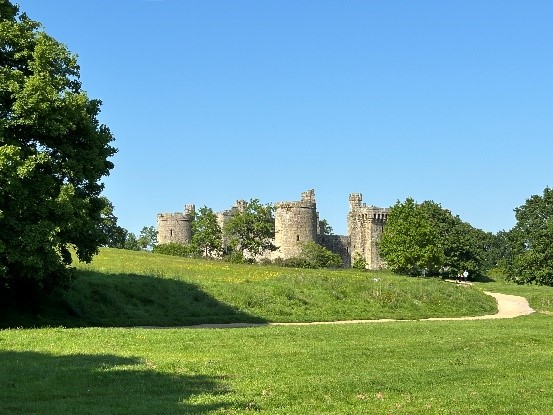
We set off for Park Farm Campsite about 30 miles from Folkstone as we wanted the train journey to be stress free. We set off from home around 9am and had the day to get there. The campsite was spotless and virtually empty at this time of year. A great start for the coming trip to France the next day. We arrived late afternoon and so we took a walk to Bodium Castle. There was a pathway from the campsite alongside a river. A beautiful walk in the sunshine and had an evening meal in the local pub next to the castle.
Monday 20th May
The next morning, we packed up early and set off for the Channel Tunnel. This was the first time that we had been on the tunnel, and found it interesting and exciting. It could not have been easier. We arrived early and were told that we could take an earlier train than our ticket specified, as it was not busy. We took this opportunity to go to France early and I would certainly use the Tunnel again.
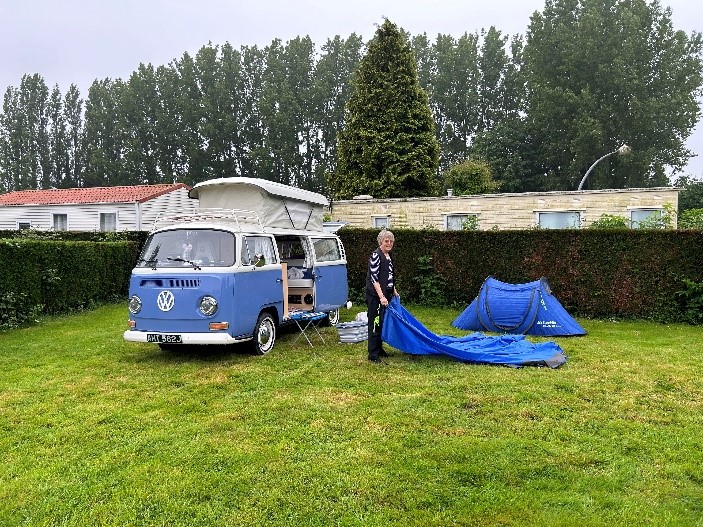
Arriving in France 35 minutes later we decided to go to Dunkirk, as it is nearby and I have been fascinated by the stories and films of WW2. This was well worth the small trip. We then headed for the campsite at Renescure. We arrived first out of our group and so set-up pitch. The pitches were individual and quite large. Val, Malcolm, Lorna and Nick arrived about an hour later having been shopping for supplies. The place was so nice. Each pitch had its own electricity and water supply. I did not bring a French plug convertor (against my wife’s advice) but the Campsite owners lent us one. They were such lovely people.
And so the trip had really begun.
Tuesday 21st May
The next morning we set off on a 240 mile journey through France, Belgium, and Holland and on to Germany. Although this was quite a number of miles, we stopped for meal / toilet breaks or whenever someone felt they needed a further stop. It gave the drivers a chance to get used to the ‘other side’ of the road.
Taking the bypass round Antwerp was quite an experience, as the roads were extremely busy and it was raining hard. We all noticed the extreme number of huge lorries on the roads particularly on this section. And when we say big, they were enormous. Apparently, this is a trade route so this could be expected. But this was all part of the Adventure.
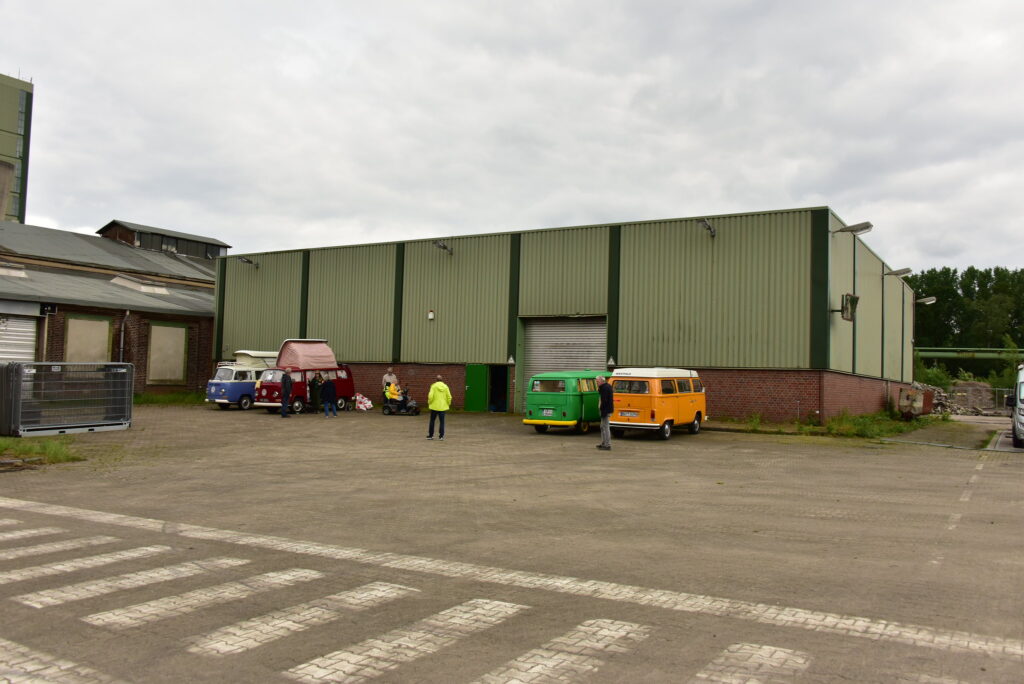
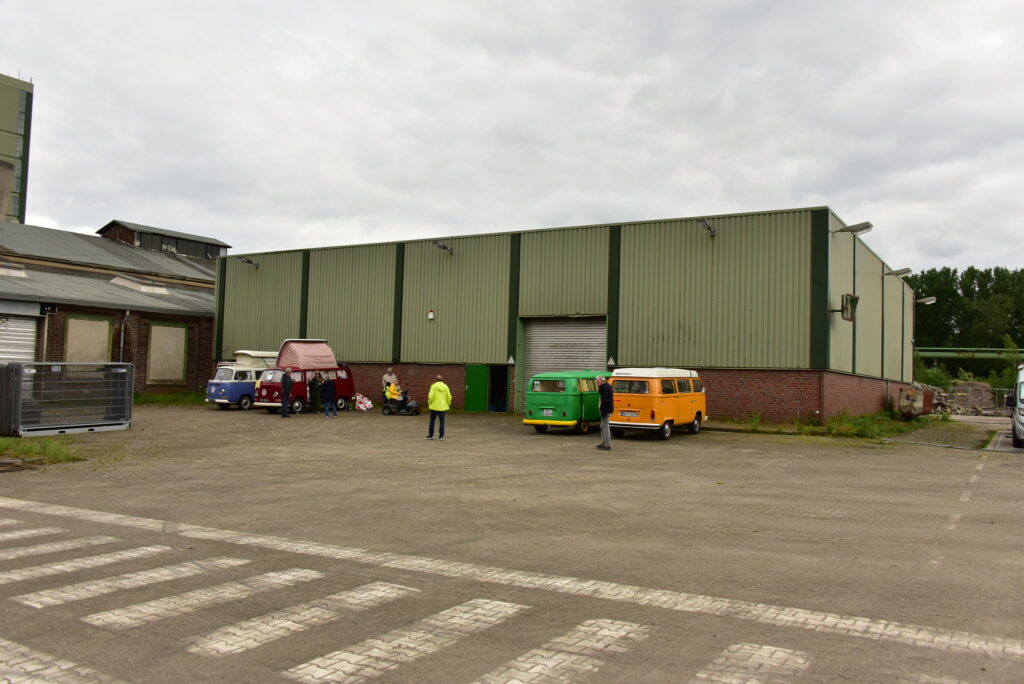
Leaving Antwerp the road opened out and we made good progress. Our first stopover was to be in a disused coal colliery, and we wondered what we might find there. We had just stopped to decide if we were in the correct place when someone hailed us to follow them which we did. We arrived at the Bulli Museum in Gelsenkirchen.
One of the buildings was used by the T2 Club in Germany to store all their vans and parts. Roland greeted us and made us very welcome. My word when they opened the doors and we saw their fabulous collection (many under wraps), we all got very excited.
After showing us where the facilities were, we had a general chat and were invited out for a meal. We camped in the car park which was not as bad as it sounded as a water supply and toilets were available in the Museum which remained open during our stay.
Wednesday 22nd May
Bright and early our hosts arrived including Detlef (who was the German organiser of the trip) and Ulf (who became our driver to certain events) together with a few of the Club members. We couldn’t wait to have a look at their collection. Most of the vehicles work or at least they will when completed.
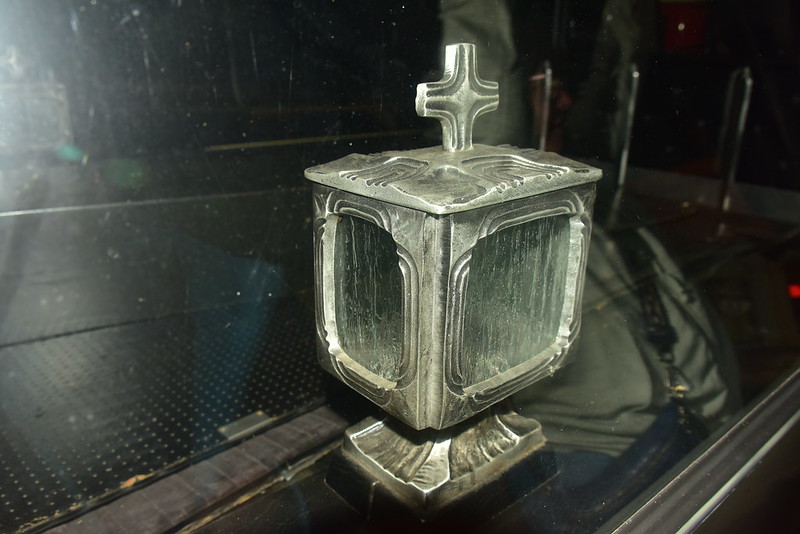
A lot of the vehicles had individual stories attached to them and one by one we were shown them. There was even a fire truck and 2 hearses; one reminded us of the Victorian times as it was decked out with lace fringing and carriage lanterns.
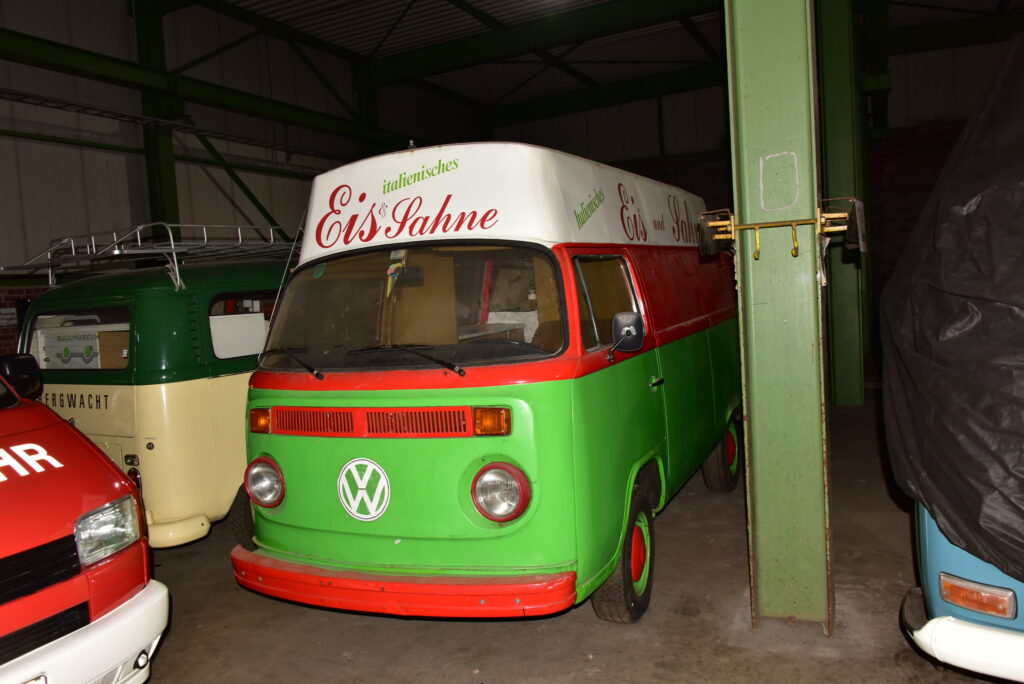
It was amazing the number of different kinds of vehicles. One was used at the airports with a lookout tower on the top, another had a crane used for carrying lamp posts. An ice-cream van and a Police radar van were also there. The vehicles ranged from Split screens to T4s. Each one was unique.
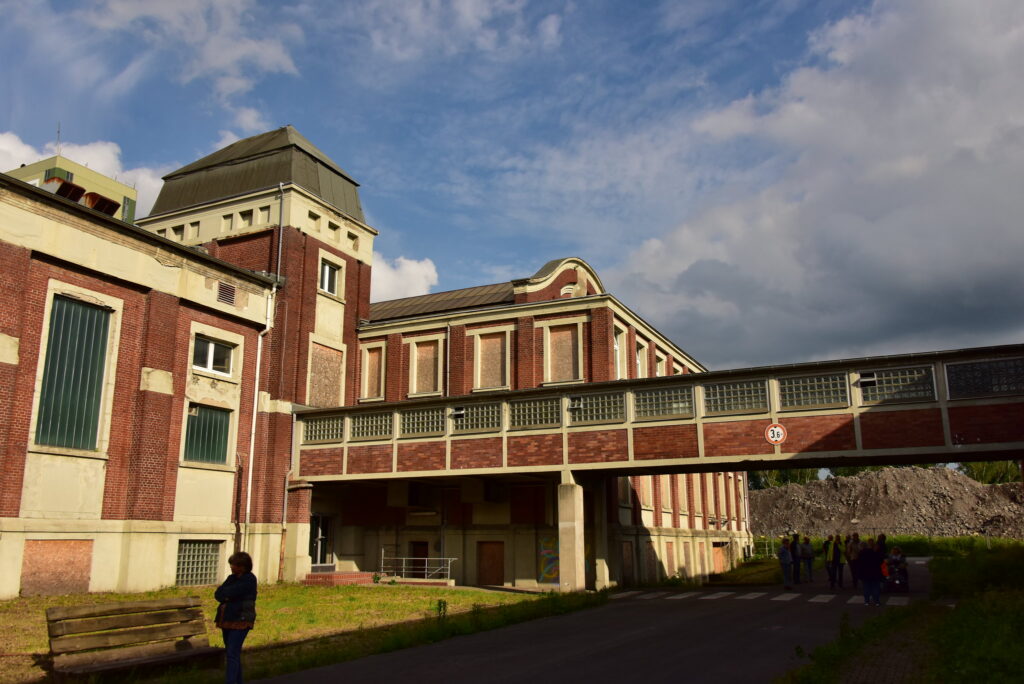
In the afternoon, we were given a guided tour around the colliery by a man who was working on the buildings and site. The whole site is being preserved and put to use in different ways. The Bulli Museum (Bulli being the German name for VW transporter vans) is working towards making a bigger area in order to display their vehicles to their best advantage.
We look forward to a possible return trip in order to see that!
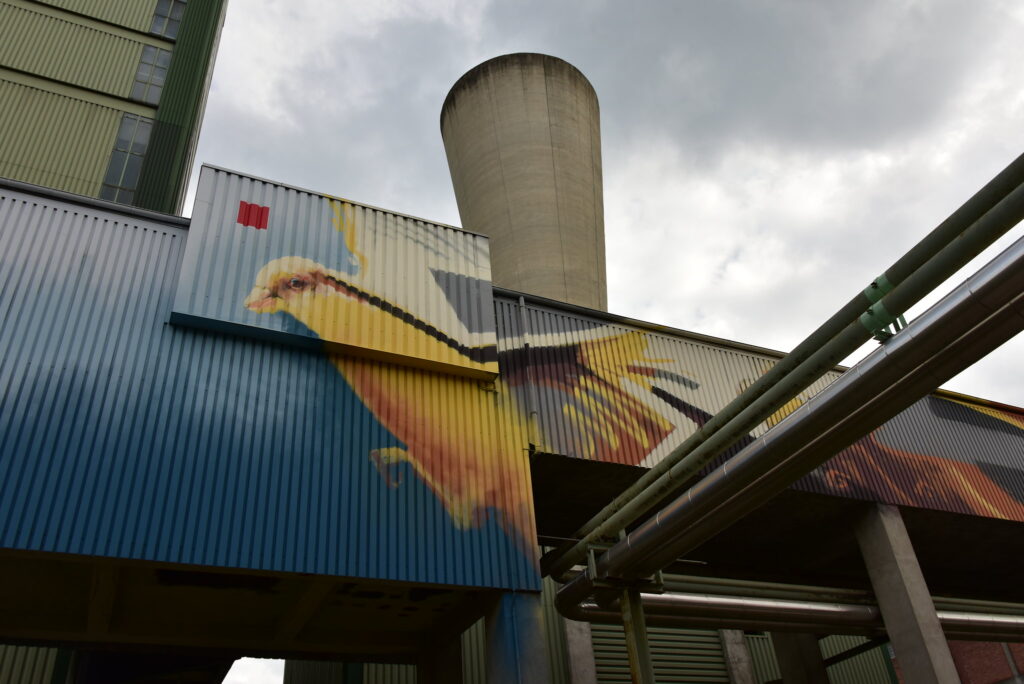
There had been an art celebration a little while ago and many of the buildings had been painted with different artwork and writing. CAN YOU SPOT THE DELIBERATE ERROR IN ONE PIECE?
Some beautiful artwork included Canaries representing the birds taken down the mines to give an alarm when gas is detected.
It was interesting to know how the colliery had been worked and what the buildings were used for. One room was for the injured and there was a doctor’s house on site although this is not going to be used as part of the regeneration of the site.
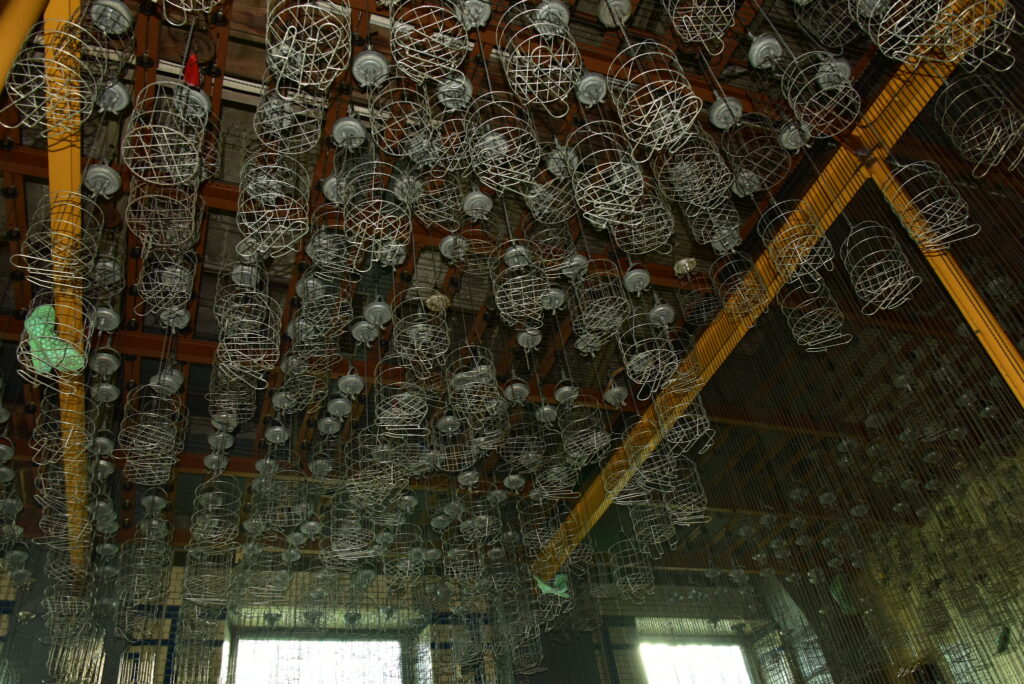
One area contained many metal baskets which were hanging from the ceilings on long chains with an individual padlock on each one. These were for the workers to leave their clothes in when they changed into their working clothes in a different room. At the end of the working day they put their dirty clothes down into a special hole in the room where they dropped into the laundry area. They then took a communal shower and were so close to each other that they could wash each other’s backs.
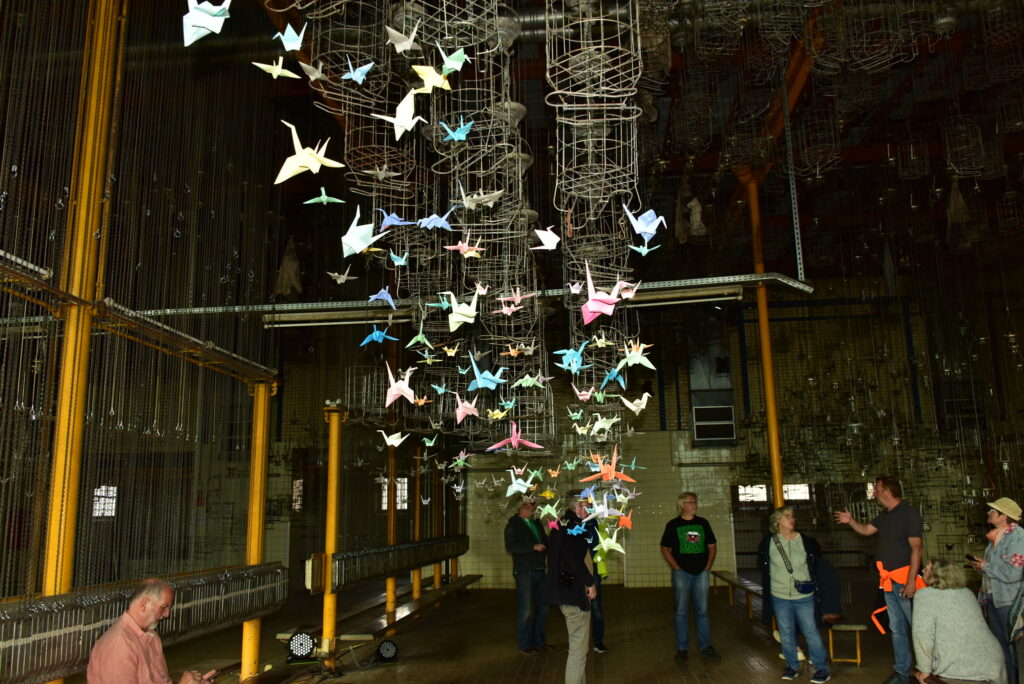
As part of the art exhibition an artist had made origami birds. These were coloured from black to grey to a variety of colours depicting the coal dust to clean. The birds were then put in the cages. A lovely spectacle.
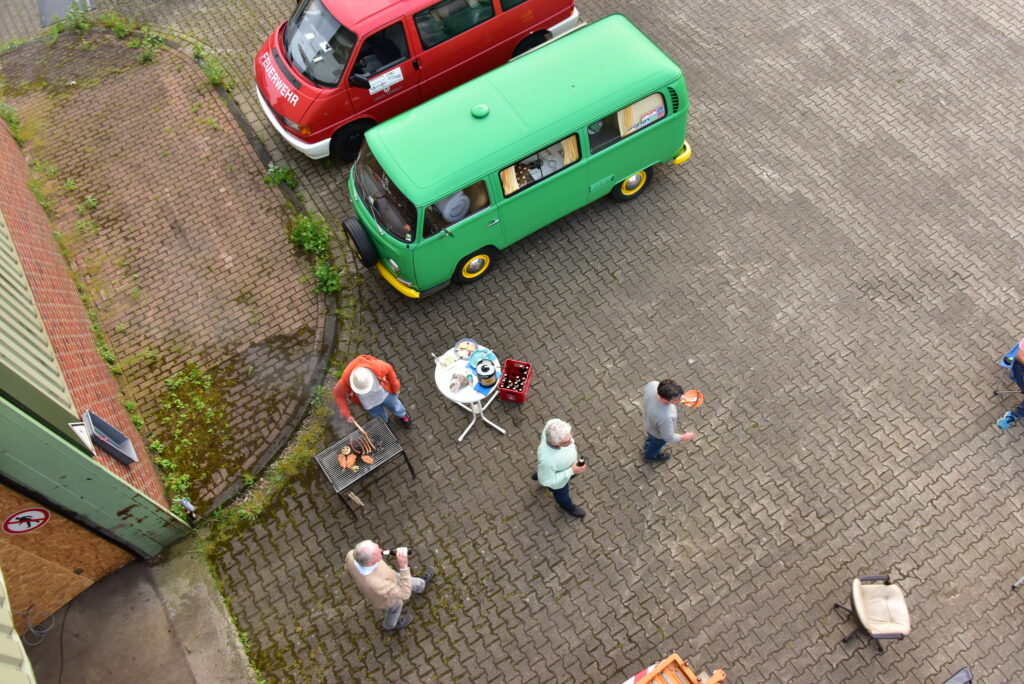
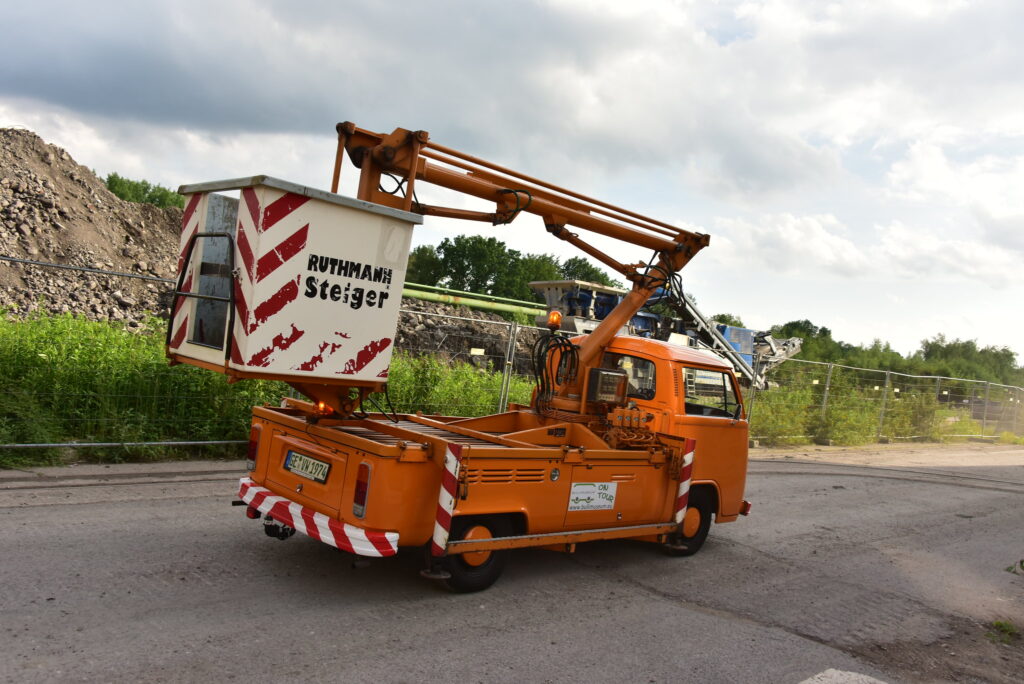
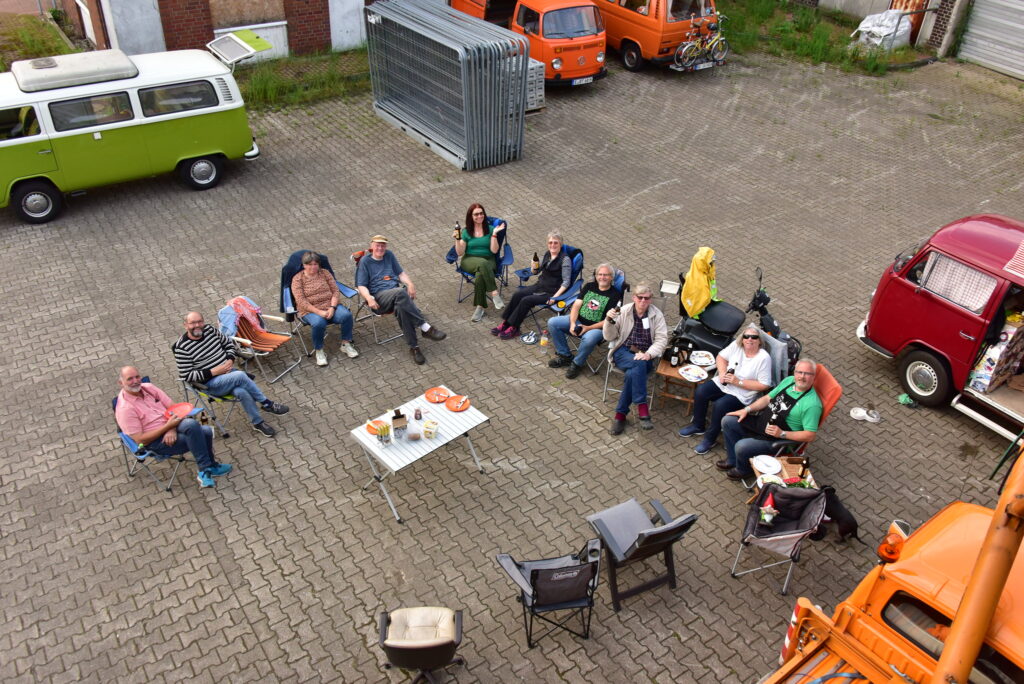
Being nominated ‘unofficial’ club photographer I was asked by Nick and Lorna to take a picture of us all from the top of the Bulli Museum building. I needed to get high, so I was offered this vehicle as the platform (Editor notes that “I needed to get high” means elevation, not smoking!). This vehicle is owned by a member of the German VW Club.
The resulting picture shows the fun were we having with the German Club. They laid on a BBQ for us with plenty of food and drink of all varieties including some incredible German sausages made by Roland’s next-door neighbour who is a butcher.
This was just the first day with the German Club members.
Volkswagen currywurst Chips Gewurz ketchup (or other tomato ketchup)
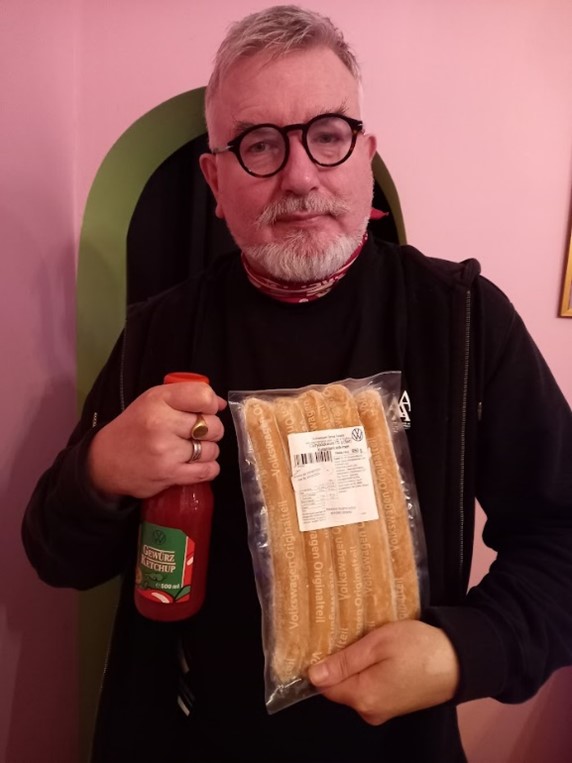
If asked which product VW has sold the most of, it would be reasonable to think the answer would be “the VW Beetle”, given that they built over 21 million of the vehicles between 1938 and 2003, but you would be wrong. In fact, it is Volkswagen Originalteil (Volkswagen Original Part) number 199 398 500 A, the Volkswagen currywurst. Manufactured at the company’s Wolfsburg plant, it is served in the canteens at their six German factories, with more than 7 million made every year since 1973. It has long been available outside the factories through German VW dealers who would give away packs to car buyers, but in more recent years it has been sold to the general public, along with Volkswagen ketchup, Volkswagen Originalteil 199 398 500 B.
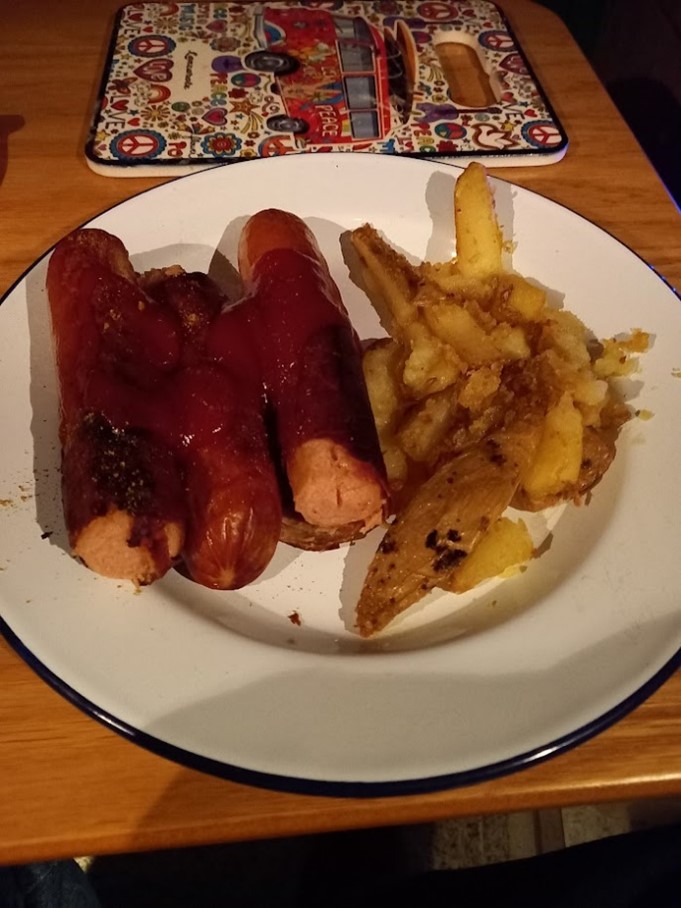
On discovering this, it seemed that I had found the ideal meal for camper van excursions and promptly tracked some down to sample on an early autumn weekend visit to Norwich with my partner Frances. In the UK, both the sausage and the ketchup are sold by the specialist online German sausage retailer, The Sausage Man (sausageman.co.uk) and by Crafted Meats (craftedmeats.co.uk) for £16 a packet of five. This may sound steep, but they are imported from Germany, with the additional costs that now entails, and are huge. At 25cm long each one is a meal in itself – there are smaller ones available in Germany, but I can only find the monsters here. Made with best quality pork and only 20% fat, it is important to note that they are not actually curry flavoured – they are just the kind of sausage used to make classic currywurst in Germany. This consists of the sausage, fried or grilled, with a good splash of the ketchup and a sprinkling of curry powder, eaten with fries or in a bun, hotdog style.
So, equipped with my giant sausage, the ketchup, and an air fryer to cook the chips with (I did not fancy running a deep fryer with all that hot fat in the confines of our T2!) and safely settled in the Top Farm campsite in Marsham, just north of the city, I set about cooking the wurst. Given a brisk fry on the van’s stove, the sausage took about 20 minutes to cook, while the air fryer, plugged into the electric hookup, quietly prepared the chips beside me. As they are almost too big to fit on a camping plate, I halved the wurst, then doused them in ketchup, sprinkled on the curry, added the chips and we piled in. The sausages turn out to be firm, tasty and slightly smoky, akin to a classic bratwurst, with the ketchup being a little more sweet and less vinegary than UK ketchups, with a hint of spice, perhaps tamarind, that tilts it a little in the brown sauce direction. Either way, it was a perfect accompaniment to the wurst, and I easily polished off one and a half of the giant sausages and can confidently say I now have the official food of family camper trips sorted out, with three more of the things awaiting the next expedition in the freezer.
Club member Sarah McCutchion says that this is guaranteed to send delicious wafts of cooking smells to all corners of the campsite.
Needed: One big pot. One knife and a wooden spoon.
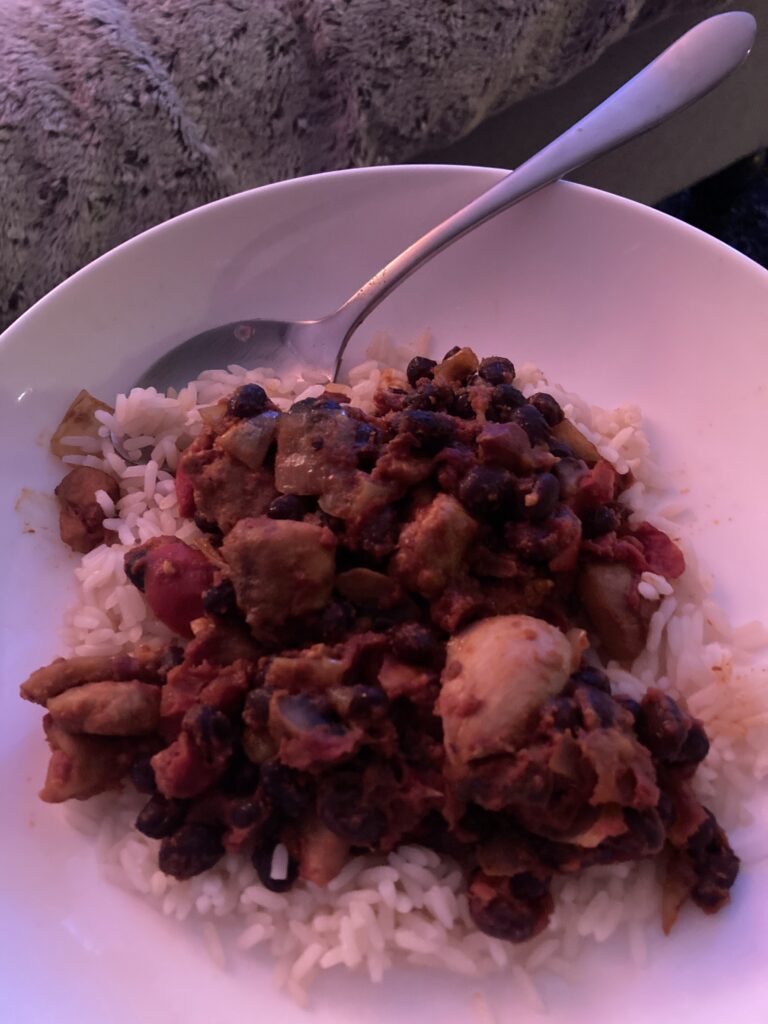
For 4 people: 8 skinless boneless chicken thighs One large onion finely chopped One red pepper finely sliced Lots of garlic 1 whole spicy chorizo sausage sliced 1 tin chopped tomatoes Tablespoon tomato puree Paprika Cayenne pepper
Cube the chicken and brown in the pan. Add the onions & chorizo. Brown it all. Add the garlic. When the onion is softened add everything else. Bring to the boil, then simmer for 40 ISH minutes. Add water or red wine as required. Serve with crusty bread, rice, pasta or potatoes.
As the long season comes to an end and following on from the recent winterizing post, some owners may elect to cover their pride and joy with a cover.
Please. Pretty please. Pretty please with little chrome covers on. Don’t cover your expensive paint work with a tarpaulin that will get condensation inside it, press that moisture onto your bodywork and accelerate the attack on the paint and the metal underneath.
If you don’t have access to a garage or a car port that will keep most of the weather off, try to invest in a good breathable cover. Get the right one for your vehicle and make sure that the material is not flapping around, abrading where it touches.
Ideally park on hard ground that will not have standing water. Parking on grass at the bottom of the field will collect water underneath which will evaporate upwards into your van and its little cover. A breathable cover will let some or most of that collected moisture out but ideally you should remove the cover over winter every month to let things properly dry out and then put it all back to bed once more.
If possible, get a cover with straps that go under the vehicle from side to side, so that the wind cannot lift the cover off the vehicle. It is disheartening to get home from work in the dark and find your expensive van exposed to the elements and a wet cover wrapped across your hedge.
For those of you lucky enough to have a garage, a dust cover is optional but again, think about the possibility of trapped moisture pressing against the bodywork. Does a quick dusting or a nice spring time wash and wax give more benefit than the winter cover?
Hello, my name is Tish and I’m having a go at writing some camp friendly recipes. We have a small 70s two hob stove like I’m sure many of you do. I carry on board a small and large cast iron saucepan and a none stick frying pan. I’m also a bit of a foodie so I have a small wicker basket on board which always contains – a proper salt and pepper grinder, olive oil, stock cubes, a few dried herbs and cinnamon. I also like to have some chutney/pickle/jam around too. Great for making fancy sandwiches or elevating a charcuterie board when it’s too hot to cook. Whenever my husband complains about fuel economy I just shrug my shoulders.
I tried to incorporate bits you’ll have on board for breakfasts or have at home to use up. With the cost of camp sites going up, and restaurants increasing their prices (understandably) it’s nice to try and save a few pennies where you can.
This can be made on a camping stove, or at home and warmed up on site.
You’ll need 2 hobs
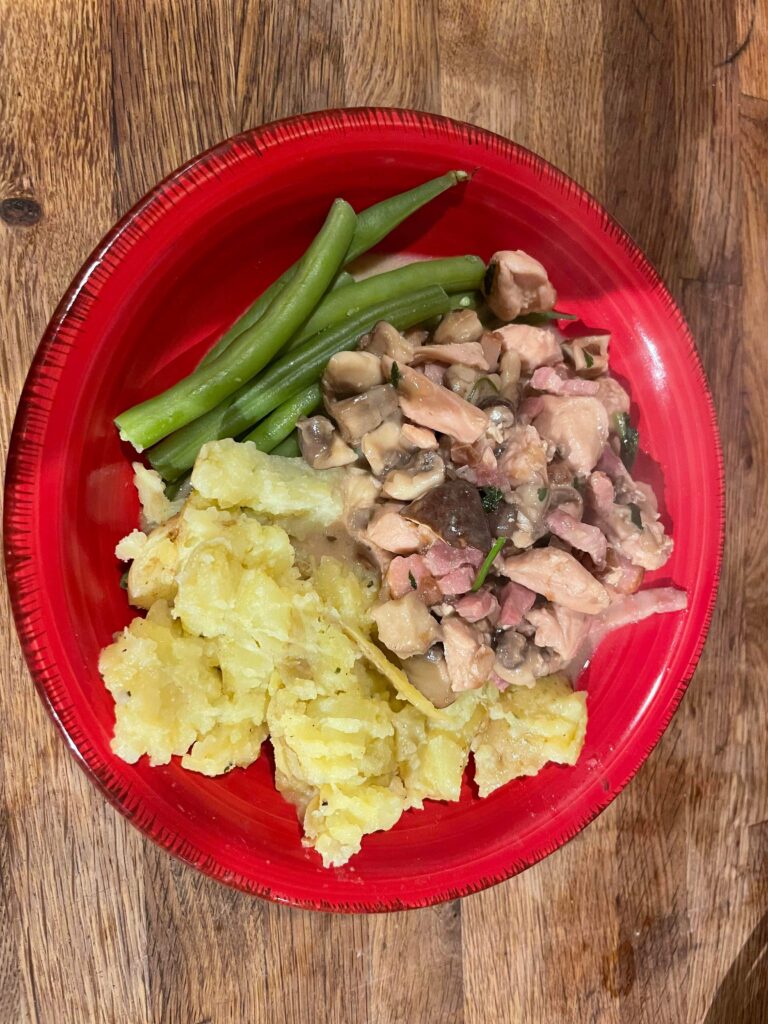
Whatever chicken you have available (about 250g) or vegan alternative. Chopped. Bacon lardons (I used smoked for extra flavour) Mushrooms 200g Chicken stock Cream cheese (at least a tablespoonsworth – useful if you’re using it for breakfast!) Small Waxy potatoes. (You can precook these at home, they travel well – or boil in a separate pan) Salt and pepper and some butter.
Instructions Boil a full kettle. Once kettle is boiled add almost all the water into a small pan, add your potatoes on to boil. (Omit this if you’ve precooked them at home) try reserve about 100ml of water. Add a small bit of oil into a medium saucepan and once hot add in chicken and bacon. After the chicken starts to cook through (about 5-10 mins) crumble in your mushrooms. Leave for another 5 minutes to soften. Now you can add in your stock, soft cheese, salt and pepper with 100ml of water. (I add in some onion chutney here) Leave this to bubble and reduce. At this point you can add your peas into the stew or green beans into the same pan as the potatoes. Neither need very long. Once potatoes are soft, pop onto a plate and crush gently with a fork. Add salt and pepper to taste and as much butter as you like. I’m not your doctor! (If you’ve precooked your potatoes, similarly crush them and warm them up in a pan with some butter, salt and potatoes) If you wanted some fresh herbs now is the time to mix into the stew.
Then divvy up into bowls and enjoy. To make this a one pot lower carb meal, omit the potatoes entirely. Or if you’re low on cooking facilities the stew can be happily mopped up with some bread.
Yes, it is that time again, winter is very much heading our way. For anyone with a vehicle, VW or not (apparently other vehicles are available!), winter in the UK is the worst time for metal on the roads.
Some suggestions:
Inside
Water
If you have anything containing water, drain it all out. Water tanks, boilers, kettles. Don’t just empty the tank, drain the whole system including the pipes. Remember that water in pipes still expands when it freezes, not just in the tank. It also goes stale after a period of standing. If possible take the tank indoors to keep it above freezing and/or clean it thoroughly.
We use a mild Milton solution to thoroughly clean ours including the impeller that sits in our tank and its associated pipe and electric cable. Then we rinse everything and air dry it all. Other options are available too!
Power
Leisure batteries like ambient temperatures and extreme cold will reduce their operational life. Keep them above freezing by removing them and keeping them in the garage or similar. Remember to keep the electrical contacts in the van safely insulated if applicable.
Keep those batteries charged using a trickle charger that is fit for purpose, which will also prolong their life.
Gas
Butane or propane tanks and bottles should be removed from your vehicle and stored safely with their openings closed properly – don’t leave the regulator open relying on the gas tap on the cooker as these can fail. Now is a good time to weigh them against their empty counterparts to know when you need to change them!
Boring cleaning
Now that you have opened up your van, removed the relevant tanks and bottles, you can get all misty eyed and miss the peace and tranquility of your van by getting in there and cleaning it all. It gives you a great sense of personal achievement as well as going into the winter with a nicely clean kitchen area, the fridge has been bleached and rinsed, and if applicable the bathroom, the shower and maybe the hot tub are all clean. Leave internal doors slightly ajar to keep mould and mildew at bay.
Soft furnishings
If possible, remove curtains, bedding, that emergency woollen blanket from Granny and take them indoors for a good wash or airing.
Ingress
Don’t be tempted to leave doors open or windows more than cracked open. All sorts of miscreants can get in and eat your lovely interior.
Outside
If possible store your vehicle in a garage. If that is not possible, a car port will do a similar job. A breathable cover can be good but make sure it is listed as fully breathable otherwise moist air gets under the cover, rises when things warm up and the vehicle will get wet, holding that wet against the bodywork. Avoid a heavy cover for sure!
Tyres
Tyres degrade from extreme temperatures and long periods of standing still. Winter does that very well! Inspect the tyres, check the pressures and consider putting the van on axle stands if you are not using it for a very long time, taking the wheels into the garage or shed. It also makes theft more difficult!
Moving parts
Lubricate everything. Hinges, moving parts, sliders, mechanical parts. Check the oil level. Use the right lubricant for the part in question. It will pay dividends next year and will keep water away, which is good for the life of the part.
Boring cleaning
Again, give the outside of your vehicle a proper clean, ideally by hand. Dry fully including the fiddly bits inside doors and between panels. Give it all a good quality wax polish. This also keeps water away and prolongs the panels and parts. It also makes you happy as you pass over the cold season when you don’t want to be away.
Underneath
If you are an advocate of underseal and waxoil, get the old visible stuff removed and apply new underseal to dry clean parts. The jury seems out on the benefits of underseal against the downside of it trapping moisture but waxoil or similar applied hot into cavities must be better than not applying it?
Engine
Some texts state to start your engine once a month and run it on idle for 30 minutes. More than that is not necessary and I don’t touch our air cooled engine at all.
An oil change just before the winter alongside a fuel-storage additive in the fuel tank if you like that sort of thing.
Main battery
We leave the main battery connected and the solar panel bolted to the roof of a van in a car port for the leisure battery. If that was not the case, we would trickle charge the main battery once a month over the winter. Again, this just makes sure that you don’t degrade the battery and end up having to replace it all of the time.
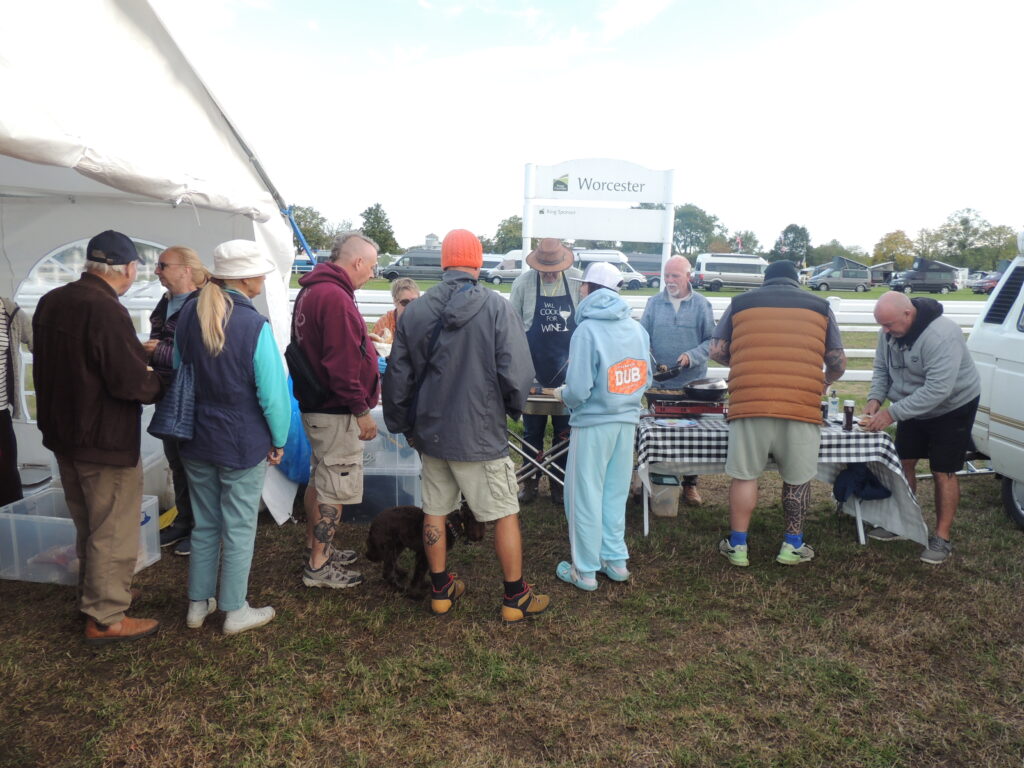
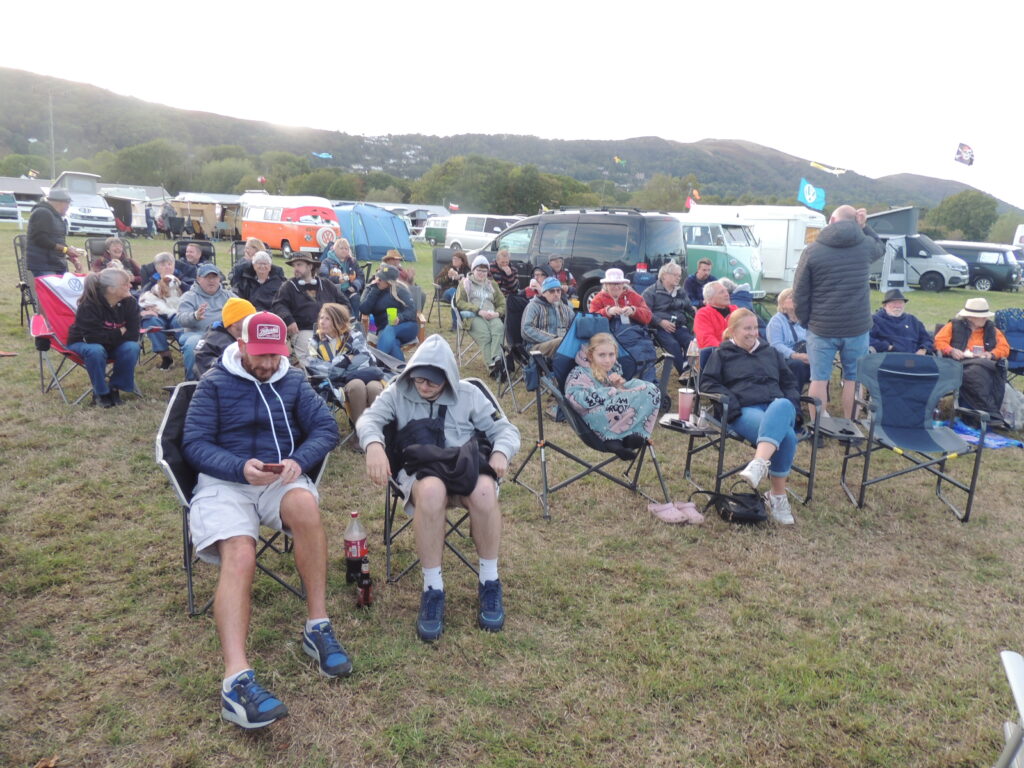
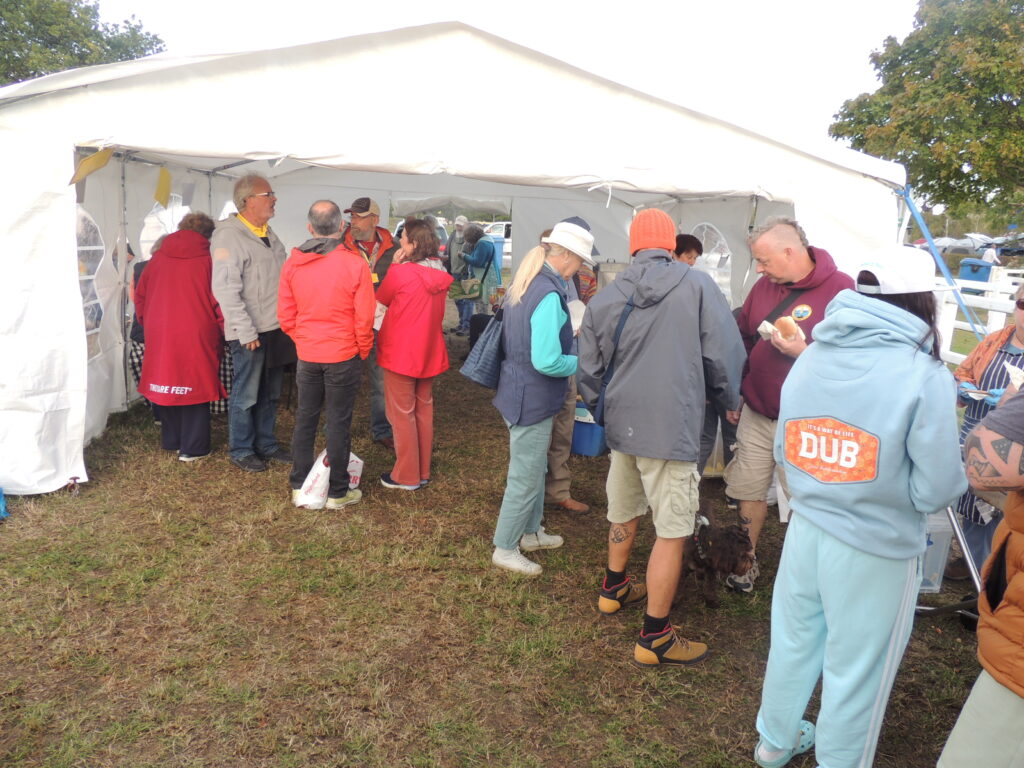
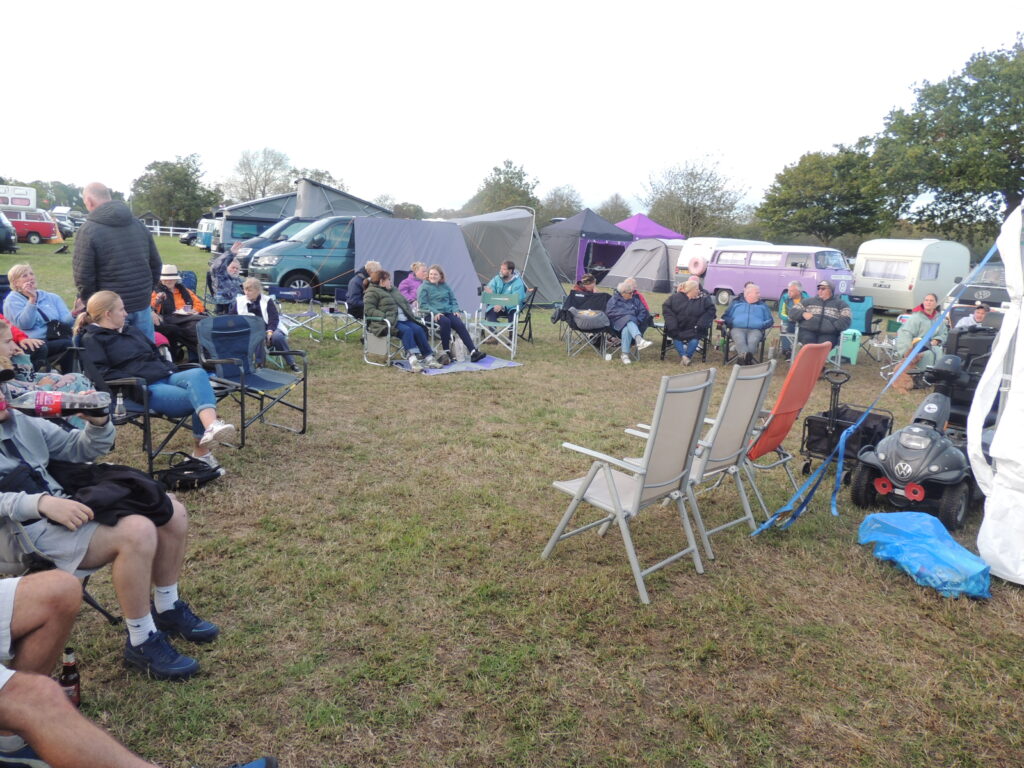
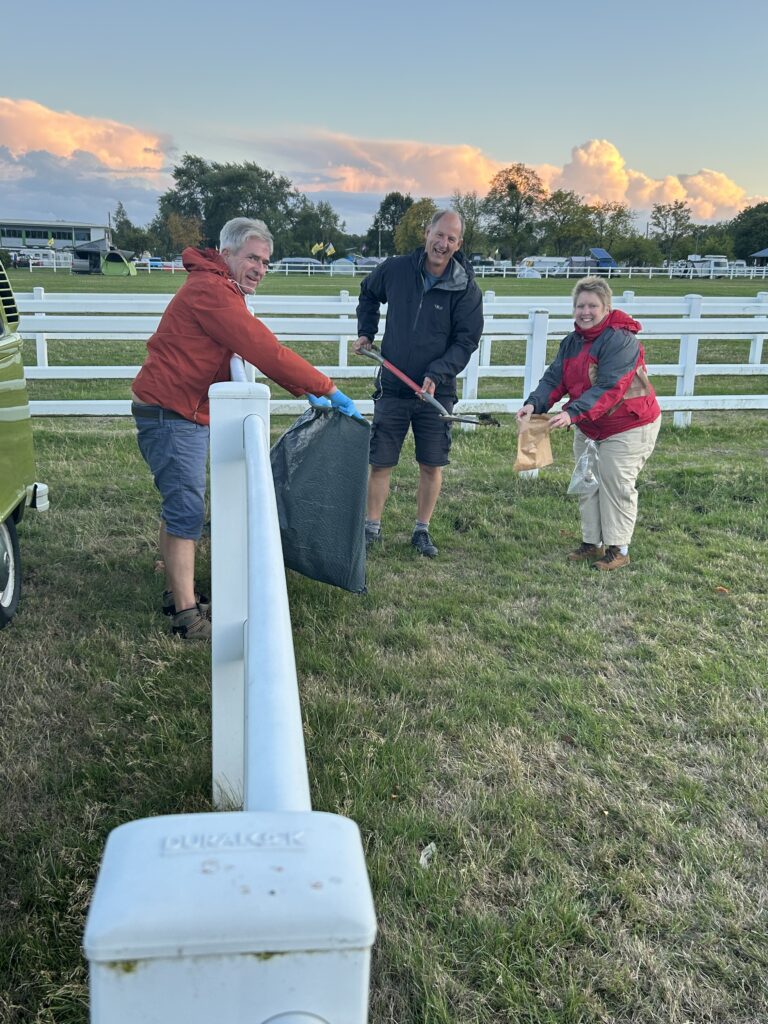
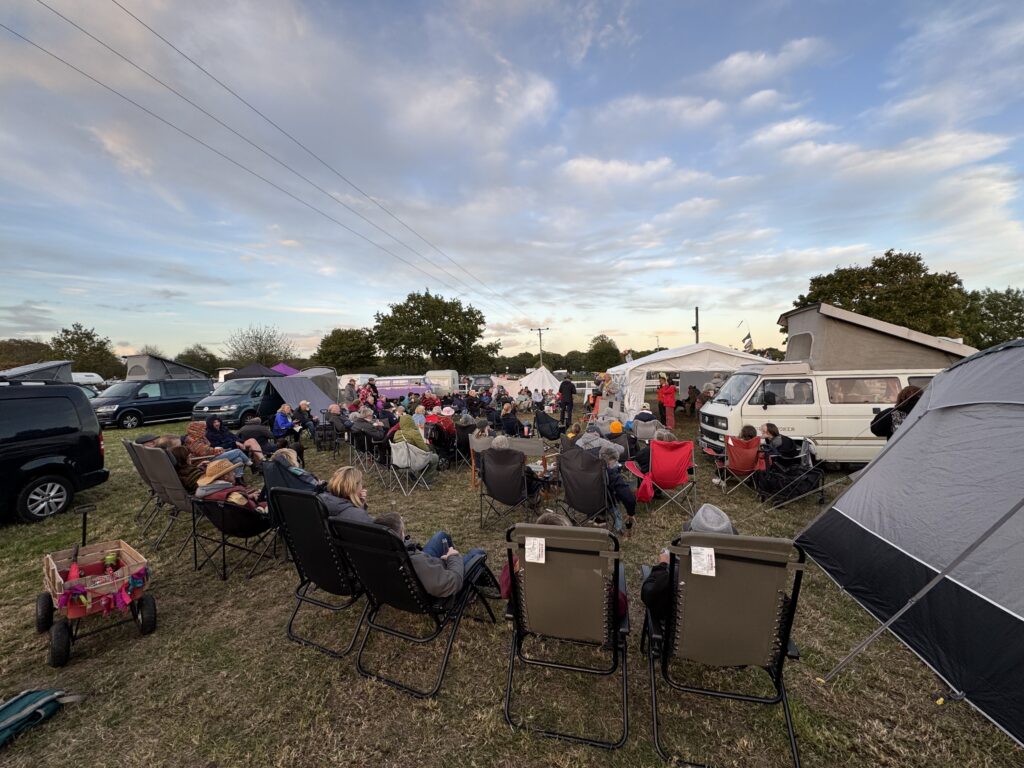
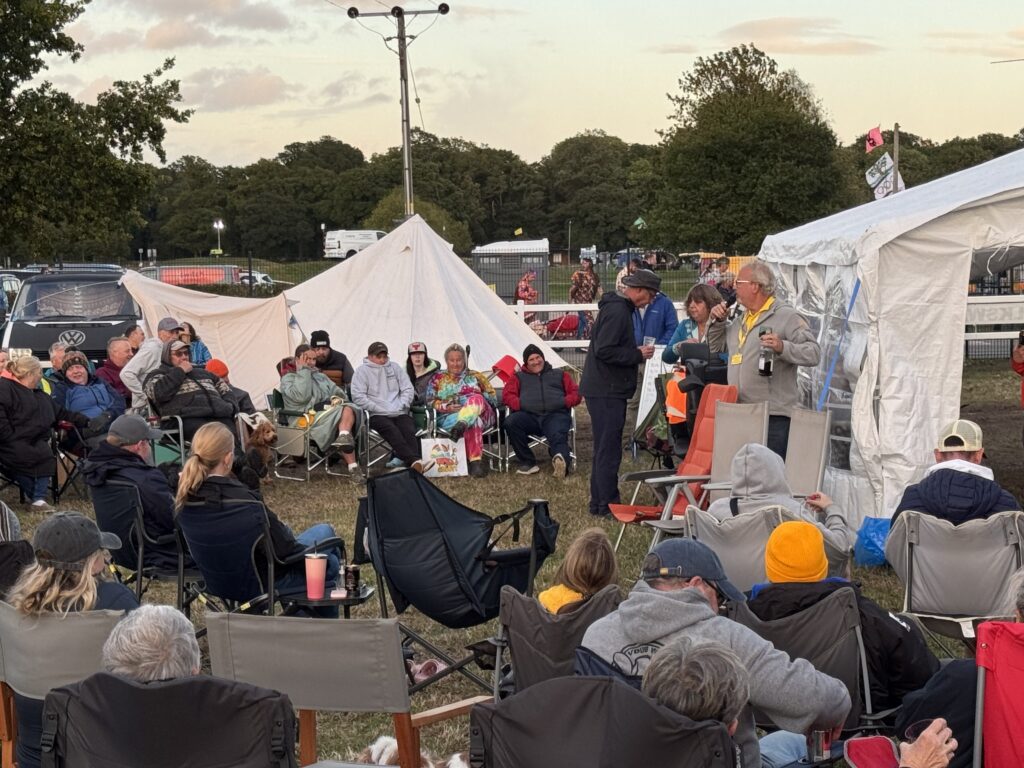
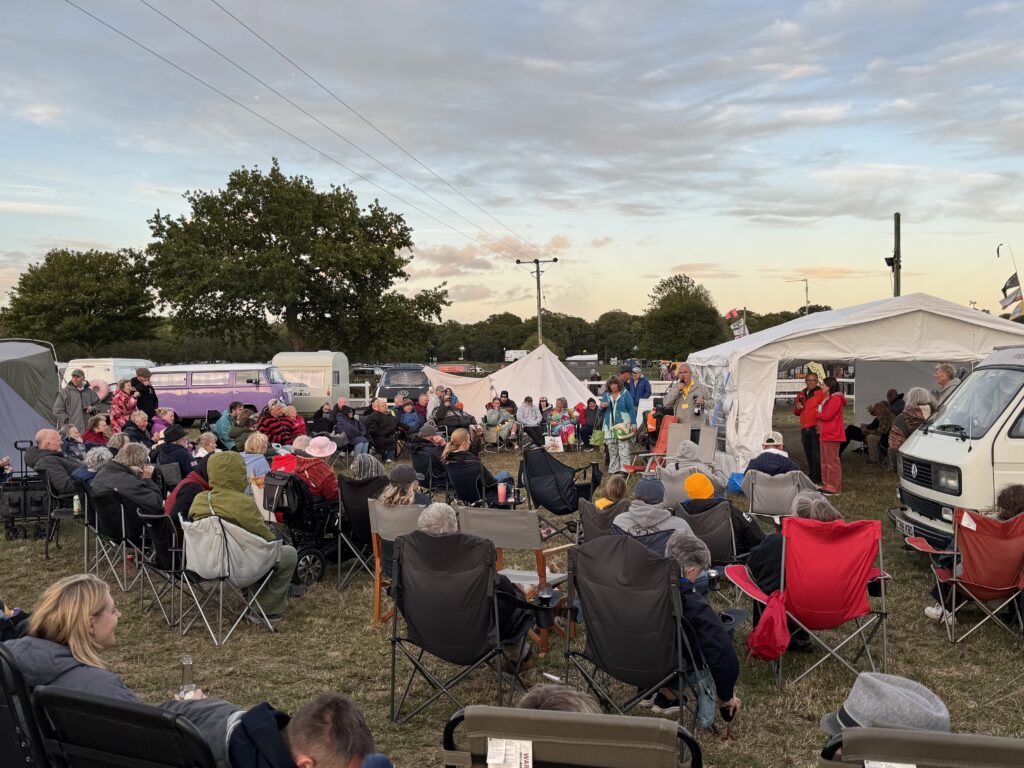
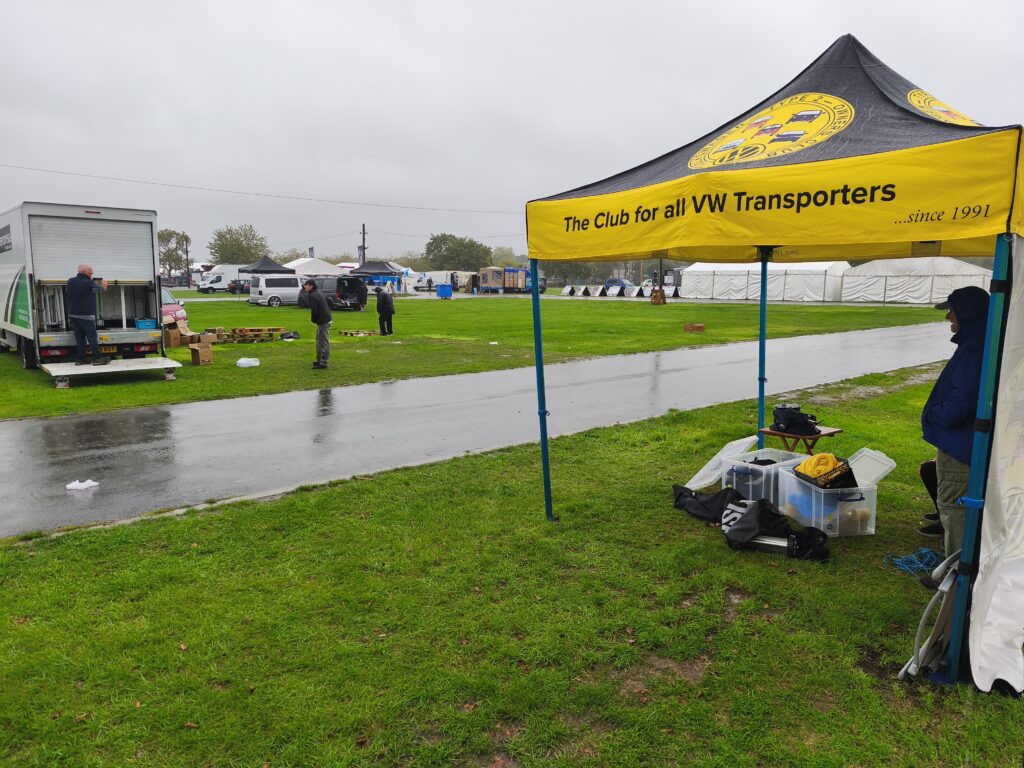
Four seasons in one day! About 100 members arrived into our club field, had burgers on both Friday and Saturday nights, had tea, coffee, cake and biscuits on Saturday and Sunday mornings.
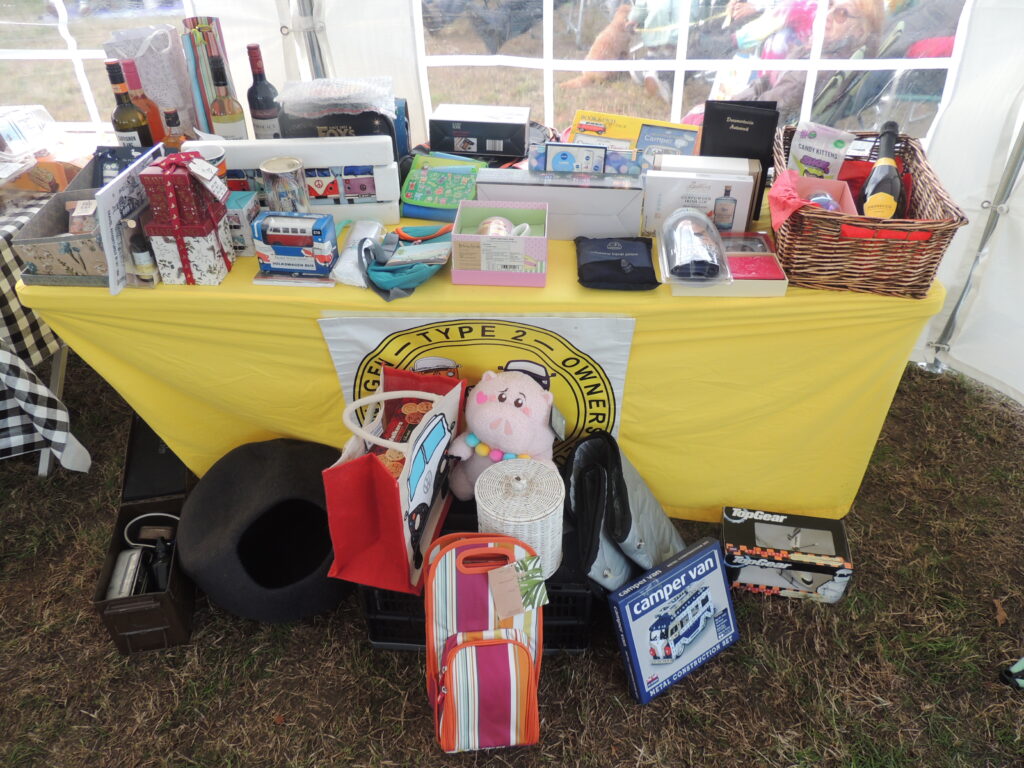
There was a raffle with dozens of prizes, a lot of laughter, some rain, some wind, some sun and that was just our field. Busfest gave its usual array of stalls, music, kids entertainment, displays, for sale, autojumble and lots lots more.