Category Archives: T4

Always trying to stay ahead of the curve, the T4 used all the automotive design enhancements that had occurred in the last 10 years. The very essence of Volkswagen usability.

Member’s Hack – Ian Crawford’s starting issues

Long time member Ian Crawford had issues with his van that he bought in 1972 at a year old. He still drives it! I should point out the van was a year old, not Ian.

Ian says:

An unusual problem solved the other day. My van would only turn over 2-3 times when
ignition switched on, then it just refused to do anything! I connected my battery charger to the terminals (before switching on) and the lights showed the battery was 20% efficient.
I then switched the charger on and literally within 15 seconds it said 100% charged. I
disconnected and switched off the charger and attempted to start the van.
As before, it only turned over 2-3 times then it wouldn’t do anything. Reconnecting the
charger it again showed only 20%! Once again, charging for around 15 seconds showed the battery 100% charged. Time to retreat and think hard as to what the problem really was and how to solve it. I slept on it and the next day I had a brainwave!
I decided to remove the battery earth strap from where it is bolted to the chassis. Using a steel wool pan scourer, I gave the bare metal a thorough good scrub as well as the underside of the fixing lug of the earth strap. I also smeared Vaseline over both surfaces.
I then refitted the earth strap into the chassis fixing hole and went to start it up. Surprise surprise, it started first time!!
So if you have experienced problems with starting, maybe removing and cleaning the metal around the fixing of the earth strap will solve it.
Hope this gives members some useful tips.

Another one in the bag! Petruth Paddocks

We are all just back from a great week at Petruth Paddocks near Cheddar. Here are some photos of our time there.

Upcoming club event – Petruth Paddocks

It is all systems go for Petruth Paddocks – are you going? Hope to see you there!

Tuesday 11th April – Monday 17th April 2023

End of Easter Camp at Petruth Paddocks, Cheddar

Last year’s April event was such a huge success, we’re going to do it again!  Just a bit earlier, again starting at the tail end of the Easter weekend. Come for as many or as few nights as you like.

This well-run site with “the best showers and loos” according to our attendees, sits at the foot of the Mendip hills and within a 20-minute walk into Cheddar, its splendid caves and numerous coffee shops. There are also two supermarkets just over half a mile away, and a Post Office in the village. It’s a level walk into Cheddar, and around half of it is traffic-free, more if you’re just going to Sainsbury’s.

Wookey Hole caves, Wells cathedral, and Glastonbury are within easy reach.  Check out www.petruthpaddocks.co.uk to see information about local footpaths, buses, and cycle-ways. On-site facilities include free wi-fi, washing up, and electric hook-ups, as well as those loos and showers.

We’ve secured rally rates again, £15 per unit without electric hook-up instead of £15 per person. Electric will be charged through a pre-payment meter. And we’ll only pay one nightly fee for doggie companions per unit, saving £3 a night for any extra dogs you may have!

In addition to our Club BBQ on the Saturday evening, I hope we’ll be able to offer one or two activities – a coffee catch up on the Sunday morning; a gathering near the Club gazebos and listen to some early evening, easy music from our own Lorna James and/or other members;  a belated Easter egg hunt if we have little ones in our group – I’ll work up the details as we get closer to the event, based on numbers. There is also a local pub, so if all else fails we’ll be able at least to wander along there if we fancy a change of scene for a natter. It’s all in the pot at the moment!

The site operates a Behaviour Bond and a nattering-only policy after 11pm, so if you’re after rock n roll, it’s probably not for you. You can read more at www.petruthpaddocks.co.uk/groups/adult-group-booking.html – your Club is covering the bond. Please note if your party breaks the site’s rules, you will be asked you leave and you may be removed from the club. Not that I expect that to be an issue!

Find out more about what’s going on locally, attractions, facilities, pubs, activities etc. and more about the site itself at www.petruthpaddocks.co.uk

Wakey Wakey!

This image has an empty alt attribute; its file name is vw-winter1.jpg

Yes, it is that time again. Hurray! Finally, after the long winter in our non-mobile houses, we can get out our beloved vehicles.

Checklist

Hopefully you all followed the article Time for bed/ to help put your vehicle to bed for the winter. Now that spring is in the air and we are starting to think about getting out and communing in nature, this is a key time to get things ready.

Doors locks – there’s nothing more annoying than a failed lock. get it fixed now before the season really gets going. Door lock issues can be very straight forward but a simple lubrication can be key. Pun intended. A non residue lubricant is best to move the dirt away as WD40 can leave enough gunk to create issues. We favour silicon spray. A little into each lock.

Windscreen wipers – did they perish in the cold winter freezing them to the windscreen. Inspect and replace now.

Water – check the radiator if you have one. Ensure that the bottles that you emptied in the Autumn / fall have no mice, carefully hidden Christmas presents or mildew. Clean with a weak Milton solution if it is drinking water or food related.

Batteries – check the charge on each battery with a good meter. A flat battery can indicate an earth leak. A failed battery needs careful investigation.

Carburettor – Or equivalent. Check for good operation, no stuck flaps or other deterioration over winter. If you are a professional, this will be straight forward. If you are an amateur, a test drive very close to home will highlight problems! But only after the other checks.

Brakes – your vehicle should roll easily, otherwise this can indicate jammed brakes. Parking in gear for long periods of time can be better for your brake health than a jammed set of brakes. Check the brakes for operation. Check the brake fluid level. If it has been more than 5 years, change the brake fluid as it is hygroscopic and slurps up water incredibly quickly. Water is not a good fluid for applying the brake pads to the disks.

Seals – inspect all door seals for any signs of damage, water ingress or other problems and sort them out now. Glue any loose bits back down with the correct glue.

Windows – ensure that they all open and close fully. Or at least as fully as they did last year if applicable!

Ignition – Once you are feeling confident, get in to your pride and joy and turn on the ignition to number 2. Look at the lights on the dashboard. Check there ARE lights! Are they what you expect / are used to seeing? Have you got fuel (for those with a working fuel gauge)?

Crank it over – don’t expect it to start immediately but things should kick into life within a few seconds.

A little test drive on your driveway will allow you to test the brakes, maybe the steering and other important parts. Softly, softly.

Stay local, take your phone with you and warm clothing. Just in case!

Once you get home, assuming that you have a big smile on your face, make a list of snags, get indoors, put the kettle on and start planning for your summer.

Check out the events page and come and see us at a meeting soon!

Member’s Motor – Paul and Suzanne Dunstan – Lola

Sitting by the log burner one cold winter’s
eve, my wife Suzanne and I had a very
uncomfortable chat with decisions to be
made just after Christmas last year; Delilah
our 1970 Early Bay had become the problem
child all VW parents hope won’t happen. After
several years of happy times, forgetting all
the damp nights from the leaky pop top and
refusals to start after a weekend away, the
steady drip of cash to keep her going turned
into a deluge when we found out her engine
problems, whilst not terminal, were not good
news. Our soul searching kept coming around
to the inevitable; we’d have to let her go, listen
to our heads and not our hearts. We’d toyed
with the idea of getting a T4 a few years ago
but air-cooled was always the previous winner.
Who couldn’t fail to love the look, the sound
and the feel of the old Bays and Splitties?…
Only the hopeless romantics and the ones
with deep pockets!
Everything happened in a whirlwind shortly
after the New Year. Delilah advertised and sold
within a matter of days to a wonderful fellow
from Kent who would have the time and
expertise to return her to her glory and just
days after and several viewings of vans in all
conditions and specs, we picked up a T4 2.5TDi
SWB short nose, new conversion from Will at
Coast Campers near Bognor. Will had turned
around an extremely sound, low mileage work
van, fitted her out with a ¾ rock n roll bed,
swivelling double passenger seat, Dometic
twin burner and sink, 240v/12v fridge, split
charger, hook-up and plenty of storage by Evo.
Suzanne soon had her named Lola (think The
Kinks / trans-porter) and we began adding the
personal touches. We are Pagans and into our
Nordic heritage and culture, so we set about
sourcing decals to make Lola look that little bit
different to your average camper. It’s surprising
how much you can save by not looking at
camper/vehicle stickers and decals and look at
interior decorating instead!
We traded in our Skoda estate and downsized
to a Fiat 500 and I immediately began using
Lola as a day runner, something I’d never even
contemplated with Delilah, and as soon as the
weather picked up we started to get away for
weekends and day trips. So far, we’ve travelled
the Hampshire countryside, done Dorset and
Wiltshire, and sailed over the Solent for a long,
long weekend at the Isle of Wight Festival.
Our first weekend away was to Eype/West Bay
near Bridport; Highlands End campsite is on
the cliff tops and has excellent facilities to suit
all needs and pockets. We love Dorset as it’s so

close and it offers everything for a weekend as
relaxing or active as you’d want. We even took
Alfie the pug with us but the pesky rabbits
occupying the campsite on the clifftops kept
him alert all through the small hours with their
thumping and such. The luxury of having a
van that was guaranteed not to leak helped
with the relaxation but missed having a pop
top, meaning we had to bend double or kneel
down to cook. The ease of shifting a lever and
pulling out the bed was fantastic, especially
putting it away again in the morning rather
than the near IKEA building process we
needed with Delilah’s bed. I’d never got around
to finishing the hook up on Delilah either
so having power to the van took away that
modern day first world anxiety of smartphone
battery watching and also meant we could
take an electric kettle with us for that lifesaving
morning cuppa just that little bit quicker.
Soon after the Dorset trip, we were off to
the Stonehenge Camping site at Berwick
St. James. What a wonderful site, with big
communal fire pits, small but spotless facilities
and only a 4 mile walk from the hallowed
stones themselves. They even have VW only
pitches! We’re already looking to book there
for next year’s Summer Solstice so we can fully
appreciate the atmosphere and meet up with
other like-minded V-Dubbers.
6 months in and Lola has given us back our
freedom to get away when we want and know
we’ll get back without the worries we all have
when on the road in a 47-year-old air-cooled.
We just did the VDub at the Pub festival at
Wimborne with friends who hired a T6 camper
(we’re in the process of getting friends hooked
on campervans). It’s a great little family
friendly weekend and there was every type
of VW under the sun there. As always you get
to wander around the campsite and arena
being nosy and chatting to other owners
(shout out to Steve and Dee with Matilda)
comparing interiors, engines, colour schemes
and everything in-between and always come
away with ideas for the next addition or
modification. When time and money allows,
ours will be to get Lola a pop top to save our
aching backs and knees.
I know we’ve lost some of the kudos and
glamour we used to have but in their own way,
T4’s have character and can be whatever you
want. Reliable and versatile, Lola will hopefully
last as long as the originals with the same
amount of dedication and TLC and will give
us many years happy ‘vanning in the future.
We’ve already got the next weekend sorted,
Somerset with our latest campervan convert
friends (keep it quiet though, they’ve got a
Renault – we tried!

The Mechanic – Engine Bay Fire Suppressors

With the summer holidays looming and
everybody planning their travels and holidays,
have you planned your maintenance and
checks of your VW in as much detail? It is
very important to keep your van maintained
properly, but with the hotter weather and
longer than usual journeys; even the most
well maintained engines can suffer problems,
such as perished or split fuel hoses. Something
such as a split fuel hose could mean really
bad news for classic (or even modern)
VW camper owners.
Every summer there are reports on social media
of at least one classic VW that has caught fire
and been lost. Although good maintenance
and preparation should prevent this, there is
always that small chance and a fire suppression
system will provide extra insurance against
losing your van to a fire.


Fire suppression systems are now readily
available and vary in function and cost.
There are manual systems that operate using a
lever and cable to activate the suppressor and
there are also automatic systems. Automatic
systems are preferential as they require no
input from the driver to activate.
Within the automatic suppressor range there
are two main systems that prove to be the
most popular.


The first one is a cylinder (much like a fire
extinguisher) that is mounted in the centre
of the engine bay over the engine and if a
fire occurs in the engine bay, the vial over the
nozzle melts, releasing a gas agent at 240 psi.
The nozzle is designed to ensure 360° dispersal,
meaning that the gas will completely fill the
engine bay. The gas is released at -19°C so will
cool down the engine bay helping to prevent
any re-ignition of petrol vapour. This system is a
small scale version of what is used within oil rigs.

The second automatic system is also a cylinder,
but rather than mounting the cylinder directly
over the engine, the cylinder is mounted
within the engine bay (usually) but out of the
way, (usually the left rear side of the engine
bay is most spacious). This system uses a linear
detection tubing which is installed throughout
the engine compartment. This tubing can not
only quickly and accurately detect a fire but
also extinguish it before it can damage adjacent
components. The tubing is connected to the
cylinder valve and charged with nitrogen or
compressed air. This pressure is utilised to hold
back the extinguishing powder in the cylinder.
Should a high temperature or fire occur, the
pressurised tubing will burst and the powder
will be deployed from the burst hole directly
onto the fire.
Both systems are fully automatic and come
with a full fitting kit.
Fitting is relatively simple and requires no
wiring or electrical input.
The first system with the 360° dispersal nozzle
can be purchased for approximately £60-
£100 and the second system that utilizes the
linear detection tubing can be purchased for
approximately £180-£250.
The design is personal choice and we would
not merit one over the other, but The Mechanic
has had experience of fitting the second system
and found it simple

Ask The Mechanic – Vehicle Security

With classic car vehicle theft on the rise classic car security systems are more important than ever.
The Mechanic has noticed some members asking some questions on the Club Facebook page about van security and what different people use, so has decided to cover some options for security to help members understand what products and services are available to keep your van as safe as possible.
Starting with the basics, your vans already has some built in security features from the factory that you should utilise and ensure are working effectively before even worrying about additional security measures.
Firstly check that all of the doors lock securely, including the tailgate or rear doors in later transporters. Full lock sets can be inexpensive and a doddle to fit, depending on the model. If the doors aren’t locking as expected, there is plenty of adjustability with the striker plates and latches, don’t be afraid to give it a go. All van windows, whether they are manual windup, electric windup, louver or sliding, should close fully and latch where possible. Anything short of this is an invite to an opportunistic thief.
All types of Transporter have a standard steering lock fitted which is activated by turning the steering wheel with the ignition key removed. This stops anyone from being able to turn the steering wheel and drive off without the ignition key. The ignition key and barrel is another standard security feature that should be present, older vehicles can be modified over the years to work in several ways depending on whether there have been problems in the past, but the ignition lock is something extremely basic that
you want to ensure is working.


Some other very basic things to consider are where you keep your van parked when not in use. Do you have a secure location such as a garage or a lockup? Do you use a driveway or park on the road? If you have a safer place available to you, use it. Now we have covered the basics, we can move on to additional security devices. There are various additional security devices available for vehicles and they can be mechanical or electrical and very affordable or expensive, depending on the product and the application.
A basic additional security device that many will have used at some point is the steering wheel lock/clamp. These are a mechanical device that fits to the steering wheel to prevent the wheel from being turned in the event of you vehicle being stolen. They vary heavily in application and price and the choice is a personal decision, but whatever you choose, a steering lock is a visual deterrent for potential thieves as well as a physical mechanical hindrance. I personally always use a steering lock, even if only leaving my van for a short period of time, it gives me peace of mind that it would take longer for someone to
steal my van with it fitted than it would without it, which should help to put off the opportunistic types. There are many different types of steering lock on the market, but “Stoplock” has been a well known name for years.


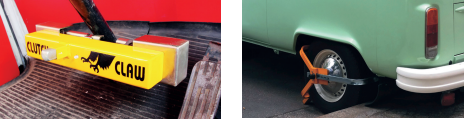
Another basic, internal fitting mechanical device is a pedal lock. These are not as common as steering locks as some people find them fiddly to fit and not as quick as simply fitting a steering lock. These are more common when leaving a van for a longer period of time and work by locking the three driving pedals together. These are more expensive than steering locks and obviously need to be tailored to the application.
There are several available on the market such as the “Safe-T Pedal” and “Clutch Claw” that we looked at in the last issue of Transporter Talk. These are less visual than a steering lock, but if someone gets into your van and sees one of these fitted, there’s a good chance they will decide to leave it or will need to make noise and spend time removing it in order to get your van easily.

That’s not all for internal mechanical locks as you can also buy devices that lock the gearstick to prevent any gear changes. On some VW models you can buy gear sticks and surrounds that have locks built in. Or you can find devices that lock the gearstick into position using a part of the interior, such as seats or steering wheels. Much like the steering wheel lock and pedal locks, these are a visual deterrent and will also slow down any thieves if they’re intent on taking your van.
Use of these mechanical devices may be time consuming, but can prove to be a very effective and wallet friendly means of adding security to your pride and joy. Another simple mechanical locking device is the
use of an external wheel clamp. If you use your van on a daily basis then this could prove to be an annoyance, but if you use the van on the odd occasion then using a wheel clamp is a cheap and effective means of additional security. There are various designs and styles of clamp available and they vary in price, but the main thing is that this extra security device is another problem that any would be thieves need to break through in order to get what they want.
With mechanical devices covered, we can now move on to the electronic advancements that can help to keep your van in your hands. Some more modern vehicles already have electronic devices fitted as standard, but those with older transporter models will be lacking in this area. Immobilisers are fitted to modern vehicles as standard and are fitted to prevent the engine of a vehicle from running unless the correct key or chip is present. Those who have ever owned a car that has an aftermarket immobiliser with
problems will tell you how effective they are! Immobiliser kits can be purchased and DIY fitted fairly cheaply these days and there are companies out there that offer fitting and after sales services too.
As well as immobilisers, alarms are also now fitted to most modern vehicles and these can now be added to older vehicles as an additional security measure. Alarms can be much more complicated than immobiliser kits as there are more areas for problems, such as doors and movement sensors.
It is highly recommended that alarms are fitted by a qualified alarm fitter and ensure that you get some kind of warranty too.
Another excellent and worthy purchase in the category of electronic security devices is a GPS tracker.
A GPS tracker is a location device that will track your vehicle if it’s taken without your permission. This is the best way of locating your vehicle quickly to have it recovered and so reducing the chance of damage or loss. There are several types of GPS Tracker on the market, some are standalone devices that are
completely user operated and some utilise a subscription service where a company will monitor the tracker and can offer different levels of service. One such GPS Tracker service is Skytag, which has been covered elsewhere in this issue and now offers VWT2OC member’s a discount on their tracker service.
Other methods of additional security could include kill switches or battery isolators, these are cheap to acquire and simple to fit for most. These are best used when leaving the vehicle for longer periods and can be operated with a key. One problem with this is that if you have a vehicle tracker fitted, the battery isolator will likely disable the tracker.
Some other different and interesting ideas include fitting an electronic fuel pump that has a hidden switch somewhere inside the van, no fuel, no running engine! Or you could go very extreme and remove the steering wheel from your vehicle for longer periods of storage and would be much easier on earlier transporter models.
Others have suggested removing the rotor arm from the distributor as this disables the engines ignition system, but again is probably best used for longer periods of storage. To aid with tracking, some also suggest fitting a number plate to the roof so that the vehicle can be identified from above in the event of it being stolen. Hopefully some of these hints are useful to members for helping to think about security options, but remember that the most important thing is to keep the basics working. Without these, any other additional security device loses effectiveness.

Time for bed!

As the long season comes to an end and following on from last week’s winterizing, some owners may elect to cover their pride and joy with a cover.

Please. Pretty please. Pretty please with little chrome covers on. Don’t cover your expensive paint work with a tarpaulin that will get condensation inside it, press that moisture onto your bodywork and accelerate the attack on the paint and the metal underneath.

If you don’t have access to a garage or a car port that will keep most of the weather off, try to invest in a good breathable cover. Get the right one for your vehicle and make sure that the material is not flapping around, abrading where it touches.

Ideally park on hard ground that will not have standing water. Parking on grass at the bottom of the field will collect water underneath which will evaporate upwards into your van and its little cover. A breathable cover will let some or most of that collected moisture out but ideally you should remove the cover over winter every month to let things properly dry out and then put it all back to bed once more.

If possible, get a cover with straps that go under the vehicle from side to side, so that the wind cannot lift the cover off the vehicle. It is disheartening to get home from work in the dark and find your expensive van exposed to the elements and a wet cover wrapped across your hedge.

For those of you lucky enough to have a garage, a dust cover is optional but again, think about the possibility of trapped moisture pressing against the bodywork. Does a quick dusting or a nice spring time wash and wax give more benefit than the winter cover?

Yes, it is that time again, winter is very much heading our way. For anyone with a vehicle, VW or not (apparently other vehicles are available!), winter in the UK is the worst time for metal on the roads.

Some suggestions:

Inside

Water

If you have anything containing water, drain it all out. Water tanks, boilers, kettles. Don’t just empty the tank, drain the whole system including the pipes. Remember that water in pipes still expands when it freezes, not just in the tank. It also goes stale after a period of standing. If possible take the tank indoors to keep it above freezing and/or clean it thoroughly.

We use a mild Milton solution to thoroughly clean ours including the impeller that sits in our tank and its associated pipe and electric cable. Then we rinse everything and air dry it all. Other options are available too!

Power

Leisure batteries like ambient temperatures and extreme cold will reduce their operational life. Keep them above freezing by removing them and keeping them in the garage or similar. Remember to keep the electrical contacts in the van safely insulated if applicable.

Keep those batteries charged using a trickle charger that is fit for purpose, which will also prolong their life.

Gas

Butane or propane tanks and bottles should be removed from your vehicle and stored safely with their openings closed properly – don’t leave the regulator open relying on the gas tap on the cooker as these can fail. Now is a good time to weigh them against their empty counterparts to know when you need to change them!

Boring cleaning

Now that you have opened up your van, removed the relevant tanks and bottles, you can get all misty eyed and miss the peace and tranquility of your van by getting in there and cleaning it all. It gives you a great sense of personal achievement as well as going into the winter with a nicely clean kitchen area, the fridge has been bleached and rinsed, and if applicable the bathroom, the shower and maybe the hot tub are all clean. Leave internal doors slightly ajar to keep mould and mildew at bay.

Soft furnishings

If possible, remove curtains, bedding, that emergency woollen blanket from Granny and take them indoors for a good wash or airing.

Ingress

Don’t be tempted to leave doors open or windows more than cracked open. All sorts of miscreants can get in and eat your lovely interior.

Outside

If possible store your vehicle in a garage. If that is not possible, a car port will do a similar job. A breathable cover can be good but make sure it is listed as fully breathable otherwise moist air gets under the cover, rises when things warm up and the vehicle will get wet, holding that wet against the bodywork. Avoid a heavy cover for sure!

Tyres

Tyres degrade from extreme temperatures and long periods of standing still. Winter does that very well! Inspect the tyres, check the pressures and consider putting the van on axle stands if you are not using it for a very long time, taking the wheels into the garage or shed. It also makes theft more difficult!

Moving parts

Lubricate everything. Hinges, moving parts, sliders, mechanical parts. Check the oil level. Use the right lubricant for the part in question. It will pay dividends next year and will keep water away, which is good for the life of the part.

Boring cleaning

Again, give the outside of your vehicle a proper clean, ideally by hand. Dry fully including the fiddly bits inside doors and between panels. Give it all a good quality wax polish. This also keeps water away and prolongs the panels and parts. It also makes you happy as you pass over the cold season when you don’t want to be away.

Underneath

If you are an advocate of underseal and waxoil, get the old visible stuff removed and apply new underseal to dry clean parts. The jury seems out on the benefits of underseal against the downside of it trapping moisture but waxoil or similar applied hot into cavities must be better than not applying it?

Engine

Some texts state to start your engine once a month and run it on idle for 30 minutes. More than that is not necessary and I don’t touch our air cooled engine at all.

An oil change just before the winter alongside a fuel-storage additive in the fuel tank if you like that sort of thing.

Main battery

We leave the main battery connected and the solar panel bolted to the roof of a van in a car port for the leisure battery. If that was not the case, we would trickle charge the main battery once a month over the winter. Again, this just makes sure that you don’t degrade the battery and end up having to replace it all of the time.

Got to dash, I think my van might be snoring.

Another one in the bag! Club camp completed – BusFest

The Club on tour – Three Counties Showground, Malvern, Worcestershire

September 9 to 11 2022

Well, we did it! Over 100 club members and their families were in the club field plus a few elsewhere. Burgers, bacon butties, teas, coffees, biscuits.

Over 40 new members and a lot of renewals down at the membership stand.

6 new people onto the newly renamed Management Team.

Everyone seems to have a fabulous time and we handed out bubbly prizes to the winners of “Best van”, “Best van interior” and “Best van story” to club members as voted by club members.

Ask The Mechanic – Gas use

There were no questions for The Mechanic
this issue, but with the weather tuning cold
and some members continuing to use their
campervan through the seasons, that means
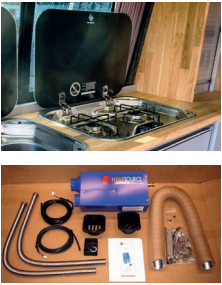
heating. There are gas heaters on the market
and these are becoming more affordable. Gas
is also used for cooking in many campervans,
so it’s time to talk gas safety!

Types of Gas
Let’s start by looking at the different types of gas
available in the UK and beyond.
All European countries have their
own gas bottle suppliers and each
of these have their own regulators
and adaptors. Campingaz is
available all through Europe in
small bottles which is great for
quick trips or for solo travellers. We (Editors) use
campingaz 907 bottles as they’re fairly readily
available in the UK and abroad and they fit nicely
in the cupboard under our storage trunk!
LPG (or Liquid Petroleum Gas) is the most
common kind used in campervans and motor
homes and it comes in two types; Propane
and Butane. Without going into the differences
between them in chemical structure, here are the
main differences:
Propane
‹ Usually used in vehicles where multiple
appliances will be running off it.
‹ Ideal for cold climates as it operates down
to -40°C!
‹ It’s much lighter and less dense than Butane.
Butane
‹ Operates more efficiently than Propane.
‹ It’s denser than propane, so a bottle of the
same size will hold more gas.
‹ Butane can’t be used at temperatures below
0°C (It cools down to a liquid state).
Different appliances may need one or the other of
the main LPGs to operate effectively, so it’s always
worth checking that before you buy.
Gas Safety Rules
‹ The standard that applies to campervans is
BS EN 1949: 2001 + A1:2013. If you ever want
more information, it is worth looking that up.
‹ There isn’t the same level of regulations
for fitting gas and gas appliances to motor
homes and campervans as there is to houses,
but would still recommend that anyone
installing an appliance is registered.
‹ If you’re installing gas appliances into
your campervan, the British Standard isn’t
mandatory, unless you’re going to be hiring
that vehicle out.
‹ If you are going to be hiring, ensuring that
everything is compliant with the law is down
to you, just as it would be if you owned a
house or flat that you were renting out.
‹ You’re allowed to undertake work yourself
if you’re not a registered gas engineer, as
long as you’re competent. (The definition
of competence is vague, but you’ve got
to ask yourself whether you’d be happy
to undertake the work and have the
responsibility on your shoulders).
‹ There’s a lot that could potentially go wrong,
and the stakes are certainly
high, so it may well
be worth getting a
registered engineer
to fit it.
‹ Registered gas engineers can charge
anywhere between £30 and £100 an hour,
but it’s worth looking around in your area if
and when you need one.

Top Tips for Gas Safety
‹ Ensure the gas is turned off before you travel.
‹ If you’re using your vehicle for work purposes
and carrying compressed gas, you must show
a sticker to alert people.
‹ If you’re not using your vehicle for work, but
still carry compressed gas, it is advised to have
a warning sticker displayed whilst carrying
the gas.
‹ Unless your campervan or motor home has
a rotating rooftop device, you’re limited to
carrying two 10 litre bottles of gas in the UK.
‹ All flammable gasses must be carried upright
at all times.
‹ Make sure you’ve got a Carbon Monoxide
alarm. They might not be stylish, but they’re
potentially lifesaving.
‹ Note that LPG gasses are heavier than air, so
will form a ‘puddle’ on the ground in the event
of a leak.
‹ Floor vents must be kept clear.
‹ If parked up in snow/mud/etc then ensure
that the vents aren’t blocked.
‹ Changing the bottle is the most dangerous
time, always make sure that you know how to
remove and fit the regulator and keep
well away from naked flames when
changing the bottle.
‹ Don’t use a naked flame to look for a leak
(sounds obvious!) and check for pipe leaks by
using water and washing up liquid solution,
bubbles will appear at a leak.
‹ Make sure you have a fire blanket and/or fire
extinguisher, as well as a fire alarm.
‹ If you’ve got an older VW it is recommended
to carry an extinguisher any way, in case of a
dreaded engine fire. Can you really have too
many extinguishers in an old VW?
The rules and tips for gas safety aren’t
complicated and if you keep to them, the use of
gas in your campervan is perfectly safe and an
excellent resource.