Category Archives: T25

They learned from their mistakes with this one. The shape was so 80s but evolved and started to include water cooled editions.

Time for bed!

As the long season comes to an end and following on from last week’s winterizing, some owners may elect to cover their pride and joy with a cover.

Please. Pretty please. Pretty please with little chrome covers on. Don’t cover your expensive paint work with a tarpaulin that will get condensation inside it, press that moisture onto your bodywork and accelerate the attack on the paint and the metal underneath.

If you don’t have access to a garage or a car port that will keep most of the weather off, try to invest in a good breathable cover. Get the right one for your vehicle and make sure that the material is not flapping around, abrading where it touches.

Ideally park on hard ground that will not have standing water. Parking on grass at the bottom of the field will collect water underneath which will evaporate upwards into your van and its little cover. A breathable cover will let some or most of that collected moisture out but ideally you should remove the cover over winter every month to let things properly dry out and then put it all back to bed once more.

If possible, get a cover with straps that go under the vehicle from side to side, so that the wind cannot lift the cover off the vehicle. It is disheartening to get home from work in the dark and find your expensive van exposed to the elements and a wet cover wrapped across your hedge.

For those of you lucky enough to have a garage, a dust cover is optional but again, think about the possibility of trapped moisture pressing against the bodywork. Does a quick dusting or a nice spring time wash and wax give more benefit than the winter cover?

Yes, it is that time again, winter is very much heading our way. For anyone with a vehicle, VW or not (apparently other vehicles are available!), winter in the UK is the worst time for metal on the roads.

Some suggestions:

Inside

Water

If you have anything containing water, drain it all out. Water tanks, boilers, kettles. Don’t just empty the tank, drain the whole system including the pipes. Remember that water in pipes still expands when it freezes, not just in the tank. It also goes stale after a period of standing. If possible take the tank indoors to keep it above freezing and/or clean it thoroughly.

We use a mild Milton solution to thoroughly clean ours including the impeller that sits in our tank and its associated pipe and electric cable. Then we rinse everything and air dry it all. Other options are available too!

Power

Leisure batteries like ambient temperatures and extreme cold will reduce their operational life. Keep them above freezing by removing them and keeping them in the garage or similar. Remember to keep the electrical contacts in the van safely insulated if applicable.

Keep those batteries charged using a trickle charger that is fit for purpose, which will also prolong their life.

Gas

Butane or propane tanks and bottles should be removed from your vehicle and stored safely with their openings closed properly – don’t leave the regulator open relying on the gas tap on the cooker as these can fail. Now is a good time to weigh them against their empty counterparts to know when you need to change them!

Boring cleaning

Now that you have opened up your van, removed the relevant tanks and bottles, you can get all misty eyed and miss the peace and tranquility of your van by getting in there and cleaning it all. It gives you a great sense of personal achievement as well as going into the winter with a nicely clean kitchen area, the fridge has been bleached and rinsed, and if applicable the bathroom, the shower and maybe the hot tub are all clean. Leave internal doors slightly ajar to keep mould and mildew at bay.

Soft furnishings

If possible, remove curtains, bedding, that emergency woollen blanket from Granny and take them indoors for a good wash or airing.

Ingress

Don’t be tempted to leave doors open or windows more than cracked open. All sorts of miscreants can get in and eat your lovely interior.

Outside

If possible store your vehicle in a garage. If that is not possible, a car port will do a similar job. A breathable cover can be good but make sure it is listed as fully breathable otherwise moist air gets under the cover, rises when things warm up and the vehicle will get wet, holding that wet against the bodywork. Avoid a heavy cover for sure!

Tyres

Tyres degrade from extreme temperatures and long periods of standing still. Winter does that very well! Inspect the tyres, check the pressures and consider putting the van on axle stands if you are not using it for a very long time, taking the wheels into the garage or shed. It also makes theft more difficult!

Moving parts

Lubricate everything. Hinges, moving parts, sliders, mechanical parts. Check the oil level. Use the right lubricant for the part in question. It will pay dividends next year and will keep water away, which is good for the life of the part.

Boring cleaning

Again, give the outside of your vehicle a proper clean, ideally by hand. Dry fully including the fiddly bits inside doors and between panels. Give it all a good quality wax polish. This also keeps water away and prolongs the panels and parts. It also makes you happy as you pass over the cold season when you don’t want to be away.

Underneath

If you are an advocate of underseal and waxoil, get the old visible stuff removed and apply new underseal to dry clean parts. The jury seems out on the benefits of underseal against the downside of it trapping moisture but waxoil or similar applied hot into cavities must be better than not applying it?

Engine

Some texts state to start your engine once a month and run it on idle for 30 minutes. More than that is not necessary and I don’t touch our air cooled engine at all.

An oil change just before the winter alongside a fuel-storage additive in the fuel tank if you like that sort of thing.

Main battery

We leave the main battery connected and the solar panel bolted to the roof of a van in a car port for the leisure battery. If that was not the case, we would trickle charge the main battery once a month over the winter. Again, this just makes sure that you don’t degrade the battery and end up having to replace it all of the time.

Got to dash, I think my van might be snoring.

Another one in the bag! Club camp completed – BusFest

The Club on tour – Three Counties Showground, Malvern, Worcestershire

September 9 to 11 2022

Well, we did it! Over 100 club members and their families were in the club field plus a few elsewhere. Burgers, bacon butties, teas, coffees, biscuits.

Over 40 new members and a lot of renewals down at the membership stand.

6 new people onto the newly renamed Management Team.

Everyone seems to have a fabulous time and we handed out bubbly prizes to the winners of “Best van”, “Best van interior” and “Best van story” to club members as voted by club members.

Ask The Mechanic – Gas use

There were no questions for The Mechanic
this issue, but with the weather tuning cold
and some members continuing to use their
campervan through the seasons, that means
heating. There are gas heaters on the market

and these are becoming more affordable. Gas
is also used for cooking in many campervans,
so it’s time to talk gas safety!

Types of Gas
Let’s start by looking at the different types of gas
available in the UK and beyond.
All European countries have their
own gas bottle suppliers and each
of these have their own regulators
and adaptors. Campingaz is
available all through Europe in
small bottles which is great for
quick trips or for solo travellers. We (Editors) use
campingaz 907 bottles as they’re fairly readily
available in the UK and abroad and they fit nicely
in the cupboard under our storage trunk!
LPG (or Liquid Petroleum Gas) is the most
common kind used in campervans and motor
homes and it comes in two types; Propane
and Butane. Without going into the differences
between them in chemical structure, here are the
main differences:
Propane
‹ Usually used in vehicles where multiple
appliances will be running off it.
‹ Ideal for cold climates as it operates down
to -40°C!
‹ It’s much lighter and less dense than Butane.
Butane
‹ Operates more efficiently than Propane.
‹ It’s denser than propane, so a bottle of the
same size will hold more gas.
‹ Butane can’t be used at temperatures below
0°C (It cools down to a liquid state).
Different appliances may need one or the other of
the main LPGs to operate effectively, so it’s always
worth checking that before you buy.
Gas Safety Rules
‹ The standard that applies to campervans is
BS EN 1949: 2001 + A1:2013. If you ever want
more information, it is worth looking that up.
‹ There isn’t the same level of regulations
for fitting gas and gas appliances to motor
homes and campervans as there is to houses,
but would still recommend that anyone
installing an appliance is registered.
‹ If you’re installing gas appliances into
your campervan, the British Standard isn’t
mandatory, unless you’re going to be hiring
that vehicle out.
‹ If you are going to be hiring, ensuring that
everything is compliant with the law is down
to you, just as it would be if you owned a
house or flat that you were renting out.
‹ You’re allowed to undertake work yourself
if you’re not a registered gas engineer, as
long as you’re competent. (The definition
of competence is vague, but you’ve got
to ask yourself whether you’d be happy
to undertake the work and have the
responsibility on your shoulders).
‹ There’s a lot that could potentially go wrong,
and the stakes are certainly
high, so it may well
be worth getting a
registered engineer
to fit it.
‹ Registered gas engineers can charge
anywhere between £30 and £100 an hour,
but it’s worth looking around in your area if
and when you need one.

Top Tips for Gas Safety
‹ Ensure the gas is turned off before you travel.
‹ If you’re using your vehicle for work purposes
and carrying compressed gas, you must show
a sticker to alert people.
‹ If you’re not using your vehicle for work, but
still carry compressed gas, it is advised to have
a warning sticker displayed whilst carrying
the gas.
‹ Unless your campervan or motor home has
a rotating rooftop device, you’re limited to
carrying two 10 litre bottles of gas in the UK.
‹ All flammable gasses must be carried upright
at all times.
‹ Make sure you’ve got a Carbon Monoxide
alarm. They might not be stylish, but they’re
potentially lifesaving.

‹ Note that LPG gasses are heavier than air, so
will form a ‘puddle’ on the ground in the event
of a leak.
‹ Floor vents must be kept clear.
‹ If parked up in snow/mud/etc then ensure
that the vents aren’t blocked.
‹ Changing the bottle is the most dangerous
time, always make sure that you know how to
remove and fit the regulator and keep
well away from naked flames when
changing the bottle.
‹ Don’t use a naked flame to look for a leak
(sounds obvious!) and check for pipe leaks by
using water and washing up liquid solution,
bubbles will appear at a leak.
‹ Make sure you have a fire blanket and/or fire
extinguisher, as well as a fire alarm.
‹ If you’ve got an older VW it is recommended
to carry an extinguisher any way, in case of a
dreaded engine fire. Can you really have too
many extinguishers in an old VW?
The rules and tips for gas safety aren’t
complicated and if you keep to them, the use of
gas in your campervan is perfectly safe and an
excellent resource.

Ask The Mechanic – Windscreen wiper condition

This issue, The Mechanic takes a look at
an often overlooked but important issue,
windscreen wiper condition.


Windscreen wipers are an invaluable part of any vehicle, providing the driver with a clear,
unobstructed view of the road when it is needed most. Whether it is rain, sleet, snow or
leaves covering your windscreen, the wiper blades will quickly and efficiently clear the obstruction,
meaning you can continue your journey in safety.
However, of all the parts of a car which are subject to wear and tear, windscreen wipers are perhaps
the most fragile. Manufactured from thin rubber, they are designed to operate smoothly on the windscreen without damaging the surface of the glass, yet despite their fragility they are often required on a daily basis, possibly for long periods of time during wet weather. In winter they become frozen to the glass and in summer they are used to help to clean the windscreen, while being subjected to high temperatures. It is hardly surprising then, that windscreen wipers do not last indefinitely and require regular replacement. Often the need to replace wipers is overlooked, although regular servicing and MOT testing should identify if they are becoming worn.
However, rather than relying on these tests to assess the condition of the blades, car owners should be aware of the common signs that the windscreen wipers are failing, especially with autumn upon us. So what are they?
Streaking: blades that are in good condition should clear the rainwater from the windscreen effortlessly, in one complete action. This means there should be no streaks of water where the blade has failed to make contact with the glass.

Unusual noises: windscreen wipers should operate with minimal noise or ideally should be silent. Sounds such as squeaks, screeches or scrapes could indicate that the blades have become worn.

Irregular movement: wiper blades which are in good condition will move smoothly across the windscreen. As they become worn over time, you may notice that the blades judder on operation which is an indication that replacement may be necessary.

Ragged or distorted blades: visually inspecting the condition of the windscreen wipers should be a weekly task for all vehicle owners. By lifting the arms of the wipers away from the windscreen, you can quickly assess the condition of the rubber. Ragged, jagged or distorted edges, where the blade makes contact with the glass, should prompt you to replace them immediately.

Worn blades may not only hinder your vision, but can also damage your windscreen, which will in turn not only cost you dearly in a replacement screen, but also hinder your vision even more, making it dangerous to drive with the vehicle in such a condition.

Replacement blades can be picked up very cheaply for all types of van, so there is no excuse not to check yours and change if required, but remember… “Buy Nice or Buy Twice”.

Club Event – RAF Odiham Family Day 2021

Can it be a year already?

August 14th 2021 saw the return of RAF Odiham’s Family Day. The club had several vans in attendance as part of the show’s classic car event and members camped for the weekend at a nearby pub. The day involved displays from resident Chinooks, Typhoons and also the Red Arrows, who put on an excellent 40 minute display. This event is getting better and better each year and we are privileged as a club to be invited to attend.
Photo credit to David Eaton.

Ask The Mechanic – Fitting a hot start relay

If you have an air-cooled van and experience
the dreaded “click” when trying to start your van,
it could be that the original wiring and ignition
switch now has a higher resistance than it did
back in the 70’s and cannot cope with the current
required to turn the engine over using the starter
motor.
One way to counteract this is to fit a relay that
takes the current load and the ignition switch
activates the relay.
A relay sourced for this application can be
purchased from Just Kampers; JK part number
J12928.
Parts required
‹ Suitable cable for wiring the relay – suggest
Halfords 12v 17A cable sold in 4m reels
‹ Several crimp connectors
‹ The relay itself – JK part number J12928
Method
It is advisable to always disconnect the vehicle’s
battery before carrying out any work on the
electrical system.

  1. Mount the relay in a safe place as close to the
    starter motor as possible.
  2. Take the existing wire from terminal 50 on
    the solenoid and extend it to reach the relay
    position.
  3. Connect this extension from terminal 50 on
    the solenoid to terminal 86 on the relay.
  4. Now connect terminal 85 on the relay to a
    good earth on the vehicle body/chassis.
  5. Connect terminal 87 of the relay to the live
    terminal of the vehicle’s battery.
  6. Now connect terminal 30 on the relay back
    to terminal 50 on the starter solenoid.

Whilst every attempt is made to ensure that
these instructions are as accurate and clear as
possible, the author or club itself cannot be
held responsible for misinterpretation of these
instructions or for any subsequent accident or
damage caused through mis-fitted parts.

Another one in the bag! Club camp completed – Odiham

The Club on tour – Just Kampers, Odiham, Hampshire

June 10 to 12 2022

6 members were in the dedicated club field with more coming over to say Hello. 15 new members joined on the day, lots of money raised for charity for the Phyllis Tuckwell hospice. Live music from multiple bands, open air cinema on Friday (Breakdance) and Saturday (Karate kid), a big raffle with prizes worth up to £700 each.

Another great weekend at JK.

Ask The Mechanic – Aircooled engine cooling

The summer is here and that hopefully means that we are experiencing warmer air temperatures.
With warmer air temperatures, comes warmer engines. Those using aircooled engines will find it
even harder to keep the engine cool during the summer months and we have all seen the odd VW
at the side of the motorway! Don’t let that be you (not through overheating anyway!)


Although it may seem like a small detail, to ensure cooler engine temperatures, it is absolutely vital
that the tinware and engine compartment rubber seals are all present and intact. This ensures that
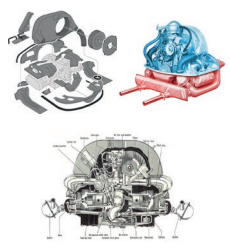
there is cool air above the engine and hot air below it. These are known as the cool and warm zones. If tinware parts are missing, or the seals around the front and back of the engine are torn or broken, hot air will be drawn from the cylinder heads and exhaust back into the cool zone around the top of the engine and then sucked in by the cooling fan and re-circulated over the cylinders and heads, causing the engine temperature to rise, potentially to a critical level. This can cause all kinds of problems over time, some of which may not be immediately obvious, from hot starting troubles, to cracked cylinder heads, up to and including a seized engine.
If you’ve just bought a van/bus, it is well worth checking the condition of the tinware and seals and also making sure that there are no foreign bodies stuck in the cooling fan (remember to do this with the engine turned off!) If you are fitting a reconditioned or new engine, don’t just rely on refitting the parts that were on the old engine, as they may not be correct either. The thermostat is another vital piece in the cooling
system. There is a set of flaps inside the fan shroud, that actually block cooling air when the engine is cold, in order to warm up the engine more quickly. These are opened by the thermostat, located between the cylinder barrels and if this part is defective your engine will very quickly overheat. Check the function of the thermostat and flaps and if required, replace. The alternative is to completely remove the thermostat and flaps, which while it certainly simplifies matters, is not ideal. It means that your engine may never reach the correct operating temperature in cold weather conditions.
The last few points to consider are your ignition timing, air leaks and fuelling. Poor ignition timing can cause your engine to run too hot, it’s unlikely to be visible if it’s wrong but you should hear it. Fuel mixture is equally important, so ensure the carburettor jetting is correct for the size of the engine, fuel starvation will raise the engine temperature internally. Your fuel system could be setup perfectly, but if your engine is sucking air in elsewhere through a split hose or a broken gasket, then the whole fuel/air mixture is compromised and the chances of running lean and therefore hot, are increased too. Spraying the intake system with Wd40 whilst running will help to detect this, an air leak will suck the spray in, using it as fuel and changing the engine note at the same time. I hope there are some helpful tips for members to help stay cool this summer.
Another one in the bag! Club camp completed – Banbury

The Club on tour – Barnstones Caravan and Camping Park, Banbury, Oxon

May 12th to 16th 2022 saw the Club’s annual AGM, BBQ and Club Camp (ABC camp) in Great Bourton. Convenient for the M40 allowing many people to join us, we had nearly 30 vehicles after some late dropouts due to mechanical trouble. Over 60 people spent the weekend together with a lot of laughter, plenty of burgers and maybe the odd glass of something.

In addition to the AGM and BBQ, we also had the FA cup final televised in one gazebo, Eurovision later in the evening and some singing from our resident jazz singer Lorna.

On the plus side, 5 people joined the Committee. On the minus side, Derek Leary stepped down from the Committee after several decades shaping the Club into what it is today. We’ll miss you Derek (and Christie).

Upcoming event – Just Kampers Weekend! – 10th to 12th June 2022

The hugely popular JK Weekender is back! Having been cancelled due to COVID, last year’s tickets are still valid in a rollover way to this year.

Set in a field next to the JK headquarters just outside Odiham in Hampshire, Mark and the team give us a chilled out, music, outdoor evening movies, stalls, displays and of course their shop.

Our club enjoys a dedicated club field for members only which includes a disabled toilet. We get plenty of space in a prime position and the club lays on a club tent for congregating is you feel sociable plus we are doing our famous BBQ on Saturday evening – come and get a free burger and have a natter!

If you are lucky, our very own Events Manager Lorna will be singing again! Check out the Events page on this site or see the latest edition of Transporter Talk

See the source image


See the source image