Display your van and attend this smaller show for free, with an option to camp for just a tenner (advance booking essential). Stay all weekend or just a night, it’s up to you, the price is the same. It costs £7 to attend the show, but if you’re exhibiting your van, it’s free to get in, you just pay for your camping. What a bargain!
Here’s more from our Chairman:
”I was chatting to the organizer of this local car show. We went as an exhibit last year and were one of around 200 cars. The show is one day but it’s on a farm with entertainment barn music on the Saturday night and an adjacent pub with meals. There will be a few stalls with varied items for sale.” Well, thank you, Malcolm, sounds great! Visit vintageandcountryfair.co.uk more details, and email me if you’d like to be part of our Club Camp and display: events@vwt2oc.co.uk
Long time member Ian Crawford had issues with his van that he bought in 1972 at a year old. He still drives it! I should point out the van was a year old, not Ian.
Ian says:
An unusual problem solved the other day. My van would only turn over 2-3 times when ignition switched on, then it just refused to do anything! I connected my battery charger to the terminals (before switching on) and the lights showed the battery was 20% efficient. I then switched the charger on and literally within 15 seconds it said 100% charged. I disconnected and switched off the charger and attempted to start the van. As before, it only turned over 2-3 times then it wouldn’t do anything. Reconnecting the charger it again showed only 20%! Once again, charging for around 15 seconds showed the battery 100% charged. Time to retreat and think hard as to what the problem really was and how to solve it. I slept on it and the next day I had a brainwave! I decided to remove the battery earth strap from where it is bolted to the chassis. Using a steel wool pan scourer, I gave the bare metal a thorough good scrub as well as the underside of the fixing lug of the earth strap. I also smeared Vaseline over both surfaces. I then refitted the earth strap into the chassis fixing hole and went to start it up. Surprise surprise, it started first time!! So if you have experienced problems with starting, maybe removing and cleaning the metal around the fixing of the earth strap will solve it. Hope this gives members some useful tips.
We are all just back from a great week at Petruth Paddocks near Cheddar. Here are some photos of our time there.
Impromptu Sunday evening communal dinnerWarming around the fire pitPaul gives us a “man fire” lessonChef even works SundaysSee the hailstones on the roofWe even took the club to the pubThe club at the breweryBacon buttiesBurger time
Phil Jones asked: After some suggestions please – with colder weather on the horizon has anyone got any ideas to heat the cab whilst driving. We have a heater in the back for when hooked up, but warm airflow into the cab is non existent… Thanks in advance!
Andy Carter answered Standard set up on my T2 will pump hot air into the cab but it doesn’t seem to have an effect on the temperature! I think it leaks cold air too much from various places. Making sure the fresh air vent is fully closed helps, as does stuffing socks into the dashboard directional vents! Other than that, gloves and a woolly hat are all i have, so interested in what other responses you get…
Graham Sims answered We have taped over the windscreen vents with black electrical tape, stops a considerable cold draft. Also socks in the circular dash vent pipe works a dream. Simply pull out vent cover, stuff in sock, replace cover. Takes less than 5 seconds! Our cab sometimes gets too warm!
It is all systems go for Petruth Paddocks – are you going? Hope to see you there!
Tuesday 11th April – Monday 17th April 2023
End of Easter Camp at Petruth Paddocks, Cheddar
Last year’s April event was such a huge success, we’re going to do it again! Just a bit earlier, again starting at the tail end of the Easter weekend. Come for as many or as few nights as you like.
This well-run site with “the best showers and loos” according to our attendees, sits at the foot of the Mendip hills and within a 20-minute walk into Cheddar, its splendid caves and numerous coffee shops. There are also two supermarkets just over half a mile away, and a Post Office in the village. It’s a level walk into Cheddar, and around half of it is traffic-free, more if you’re just going to Sainsbury’s.
Wookey Hole caves, Wells cathedral, and Glastonbury are within easy reach. Check out www.petruthpaddocks.co.uk to see information about local footpaths, buses, and cycle-ways. On-site facilities include free wi-fi, washing up, and electric hook-ups, as well as those loos and showers.
We’ve secured rally rates again, £15 per unit without electric hook-up instead of £15 per person. Electric will be charged through a pre-payment meter. And we’ll only pay one nightly fee for doggie companions per unit, saving £3 a night for any extra dogs you may have!
In addition to our Club BBQ on the Saturday evening, I hope we’ll be able to offer one or two activities – a coffee catch up on the Sunday morning; a gathering near the Club gazebos and listen to some early evening, easy music from our own Lorna James and/or other members; a belated Easter egg hunt if we have little ones in our group – I’ll work up the details as we get closer to the event, based on numbers. There is also a local pub, so if all else fails we’ll be able at least to wander along there if we fancy a change of scene for a natter. It’s all in the pot at the moment!
The site operates a Behaviour Bond and a nattering-only policy after 11pm, so if you’re after rock n roll, it’s probably not for you. You can read more at www.petruthpaddocks.co.uk/groups/adult-group-booking.html – your Club is covering the bond. Please note if your party breaks the site’s rules, you will be asked you leave and you may be removed from the club. Not that I expect that to be an issue!
Find out more about what’s going on locally, attractions, facilities, pubs, activities etc. and more about the site itself at www.petruthpaddocks.co.uk
Yes, it is that time again. Hurray! Finally, after the long winter in our non-mobile houses, we can get out our beloved vehicles.
Checklist
Hopefully you all followed the article Time for bed/ to help put your vehicle to bed for the winter. Now that spring is in the air and we are starting to think about getting out and communing in nature, this is a key time to get things ready.
Doors locks – there’s nothing more annoying than a failed lock. get it fixed now before the season really gets going. Door lock issues can be very straight forward but a simple lubrication can be key. Pun intended. A non residue lubricant is best to move the dirt away as WD40 can leave enough gunk to create issues. We favour silicon spray. A little into each lock.
Windscreen wipers – did they perish in the cold winter freezing them to the windscreen. Inspect and replace now.
Water – check the radiator if you have one. Ensure that the bottles that you emptied in the Autumn / fall have no mice, carefully hidden Christmas presents or mildew. Clean with a weak Milton solution if it is drinking water or food related.
Batteries – check the charge on each battery with a good meter. A flat battery can indicate an earth leak. A failed battery needs careful investigation.
Carburettor – Or equivalent. Check for good operation, no stuck flaps or other deterioration over winter. If you are a professional, this will be straight forward. If you are an amateur, a test drive very close to home will highlight problems! But only after the other checks.
Brakes – your vehicle should roll easily, otherwise this can indicate jammed brakes. Parking in gear for long periods of time can be better for your brake health than a jammed set of brakes. Check the brakes for operation. Check the brake fluid level. If it has been more than 5 years, change the brake fluid as it is hygroscopic and slurps up water incredibly quickly. Water is not a good fluid for applying the brake pads to the disks.
Seals – inspect all door seals for any signs of damage, water ingress or other problems and sort them out now. Glue any loose bits back down with the correct glue.
Windows – ensure that they all open and close fully. Or at least as fully as they did last year if applicable!
Ignition – Once you are feeling confident, get in to your pride and joy and turn on the ignition to number 2. Look at the lights on the dashboard. Check there ARE lights! Are they what you expect / are used to seeing? Have you got fuel (for those with a working fuel gauge)?
Crank it over – don’t expect it to start immediately but things should kick into life within a few seconds.
A little test drive on your driveway will allow you to test the brakes, maybe the steering and other important parts. Softly, softly.
Stay local, take your phone with you and warm clothing. Just in case!
Once you get home, assuming that you have a big smile on your face, make a list of snags, get indoors, put the kettle on and start planning for your summer.
Check out the events page and come and see us at a meeting soon!
This instalment of The Mechanic looks at how you can protect your VW for years to come using Dinitrol products. The biggest threat to any classic vehicle is rust and unfortunately our beloved Volkswagens seem to suffer badly. Rust is an iron oxide that forms by a reaction between iron and oxygen in the presence of water. With the British climate being renowned for its rainfall we need all the help we can to keep rust at bay. There are numerous products on the market to help combat rust, if you do your research there are various opinions on the most suitable solution. Waxoyl and Dinitrol seem to offer the best results and the choice of which product to use comes down to personal choice or ease of application. WAXOYL is a long established and proven method for combating rust. It is a petroleum based wax product with self-healing properties that contains oxidation inhibitors that slow down the growth of rust. It works by covering the treated area, thus preventing water and air contacting the treated area. DINITROL is an oil based product that contains rust inhibiting ingredients to treat and stop rust after it has been applied. It also forms a barrier that prevents further corrosion occurring. Dinitrol is supplied in several different forms, a cavity wax for use in inner sills etc. and an under body wax that dries to a flexible tough film to withstand rain and salt. Waxoyl is generally suitable for use on vehicles that have been restored and have fresh metal welded into them, whereas Dinitrol is designed for vehicles with existing surface rust due to its rust killing abilities.
Guide For a Split, Bay or T25 The range of rear engine transporters are all unique in their own way, but all suffer from corrosion in the same way. One problem that is particular to a Camper is that we create more moisture due to us living inside, just boiling a kettle will produce large amounts of rust inducing steam, sleeping in the van presents its own problems as we sweat and breathe out moisture. The underside of any Van is straight forward to protect. The usual suspect areas such as inner sill, front valance etc are easy to access from underneath, but the inside structure is more challenging. The front and side door cards are easy enough to remove but the rear will require removal of the interior furnishings and panels to gain access, a time consuming exercise but worthwhile!
With the summer holidays looming and everybody planning their travels and holidays, have you planned your maintenance and checks of your VW in as much detail? It is very important to keep your van maintained properly, but with the hotter weather and longer than usual journeys; even the most well maintained engines can suffer problems, such as perished or split fuel hoses. Something such as a split fuel hose could mean really bad news for classic (or even modern) VW camper owners. Every summer there are reports on social media of at least one classic VW that has caught fire and been lost. Although good maintenance and preparation should prevent this, there is always that small chance and a fire suppression system will provide extra insurance against losing your van to a fire.
Fire suppression systems are now readily available and vary in function and cost. There are manual systems that operate using a lever and cable to activate the suppressor and there are also automatic systems. Automatic systems are preferential as they require no input from the driver to activate. Within the automatic suppressor range there are two main systems that prove to be the most popular.
The first one is a cylinder (much like a fire extinguisher) that is mounted in the centre of the engine bay over the engine and if a fire occurs in the engine bay, the vial over the nozzle melts, releasing a gas agent at 240 psi. The nozzle is designed to ensure 360° dispersal, meaning that the gas will completely fill the engine bay. The gas is released at -19°C so will cool down the engine bay helping to prevent any re-ignition of petrol vapour. This system is a small scale version of what is used within oil rigs.
The second automatic system is also a cylinder, but rather than mounting the cylinder directly over the engine, the cylinder is mounted within the engine bay (usually) but out of the way, (usually the left rear side of the engine bay is most spacious). This system uses a linear detection tubing which is installed throughout the engine compartment. This tubing can not only quickly and accurately detect a fire but also extinguish it before it can damage adjacent components. The tubing is connected to the cylinder valve and charged with nitrogen or compressed air. This pressure is utilised to hold back the extinguishing powder in the cylinder. Should a high temperature or fire occur, the pressurised tubing will burst and the powder will be deployed from the burst hole directly onto the fire. Both systems are fully automatic and come with a full fitting kit. Fitting is relatively simple and requires no wiring or electrical input. The first system with the 360° dispersal nozzle can be purchased for approximately £60- £100 and the second system that utilizes the linear detection tubing can be purchased for approximately £180-£250. The design is personal choice and we would not merit one over the other, but The Mechanic has had experience of fitting the second system and found it simple
Oil is one of the most important components of your engine. Without oil, an engine will overheat and fail. Many Dubbers keep a close eye on oil levels and top up as required, but is this enough? Keeping the oil in your engine at optimum temperature is as important as maintaining the correct level. Monitoring the oil temperature in your classic VW has always been tricky and normally requires the fitment of an aftermarket system that can look out of place, be challenging to install and leave a large dent in your wallet. However, there is a simple yet very clever product called “Save My Bug” that can help you to monitor the oil temperature without breaking the bank.
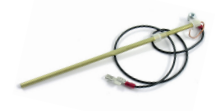
“Save My Bug” is an oil temperature dipstick that replaces your original dipstick and connects to the oil pressure switch with an 18” wire included in the kit, allowing you to monitor the engine oil temperature without the use of an aftermarket gauge. The oil light on your dash will now not only operate as an oil pressure warning light, but will also become an oil temperature warning. In normal conditions the light will remain off, if the engine oil temperature starts to get too hot it will flash, if the light comes on steady, the engine temperature is excessively hot (or there is an oil pressure problem) and you should pull over and stop the engine immediately. This has made keeping an eye on oil temperature whilst driving a doddle and the installation takes less than 10 minutes for all levels of ability. It is available for both the Type-1 engine and Type-4 engine from most well known air-cooled VW specialists for around £30-£40 depending on application.
With classic car vehicle theft on the rise classic car security systems are more important than ever. The Mechanic has noticed some members asking some questions on the Club Facebook page about van security and what different people use, so has decided to cover some options for security to help members understand what products and services are available to keep your van as safe as possible. Starting with the basics, your vans already has some built in security features from the factory that you should utilise and ensure are working effectively before even worrying about additional security measures. Firstly check that all of the doors lock securely, including the tailgate or rear doors in later transporters. Full lock sets can be inexpensive and a doddle to fit, depending on the model. If the doors aren’t locking as expected, there is plenty of adjustability with the striker plates and latches, don’t be afraid to give it a go. All van windows, whether they are manual windup, electric windup, louver or sliding, should close fully and latch where possible. Anything short of this is an invite to an opportunistic thief. All types of Transporter have a standard steering lock fitted which is activated by turning the steering wheel with the ignition key removed. This stops anyone from being able to turn the steering wheel and drive off without the ignition key. The ignition key and barrel is another standard security feature that should be present, older vehicles can be modified over the years to work in several ways depending on whether there have been problems in the past, but the ignition lock is something extremely basic that you want to ensure is working.
Some other very basic things to consider are where you keep your van parked when not in use. Do you have a secure location such as a garage or a lockup? Do you use a driveway or park on the road? If you have a safer place available to you, use it. Now we have covered the basics, we can move on to additional security devices. There are various additional security devices available for vehicles and they can be mechanical or electrical and very affordable or expensive, depending on the product and the application. A basic additional security device that many will have used at some point is the steering wheel lock/clamp. These are a mechanical device that fits to the steering wheel to prevent the wheel from being turned in the event of you vehicle being stolen. They vary heavily in application and price and the choice is a personal decision, but whatever you choose, a steering lock is a visual deterrent for potential thieves as well as a physical mechanical hindrance. I personally always use a steering lock, even if only leaving my van for a short period of time, it gives me peace of mind that it would take longer for someone to steal my van with it fitted than it would without it, which should help to put off the opportunistic types. There are many different types of steering lock on the market, but “Stoplock” has been a well known name for years.
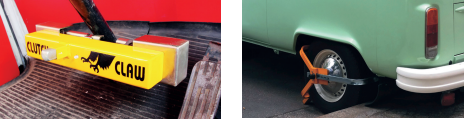
Another basic, internal fitting mechanical device is a pedal lock. These are not as common as steering locks as some people find them fiddly to fit and not as quick as simply fitting a steering lock. These are more common when leaving a van for a longer period of time and work by locking the three driving pedals together. These are more expensive than steering locks and obviously need to be tailored to the application. There are several available on the market such as the “Safe-T Pedal” and “Clutch Claw” that we looked at in the last issue of Transporter Talk. These are less visual than a steering lock, but if someone gets into your van and sees one of these fitted, there’s a good chance they will decide to leave it or will need to make noise and spend time removing it in order to get your van easily.
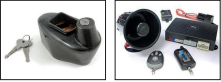
That’s not all for internal mechanical locks as you can also buy devices that lock the gearstick to prevent any gear changes. On some VW models you can buy gear sticks and surrounds that have locks built in. Or you can find devices that lock the gearstick into position using a part of the interior, such as seats or steering wheels. Much like the steering wheel lock and pedal locks, these are a visual deterrent and will also slow down any thieves if they’re intent on taking your van. Use of these mechanical devices may be time consuming, but can prove to be a very effective and wallet friendly means of adding security to your pride and joy. Another simple mechanical locking device is the use of an external wheel clamp. If you use your van on a daily basis then this could prove to be an annoyance, but if you use the van on the odd occasion then using a wheel clamp is a cheap and effective means of additional security. There are various designs and styles of clamp available and they vary in price, but the main thing is that this extra security device is another problem that any would be thieves need to break through in order to get what they want. With mechanical devices covered, we can now move on to the electronic advancements that can help to keep your van in your hands. Some more modern vehicles already have electronic devices fitted as standard, but those with older transporter models will be lacking in this area. Immobilisers are fitted to modern vehicles as standard and are fitted to prevent the engine of a vehicle from running unless the correct key or chip is present. Those who have ever owned a car that has an aftermarket immobiliser with problems will tell you how effective they are! Immobiliser kits can be purchased and DIY fitted fairly cheaply these days and there are companies out there that offer fitting and after sales services too. As well as immobilisers, alarms are also now fitted to most modern vehicles and these can now be added to older vehicles as an additional security measure. Alarms can be much more complicated than immobiliser kits as there are more areas for problems, such as doors and movement sensors. It is highly recommended that alarms are fitted by a qualified alarm fitter and ensure that you get some kind of warranty too. Another excellent and worthy purchase in the category of electronic security devices is a GPS tracker. A GPS tracker is a location device that will track your vehicle if it’s taken without your permission. This is the best way of locating your vehicle quickly to have it recovered and so reducing the chance of damage or loss. There are several types of GPS Tracker on the market, some are standalone devices that are completely user operated and some utilise a subscription service where a company will monitor the tracker and can offer different levels of service. One such GPS Tracker service is Skytag, which has been covered elsewhere in this issue and now offers VWT2OC member’s a discount on their tracker service. Other methods of additional security could include kill switches or battery isolators, these are cheap to acquire and simple to fit for most. These are best used when leaving the vehicle for longer periods and can be operated with a key. One problem with this is that if you have a vehicle tracker fitted, the battery isolator will likely disable the tracker. Some other different and interesting ideas include fitting an electronic fuel pump that has a hidden switch somewhere inside the van, no fuel, no running engine! Or you could go very extreme and remove the steering wheel from your vehicle for longer periods of storage and would be much easier on earlier transporter models. Others have suggested removing the rotor arm from the distributor as this disables the engines ignition system, but again is probably best used for longer periods of storage. To aid with tracking, some also suggest fitting a number plate to the roof so that the vehicle can be identified from above in the event of it being stolen. Hopefully some of these hints are useful to members for helping to think about security options, but remember that the most important thing is to keep the basics working. Without these, any other additional security device loses effectiveness.